


Victorian Dining Display
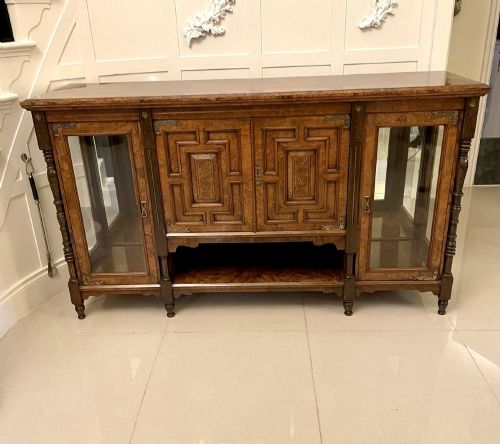
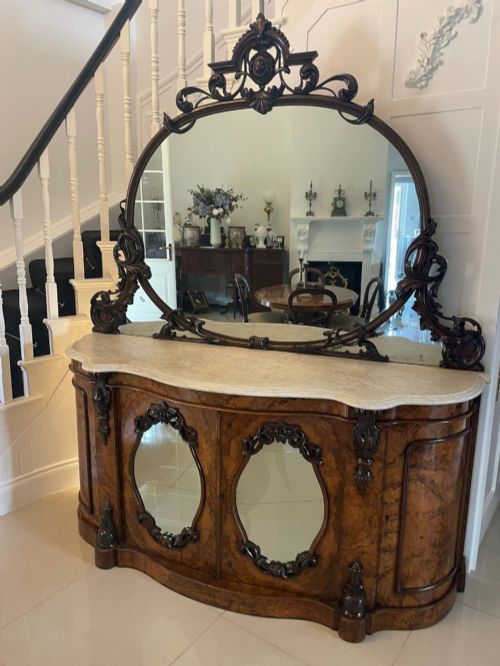
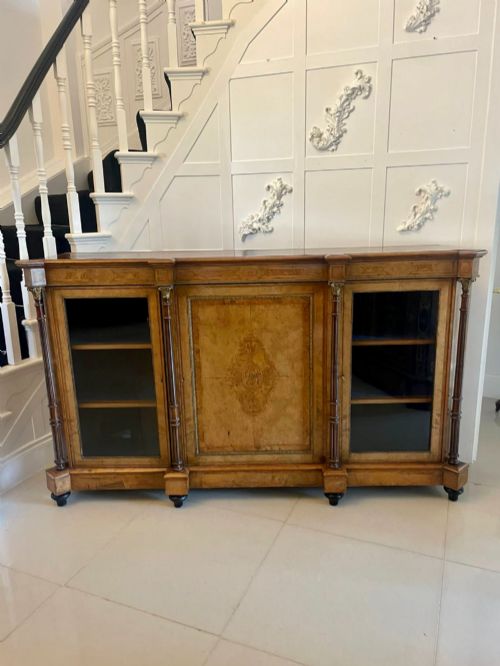
Victorian dining display pieces bring together burr walnut credenzas and rosewood side cabinets designed to showcase formal hospitality.
Victorian Dining Display
When you search for Victorian dining display, you encounter sophisticated case pieces intended for formal dining rooms. The most frequent forms include credenzas, mirror-back sideboards, and glass epergnes.
The selection spans sideboards and credenzas alongside display tables and chiffoniers. These objects originate from the nineteenth century, including specific decades such as eighteen fifty and eighteen sixty.
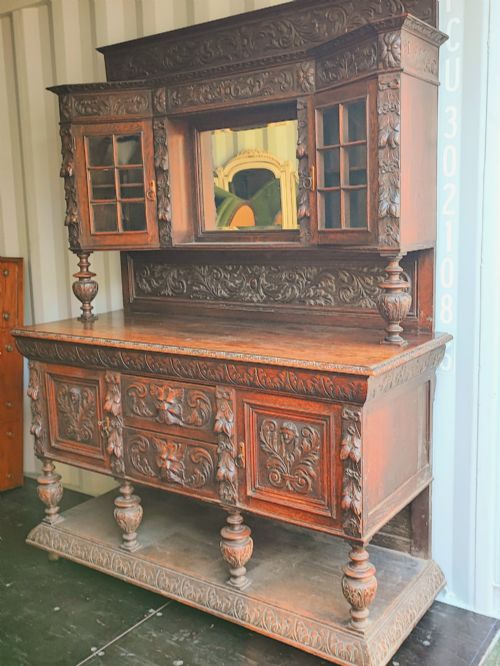
Makers and workshops of the period utilised various woods to construct these heavy furniture items. Walnut, mahogany, and oak dominate the selection, often finished with detailed mirrors.
Materials and construction
Cabinet makers utilised burr walnut, rosewood, and mahogany as primary timbers for these display items. Inlays of boxwood and amboyna add decorative contrast to the polished surfaces.
A delicate cranberry glass epergne brings a splash of bright pinkish-red to the heavy dark wood of a Victorian dining room.
Markers of quality
The sophistication of the timber grain separates standard items from superior pieces. Highly figured burr walnut and intricate crossbanding in kingwood indicate higher craftsmanship.
Carved mirror frames and detailed boxwood inlay determine the refinement of a credenza or side cabinet. Exceptional examples incorporate substantial carved elements and matched veneers.
Shapland and Petter·Edwards and Roberts·Howard and Sons
The Victorian Dining Display Glossary
- Credenza
- A grand cabinet designed for display and storage in formal rooms. These pieces often feature mirrored backs and glazed side cupboards.
- Epergne
- A centrepiece stand used on dining tables to display fruit or flowers. Cranberry glass versions appear frequently in nineteenth century dining contexts.
- Chiffonier
- A compact sideboard with shelves or a cupboard beneath. They typically include a mirrored superstructure for display purposes.
- Crossbanding
- A decorative border of veneer laid with the grain running perpendicular to the surrounding wood. This technique highlights the edges of tabletops and cabinet doors.
- Whatnot
- An open shelving unit used for displaying ornaments and tableware. They stand independently or sit atop larger side cabinets.
Victorian Dining Display: Frequently Asked Questions
How do I style a mirror back sideboard?
Position the sideboard against a principal wall in a dining room to reflect natural light. The mirrored back enhances the visual space of the interior.
Use the surface for displaying silver or ceramics while storing dining linens inside the cupboards.
What is a cranberry glass epergne?
An epergne is a decorative table centrepiece featuring multiple trumpets or baskets. Cranberry glass versions utilise deep red tinted glass created with gold chloride.
Victorians placed these centrepieces on dining tables during formal meals to hold fruit or flowers.
How do I identify a chiffonier?
A chiffonier is a smaller relative of the sideboard with enclosed lower storage and upper display shelves. They serve similar functions in dining rooms and parlours.
Mahogany and walnut examples often feature carved details and mirrored backs typical of the period.