

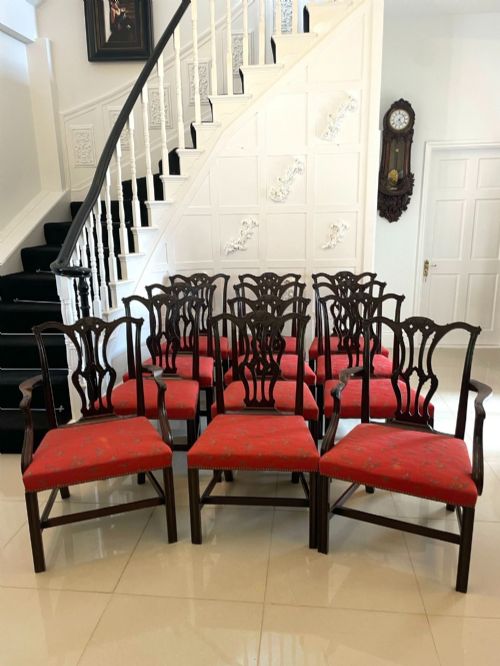
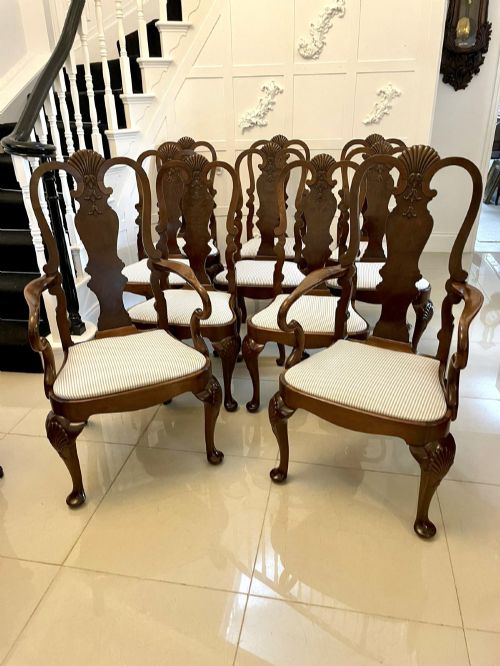
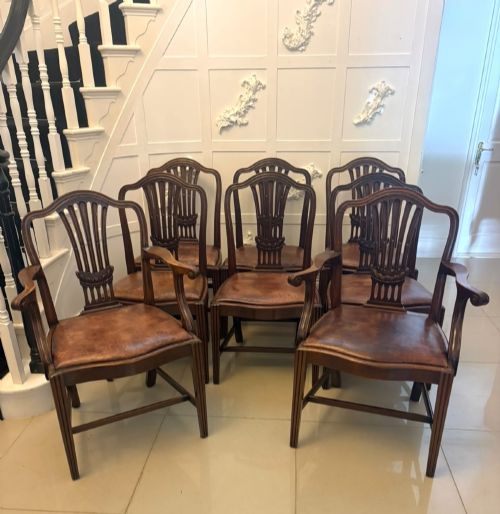
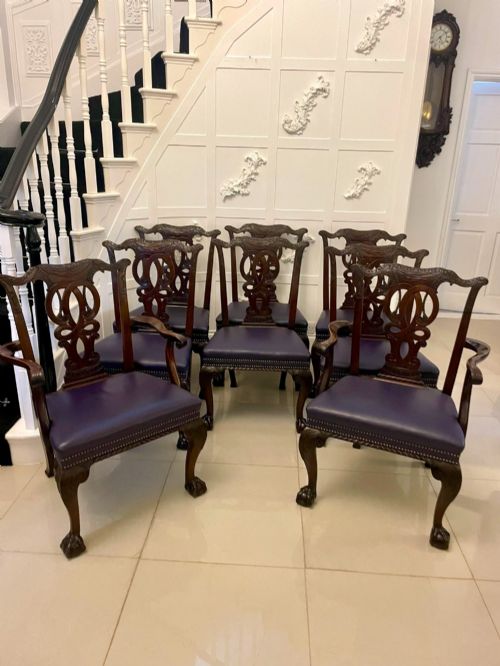
Victorian Dining Carvers
Victorian dining carvers are sturdy armchairs designed to sit at the head and foot of a nineteenth-century dining table.
Victorian Dining Carvers
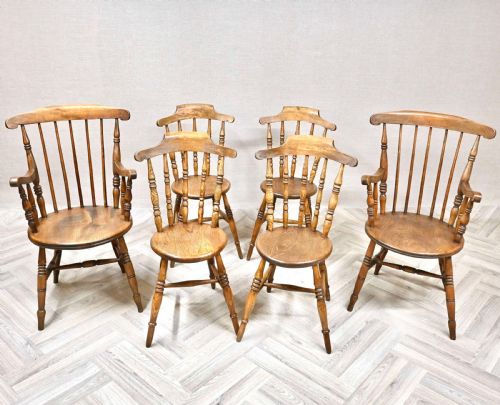
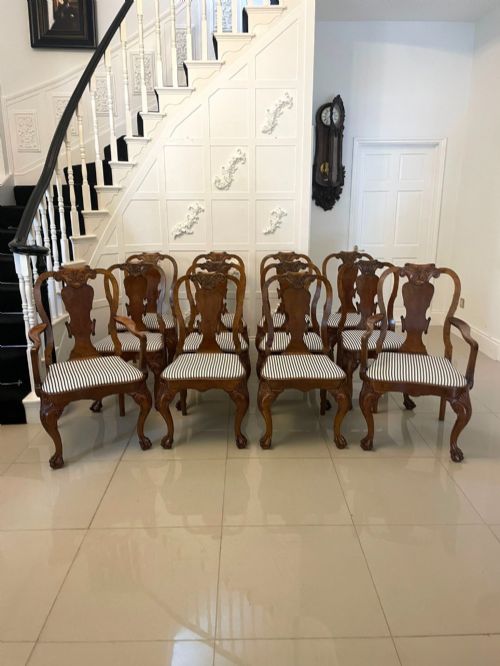
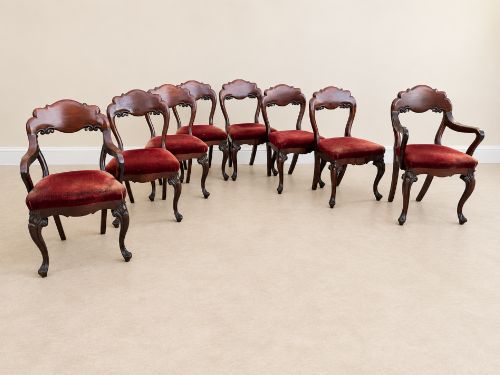
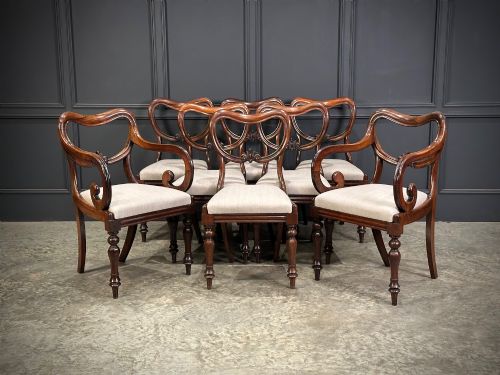
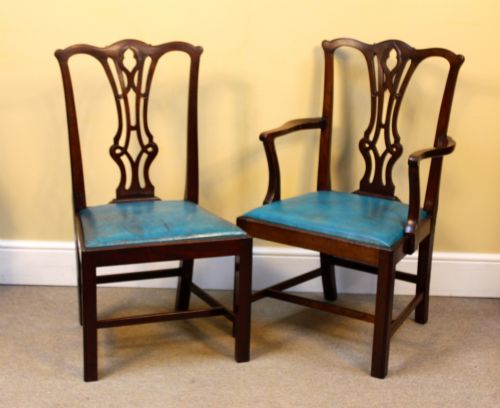
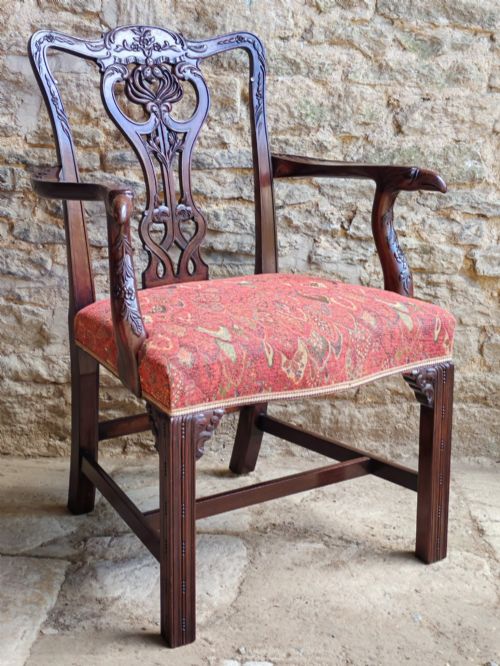
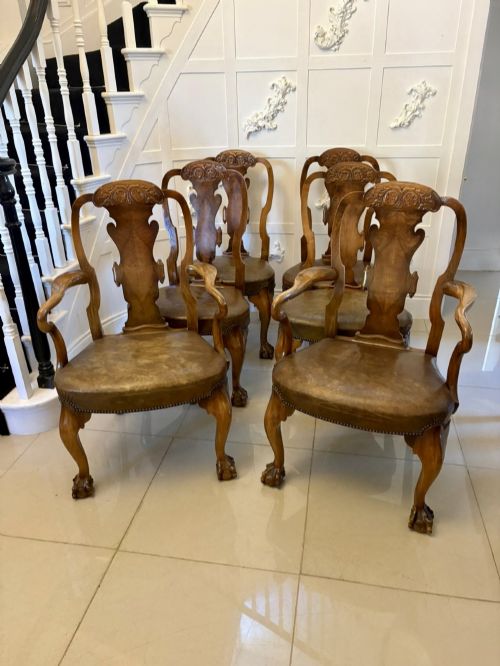
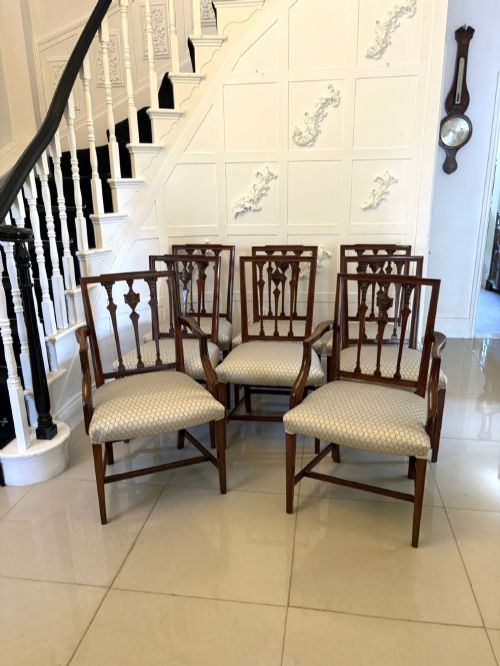
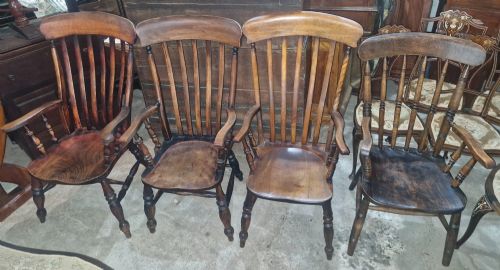
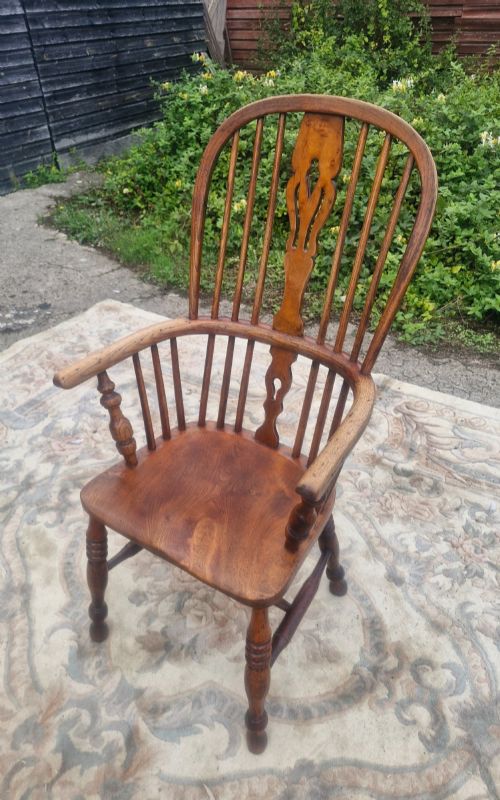
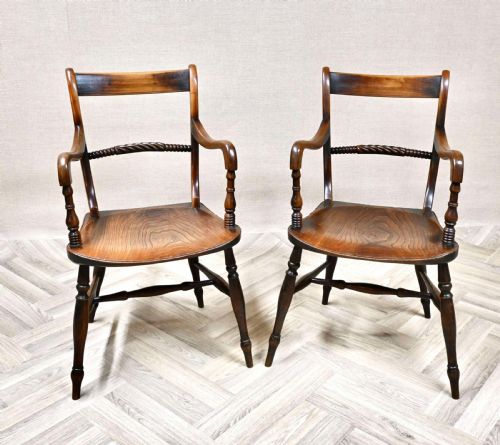
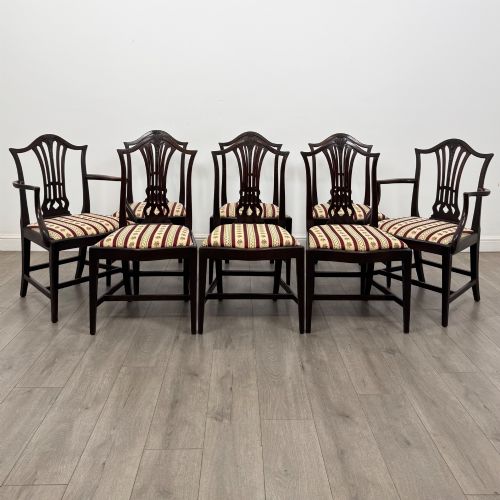
Victorian dining carvers appear in numerous forms across this selection, ranging from formal mahogany balloon backs and shield backs to robust oak farmhouse ladderbacks and spindle backs. These larger armchairs traditionally matched a set of smaller single dining chairs to accommodate the host at the table.
The materials span dense hardwoods such as mahogany, walnut, rosewood, oak, beech, ash and elm, reflecting the diverse domestic and rural workshops of the nineteenth century. Many incorporate upholstered seats covered in fabric, leather or newly applied textiles.
Stylistic influences draw heavily on earlier periods like the Georgian era, producing Chippendale and Hepplewhite revivals alongside Gothic Revival designs, Art Nouveau pieces and country Windsor armchairs.
Materials and construction methods
Cabinet makers utilised solid mahogany, walnut and oak for formal dining carvers, often employing deep hand-carving on the back splats, scrolled arms and cabriole legs. Regional country makers favoured native timbers like ash, elm and beech, turning spindles and bending wood for Windsor and ladderback styles.
Joinery techniques relied on traditional mortise and tenon joints to withstand regular use at the dining table. Seat frames were constructed to hold drop-in pads or webbed upholstery finished with brass studs or plain fabric edges.
Victorian Dining Carvers Retail Price Guide 2026
Typical asking prices for victorian dining carvers among the pieces listed under this phrase on Sellingantiques today, from the lower quarter to the upper quarter. They describe what is for sale here now, not the wider market.
Revival styles span Chippendale, Hepplewhite and Gothic forms alongside rural Windsor and Lancashire ladderback designs.
Distinguishing quality across examples
The grade of timber and the crispness of the hand-carving dictate the distinction between standard workshop production and superior examples. Dense, well-figured mahogany or burr walnut paired with deeply sculpted splats and sturdy arm supports indicates higher craftsmanship.
Structural integrity and original proportions matter significantly, as heavy daily use often led to repairs around the arm joints and leg junctions. Pieces retaining their original timber patination and sound joinery sit at the upper end of the scale.
Howard and Sons·Warings
The Victorian Dining Carvers Glossary
- Carver
- An armchair designed to match a set of dining chairs, traditionally placed at the ends of the table.
- Balloon back
- A rounded, oval-shaped chair back popular during the Victorian period.
- Shield back
- A heart-shaped or shield-shaped chair back associated with eighteenth-century styles revived in the nineteenth century.
- Ladderback
- A chair back featuring horizontal slats resembling the rungs of a ladder, common in country seating.
- Windsor
- A wooden chair constructed with turned legs and spindles slotted into a solid saddle-shaped seat.
Victorian Dining Carvers: Frequently Asked Questions
What is a Victorian dining carver?
A Victorian dining carver is an armchair with wooden armrests built to match a set of dining room chairs. They were placed at the head and foot of the dining table for the hosts.
These chairs date from the nineteenth century and appear in formal mahogany styles as well as country oak and elm versions.
How do I identify a Victorian carver?
Look at the timber, turning details and back design to identify the period and style. Victorian examples often show mahogany, walnut or oak construction with balloon, shield or ladder backs.
Armrests are integrated into the frame construction, frequently curving outwards or terminating in scrolls.
Can carvers be used with modern tables?
Yes, Victorian carvers function well with modern dining tables, provided you check the height of the armrests against the underside of the table rim.
Measuring the clearance ensures the arms slide underneath the table when pushed in.
Were carvers sold alone or in sets?
Makers produced carvers as part of larger dining chair sets, usually including six or eight single chairs and a pair of matching armchairs.
Individual carvers also appear independently, often used as desk chairs or occasional seating in a hallway or bedroom.