




Victorian Dessert Plates Set
These victorian dessert plates set pieces bring nineteenth-century refinement to the table, offering a complete service for seasonal fruit and sweet courses.
Victorian Dessert Plates Set
When searching for a victorian dessert plates set, collectors encounter matched porcelain plates, comprehensive dessert services, and associated serving cutlery. The pieces span the nineteenth century, including notable examples from the eighteen-fifties through to the Edwardian period, often uniting ceramic plates with fitted boxes and silver-plated implements.
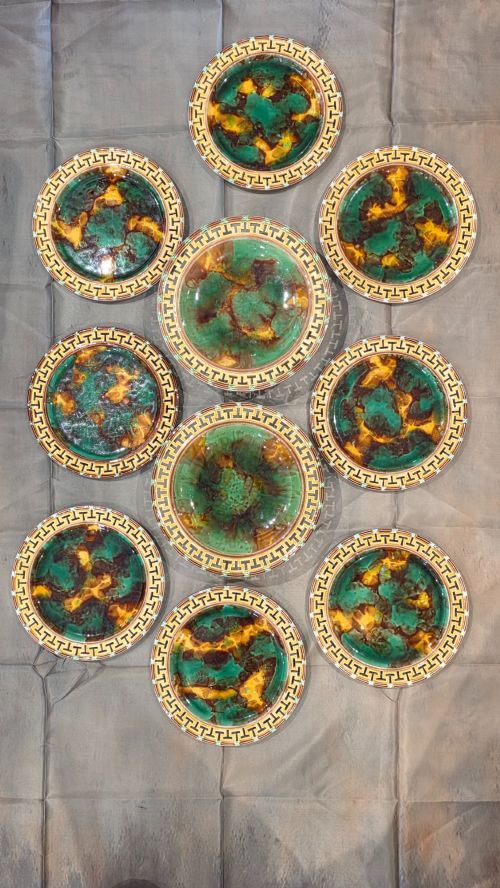
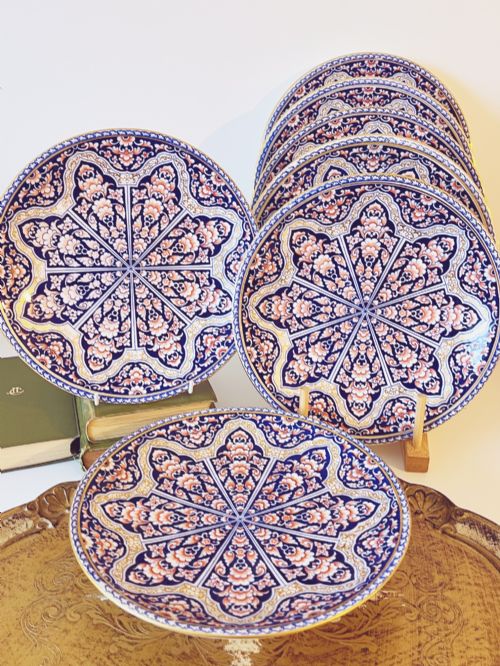
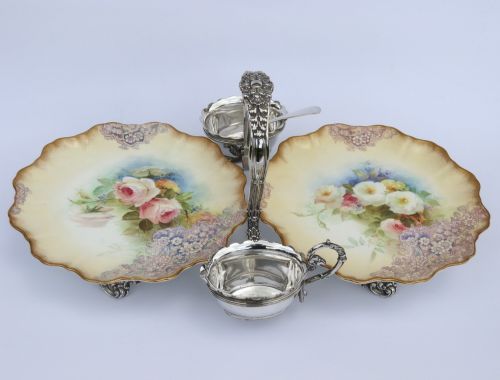
Porcelain serves as the primary medium, represented by majolica glazes, hand-painted botanical or scenic panels, and French-influenced styles. Many offerings comprise a central comport accompanied by six or more plates, whilst other variants pair crystal glass plates or Tonquin China with specialised cutlery.
Makers and potteries recorded in the evidence range from Wedgwood and Royal Crown Derby to Doulton Burslem, John Ridgway, and Kerr & Binns. Buyers frequently select sets that preserve their original presentation, whether housed in oak canteens or arranged as matched groupings.
Materials and Manufacture
Ceramic production relies on traditional porcelain and majolica bodies, shaped and fired before receiving hand-painted decoration or lustrous enamel glazes. Kiln techniques of the period allowed for vibrant green glazes, intricate borders, and detailed gilt highlights that endure on surviving service pieces.
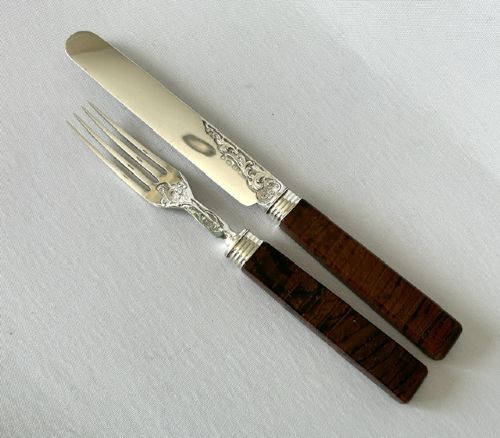
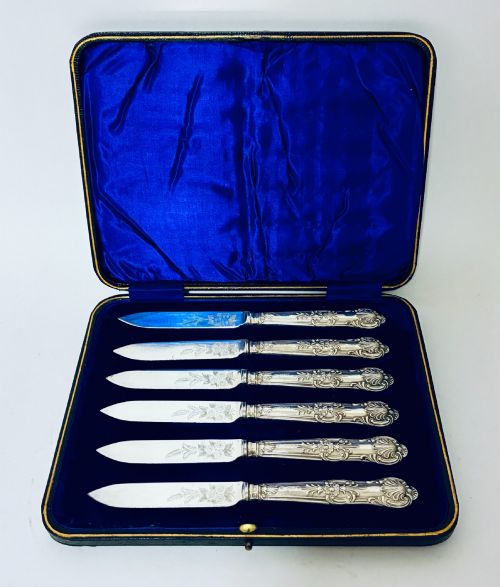
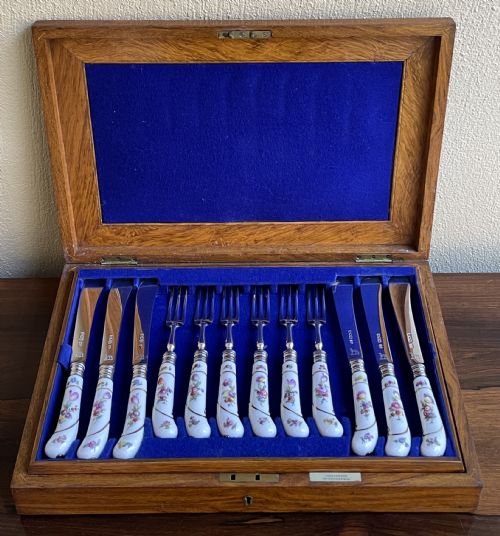
Cutlery and serving implements combine forged steel blades with handles fashioned from mother-of-pearl, carved agate, or silver, secured with silver-plated ferrules. Presentation boxes utilise seasoned oak lined with velvet to house the individual forks, knives, and spoons safely.
Glass components, including free-blown crystal ice plates and decorative bowls, demonstrate mid-nineteenth-century free-blowing and moulding methods. Artisans applied precise finishing touches to both the ceramic edges and metal collars.
Strawberry sets demonstrate the Victorian dedication to specialised dining by requiring dedicated porcelain plates alongside matched silver-plated forks.
Standards of Execution
Distinction in these sets rests upon the crispness of the porcelain modelling and the execution of the hand-painted details. Superior examples exhibit finely rendered brushwork on the glaze and well-balanced forms that sit true on the dining surface.
The degree of completeness within a service influences its character, particularly where original boxes, matched cutlery, and associated comports remain together. Maker attribution, such as documented pieces from registered potteries, adds historical weight to the ensemble.
Metalwork quality shows in the thickness of the silver plating and the secure seating of mother-of-pearl or agate handle scales. Finer sets maintain uniform gilding across all plates and crisp hallmarks on the accompanying cutlery.
Wedgwood·Royal Crown Derby·Daniel Arter·Walker and Hall·John Ridgway·Doulton Burslem·Carrington·Kerr and Binns·Hukin and Heath·Roberts and Belk
The Victorian Dessert Plates Set Glossary
- Comport
- A raised dish or pedestal bowl used centrally in a dessert service to display fruit. It stands higher than the surrounding plates to create tiered visual interest on the table.
- Majolica
- A type of earthenware coated with an opaque tin-lead glaze and decorated with coloured metallic oxides. It is known for rich, saturated hues, particularly deep greens and browns.
- Tonquin China
- A nineteenth-century ceramic body term appearing in trade descriptions for fine imported or domestic dessert wares. It describes dense, durable porcelain formulations of the period.
- Agate
- A cryptocrystalline variety of silica used for ornamental knife and fork handles. Its natural banded patterns provide decorative variation in fruit cutlery sets.
Victorian Dessert Plates Set: Frequently Asked Questions
What pieces comprise a full dessert service?
A standard service typically includes a central footed comport accompanied by six or more matching plates for fruit and sweet courses. Many offerings also incorporate specialised cutlery such as fruit knives, forks, and grape scissors.
Larger configurations extend to twelve or more plates, occasionally supplied with dedicated serving dishes and housed within fitted wooden canteens lined in velvet.
How were dessert sets used?
These services were brought out at the conclusion of formal Victorian dinners for the final course of fruit, nuts, and sweetmeats. Guests used specialised implements like mother-of-pearl handled knives and silver-plated forks designed specifically for soft fruit.
The presentation emphasised visual display on the dining table, utilising raised comports and decorative porcelain plates to showcase seasonal produce.
How do I care for antique dessert plates?
Antique porcelain and silver-plated cutlery require gentle hand washing in lukewarm water with mild soap. Avoid soaking pieces with mother-of-pearl handles or wooden cases to protect the natural materials and adhesives.
Store plates with felt dividers between them if stacked, and keep cutlery in dry conditions to prevent tarnishing on the silver plate.
How can I identify Victorian ceramic styles?
Victorian ceramic styles often combine historical revival motifs, such as French Rococo scrolls and Sevres-style blue borders, with vibrant majolica glazes. Examining the reverse of plates frequently reveals impressed maker marks, registration diamonds, or hand-painted pattern numbers.
Comparing the decorative technique, whether hand-painted or transfer-printed, helps determine the period and workshop origin of the service.