


Green Glazed Ceramic Plates
Green glazed ceramic plates bring centuries of kilncraft to the table, offering rich surfaces that transform a simple display into a study of historic glaze chemistry.
Green Glazed Ceramic Plates
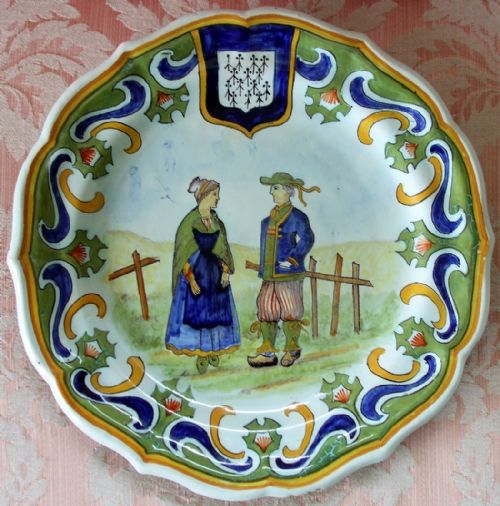
Green glazed ceramic plates encompass an international range of historic tablewares and decorative dishes spanning from pre-sixteenth century wares to the twentieth century. When exploring green glazed ceramic plates on this page, buyers frequently encounter earthenware, tin-glazed earthenware, and celadon-glazed pieces originating from English, French, Dutch, German, and Asian traditions.
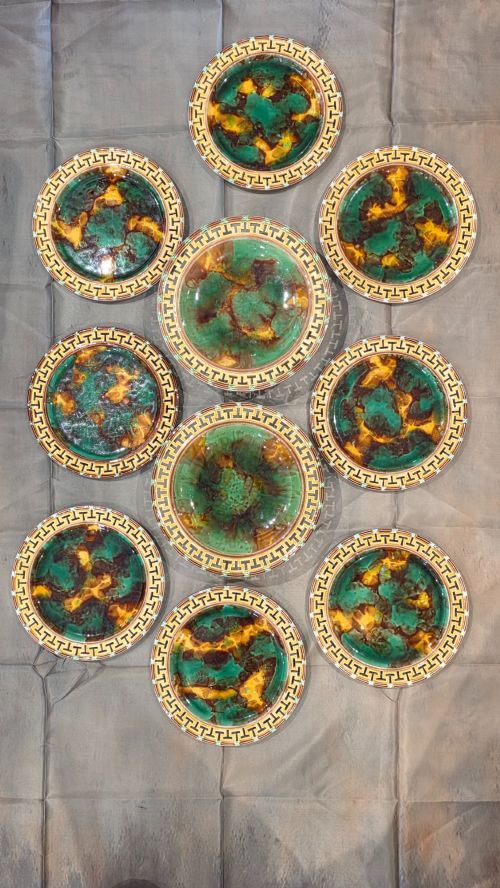
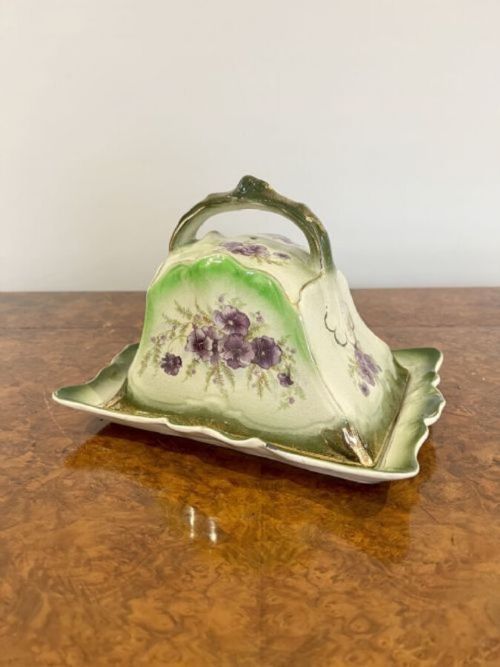
The selection ranges from nineteenth-century majolica dessert services and bread plates to antique French faience dishes and Chinese Longquan celadon bowls. Buyers often find specialised forms such as cheese dishes, food warmers, and large decorative chargers alongside standard plates and bowls.
Materials and production methods
Potters shaped these wares from local or refined clays, forming earthenware and ceramic bodies by hand, wheel, or mould. Artisans then applied liquid slips and mineral-based glazes to achieve the characteristic green coloration before firing the pieces in traditional kilns.
Specialised techniques include the tin-glazing of European faience and delftware, the high-firing of art pottery and celadon, and occasional additions of hand-painting or gilding over the finished glaze surface.
Fish swim perpetually across several centuries of ceramic history, decorating twin fish dishes long before they reach modern dining rooms.
Assessing quality and execution
Quality reveals itself in the depth and consistency of the glaze layer, where controlled kiln temperatures produce luminous celadon depths or vibrant majolica surfaces without unintended pooling or dry patches. Superior examples display crisp moulding or delicate hand-painted detail that remains sharp beneath the glossy finish.
The sophistication of the ceramic body and the precision of the form further distinguish finer pieces, separating standard utilitarian wares from ambitious chargers and service pieces produced by established potteries.
Wedgwood·Desvres·Veuve Perrin
The Green Glazed Ceramic Plates Glossary
- Celadon glaze
- A transparent green glaze fired over a grey or white clay body, originating in historic China and prized for its jade-like appearance. It relies on iron oxide in a reduction kiln atmosphere to create its signature hue.
- Majolica
- A type of earthenware covered with an opaque tin glaze and painted with metallic oxide colours that fire at high temperatures. This technique creates rich, saturated greens and browns popular in Victorian tablewares.
- Charger
- A large decorative plate or dish used historically for ceremonial service or display rather than everyday dining. These pieces often showcase the most elaborate glazing and modelling of their period.
- Earthenware
- Porous pottery fired at lower temperatures than stoneware or porcelain. It requires a glaze to render it waterproof and forms the substrate for the majority of historic green glazed tablewares.
Green Glazed Ceramic Plates: Frequently Asked Questions
How do I clean antique green glazed plates?
Wash these fragile ceramics by hand in warm water using a mild, non-abrasive detergent.
Avoid soaking pieces with historical crazing or exposed earthenware bodies to prevent moisture damage.
Are these historic plates safe for food use?
Historic glazes from earlier centuries may contain lead or other mobile minerals that can leach into acidic foods.
Treat these items primarily as decorative objects or display pieces rather than active tableware.
What is the difference between majolica and celadon?
Majolica uses an opaque tin glaze over earthenware with painted surface decoration popular in nineteenth-century Europe.
Celadon is an Asian high-fired green glaze where the colour stems from iron within the glaze chemistry itself, creating jade-like depth.
How can I date an old green glazed dish?
Examine the base, weight, and potting characteristics to determine whether the piece aligns with Victorian earthenware, European faience, or earlier Asian traditions.
Glaze crackle, kiln marks, and wear patterns on the underside offer further clues regarding age.