


Victorian Desk Globe
These Victorian desk globe examples bring the nineteenth-century world into a study, offering brass stands and paper gores that map empires long shifted.
Victorian Desk Globe
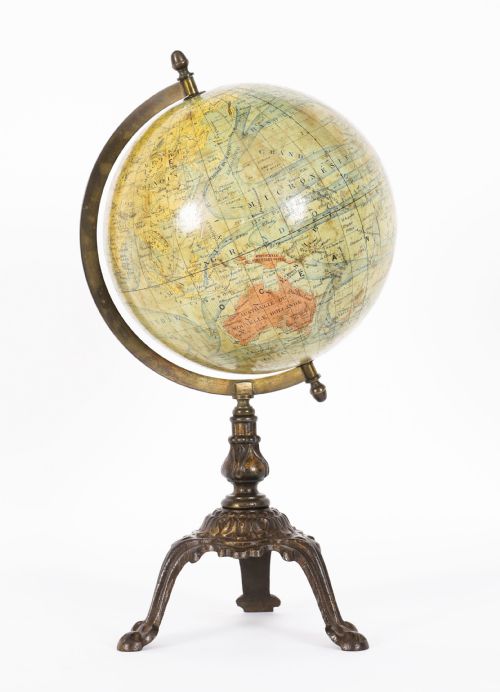
A victorian desk globe sits on a table or library surface, bringing nineteenth-century geography and cartography together in a compact form. The selection on this page ranges from compact miniature globes to larger twelve-inch and eighteen-inch terrestrial examples supported by brass hardware.
Most pieces date from the nineteenth century, including specific items from eighteen eighty and the broader Victorian and Edwardian eras. Makers such as Malby's and Crunchley produced these terrestrial models alongside French and German variants.
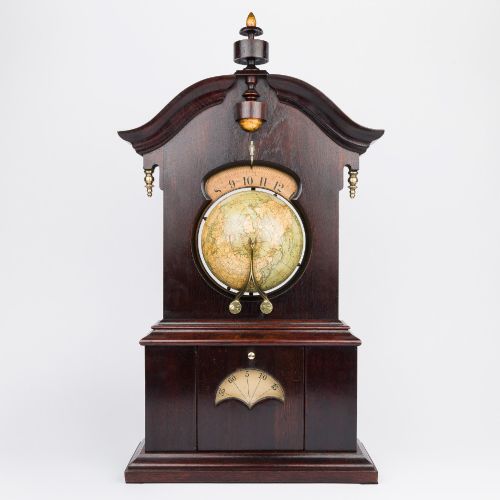
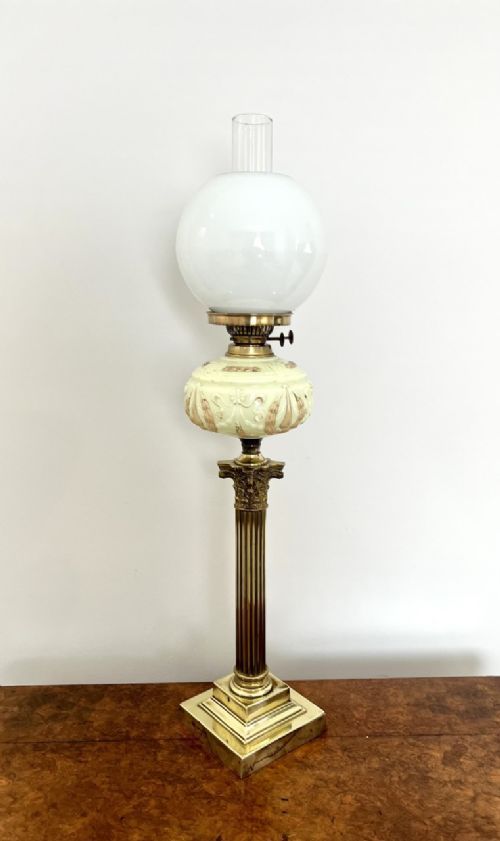
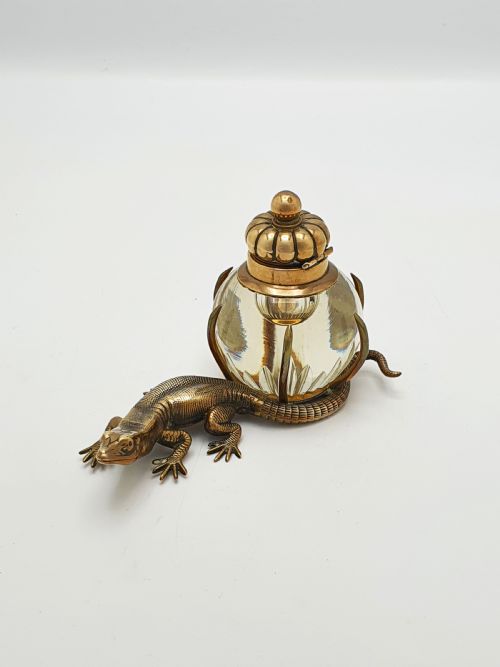
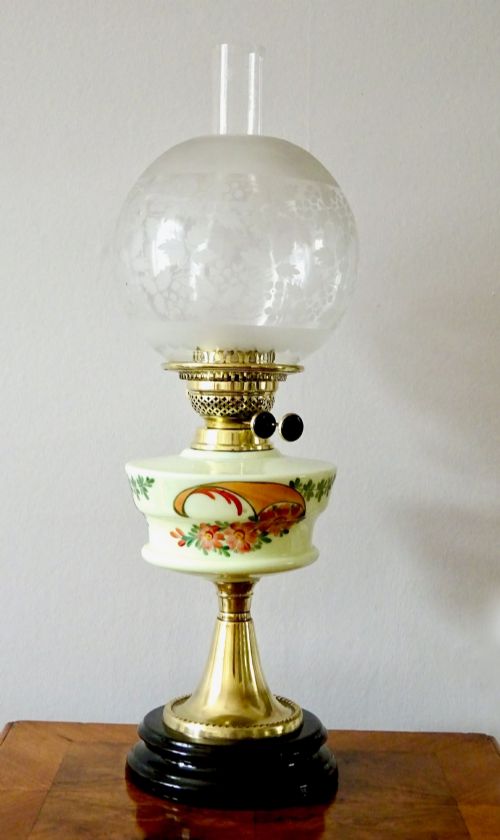
Beyond standard terrestrial globes, the inventory includes related desk accessories and lamps that incorporate globes or spherical glass shades. These items reflect the Victorian appetite for desk equipment that combined practical utility with geographical instruction.
How they were made
Makers constructed these globes using plaster spheres covered with printed paper gores, which were hand-applied to represent the surface of the earth. These paper maps were paired with brass half-meridians and stands fashioned from wood or cast iron.
Metal components involved brass casting and turning, visible in the horizon rings and supportive mountings that allowed the sphere to rotate. Glass and opaline elements appeared frequently in associated lamps and shades of the period.
One nineteenth-century German miniature globe measures just four inches across, proving that Victorian mapmakers had a fondness for pocket-sized geography.
What varies in quality
The precision of the cartographic printing and the clarity of the paper gores separate standard examples from superior pieces. Crisp, legible cartography and intact geographical details reflect the original production standard.
The quality of the mountings, particularly the casting and finishing of the brass hardware and the stability of the stand, dictates the overall integrity of the piece. Surviving in original condition with well-preserved paper and unpolished metal marks the higher tier.
Malby's·Crunchley·Lebegue and Cie·Gaggenau
The Victorian Desk Globe Glossary
- Terrestrial globe
- A spherical model of the Earth depicting continents, oceans, and political boundaries of the period. These were designed for desktop use in libraries and studies.
- Gores
- Tapered strips of printed paper applied to the plaster sphere of a globe to form a continuous map. Each gore is narrow at the poles and wider at the equator.
- Opaline glass
- A milky, semi-translucent glass used for nineteenth-century lamp shades and globe-form shades. It softened the light while providing a smooth surface finish.
- Brass
- A copper and zinc alloy utilised extensively for the stands, rings, and fittings of nineteenth-century desk accessories. It was polished or left with a patinated finish.
Victorian Desk Globe: Frequently Asked Questions
What is a victorian desk globe?
A victorian desk globe is a portable geographical sphere produced during the nineteenth century, designed to sit on a desk or library table for reference.
These pieces typically feature printed paper gores mounted on a plaster core, supported by a brass meridian and a wooden or metal stand.
How do I know the date of a globe?
The geographical boundaries and place names printed on the paper gores provide the primary clue for dating a terrestrial globe. Political entities and colonial possessions changed frequently throughout the nineteenth century, reflecting the era in which the globe was printed.
Makers often included publication dates or firm names directly on the cartouche attached to the sphere.
Where were these globes placed?
Owners kept these globes on library desks, study tables, and bureau surfaces where they could be consulted easily. They served both as educational tools and as decorative desk accessories in nineteenth-century homes and offices.
Smaller miniature versions were also produced for compact spaces or schoolroom use.
How do I care for a paper globe?
Paper globes require placement away from direct sunlight to prevent the printed gores and colours from fading. Keeping them in a stable environment with moderate humidity protects the paper and the underlying plaster sphere from cracking.
Dusting should be done gently with a dry, soft cloth without applying liquids or cleaning agents to the paper surface.