

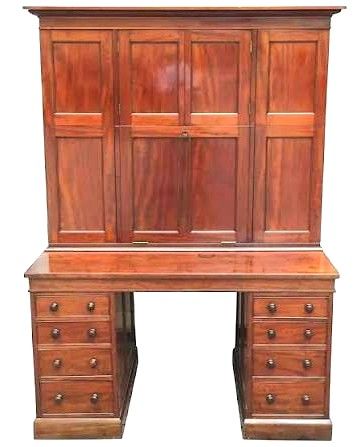
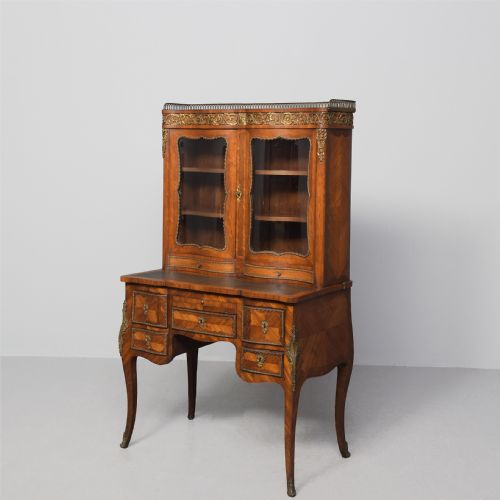
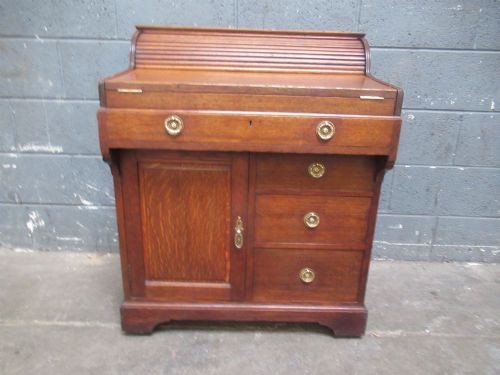
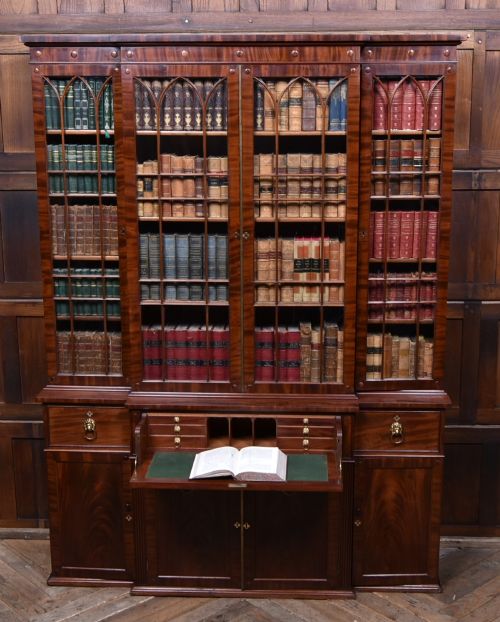
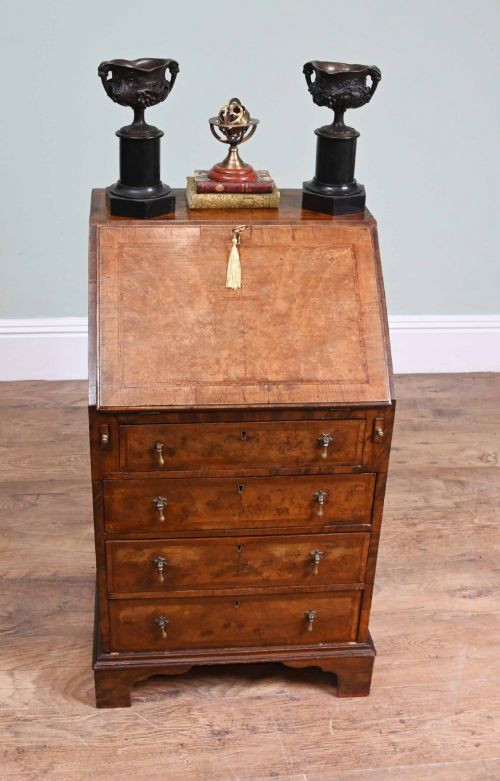
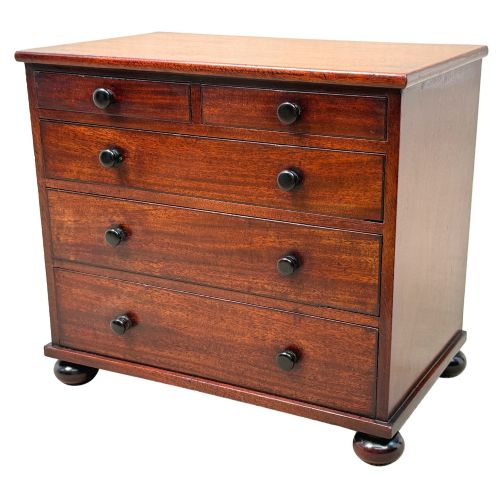
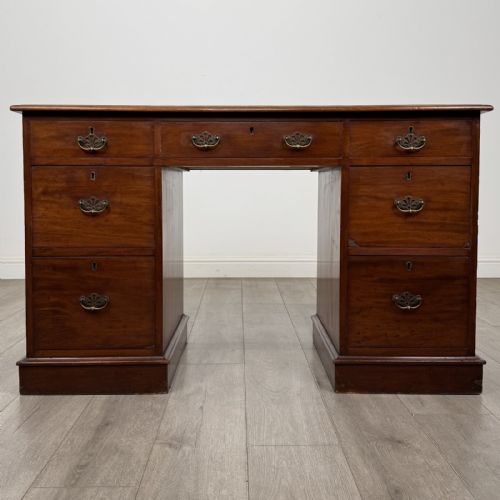

Victorian Desk Cabinet
When you search for a victorian desk cabinet, you are looking at compact pieces designed to house correspondence and writing materials with architectural refinement.
Victorian Desk Cabinet
A victorian desk cabinet encompasses compact stationery boxes, tabletop chests, and davenports designed for the correspondence needs of the nineteenth century. These pieces combine small-scale cabinetry with specialised compartments for paper, ink, and ledgers.
You are most likely to encounter desktop stationery boxes in burr walnut or mahogany, alongside slope-front davenports and miniature bureau bookcases from the middle decades of the period. The selection ranges from portable brass-bound desk boxes to substantial pedestal filing cabinets.
The overlap between writing desks and desktop storage creates a varied group of objects where compartments, drop-down fronts, and internal drawers serve the meticulous organisation required by Victorian writers.
Materials and construction
Cabinetmakers utilised dense hardwoods such as mahogany, walnut, and oak as the structural foundation, frequently applying decorative veneers like burr walnut, amboyna, and rosewood to visible surfaces. These timbers were selected for both stability and the rich grain patterns displayed across writing slopes and cabinet doors.
Brass mounts, hinges, and inlaid banding provide structural reinforcement and decorative contrast against the dark woods. Interior fittings often incorporate secondary timbers such as satinwood or pine for small drawers and pigeonholes.
French polishing remained the standard method for finishing the timber surfaces, building a smooth gloss that highlights the natural figuring of the wood.
Victorian Desk Cabinet Retail Price Guide 2026
Typical asking prices for victorian desk cabinet among the pieces listed under this phrase on Sellingantiques today, from the lower quarter to the upper quarter. They describe what is for sale here now, not the wider market.
The listings show a strong preference for walnut and mahogany, with burr walnut and amboyna reserved for high-status stationery boxes and davenports.
Assessing craftsmanship
The distinction between ordinary production and superior craftsmanship lies in the selection of veneer figures and the precision of internal joinery. Finer pieces feature book-matched burr walnut or intricate marquetry that wraps continuously around the corners of the cabinet.
Hardware quality signals the original tier of the piece, where hand-chased or cast brass fittings, working locks with original keys, and secret compartments demonstrate a higher standard of execution by the maker.
Gillows·Edwards and Roberts·Gillow and Co·Blake
The Victorian Desk Cabinet Glossary
- Davenport
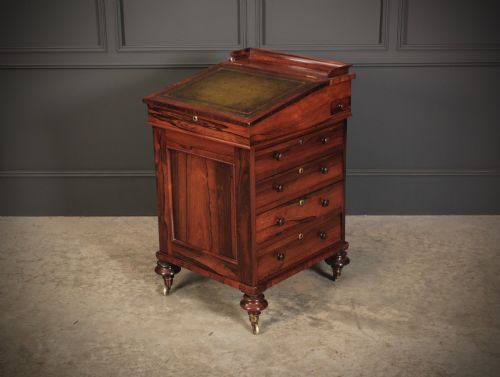
- A small pedestal desk featuring a sloping writing surface above a bank of side drawers. It gained popularity during the nineteenth century for use in drawing rooms and boudoirs.
- Stationery box
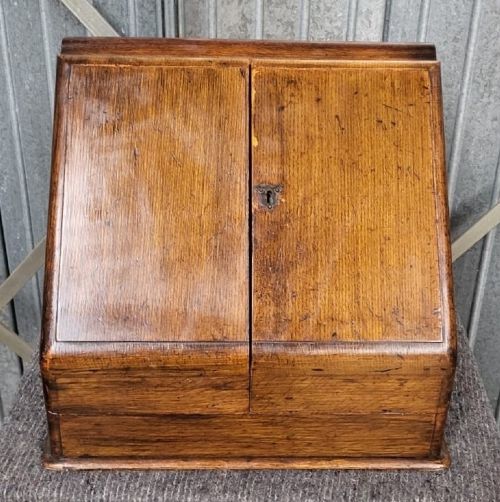
- A desktop cabinet with sloping or folding doors designed to hold writing paper, envelopes, and inkwells. These often feature tiered compartments for organised filing.
- Burr walnut
- A prized timber veneer taken from the excrescences or gnarls of walnut trees. It yields swirling, highly decorative grain patterns utilised on elite Victorian cabinetry.
- Secretaire
- A piece of furniture containing a concealed writing drawer or drop-front desk flap. It allows a chest of drawers or bookcase to double as a writing station.
- Ormolu
- Gilded bronze mounts applied to furniture for decorative effect, frequently seen on revival styles influenced by French cabinetmaking.
Victorian Desk Cabinet: Frequently Asked Questions
What is a davenport desk?
A davenport is a compact writing desk with a sloped, leather-inset top that lifts to reveal storage space. Below the writing slope, a bank of small drawers provides additional room for stationery.
Originating in the Regency era and remaining popular through the Victorian period, these pieces were designed for domestic correspondence in smaller rooms where a full-sized partner desk would prove too large.
How were desktop stationery cabinets used?
These cabinets sat upon large library tables or Davenport desks to hold writing paper, envelopes, and sealing wax. Their tiered interiors kept correspondence organised before the widespread use of manufactured envelopes.
Many included built-in inkwells and pen trays, functioning as portable writing desks that could be moved between rooms or locked to protect private letters.
How can I identify Victorian walnut furniture?
Victorian walnut typically exhibits a warm, rich brown tone with darker grain figuring, particularly when using burr veneer. Craftsmen often paired the timber with brass handles and inlaid stringing.
Examining the secondary timbers inside drawers, such as oak or pine, helps confirm the nineteenth-century construction methods alongside hand-cut dovetailing.
What is an apprentice piece?
An apprentice piece is a miniature item of furniture created by a craftsman in training to demonstrate mastery of joinery techniques. These scaled-down chests and bureaus feature the same construction details as full-sized examples.
Collectors prize them for their meticulous proportions and the high skill level required to execute complex joints on a small scale.