


Victorian Decorative Wall Shelf
These victorian decorative wall shelf pieces bring period character and display space to bare walls, built from walnut, mahogany, oak, cast iron and giltwood.
Victorian Decorative Wall Shelf
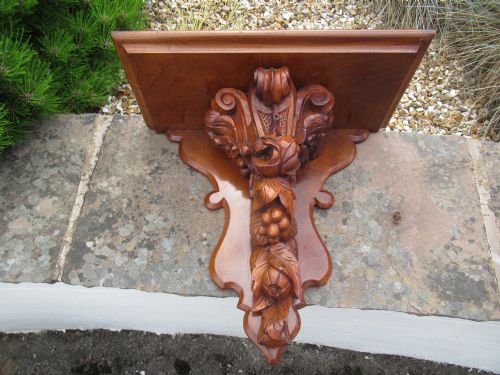
A victorian decorative wall shelf encompasses everything from carved wooden corbels and display brackets to tiered fretwork shelves and overmantel mirror supports. You will most frequently encounter walnut, mahogany and pine pieces featuring Victorian, Rococo Revival and Neoclassical styling.
The selection ranges from architectural salvage and heavy cast iron shelf brackets to delicate porcelain and giltwood wall sconces designed for ornaments. Earlier Regency influences and later 1900 examples sit alongside the core Victorian output, including Anglo-Indian and Burmese variations.
These items served to elevate ornaments, clocks and small books off tables while adding architectural depth to rooms. Surviving examples demonstrate diverse functions, operating as single wall brackets, multi-tiered display shelves or structural supports.
Materials and construction methods
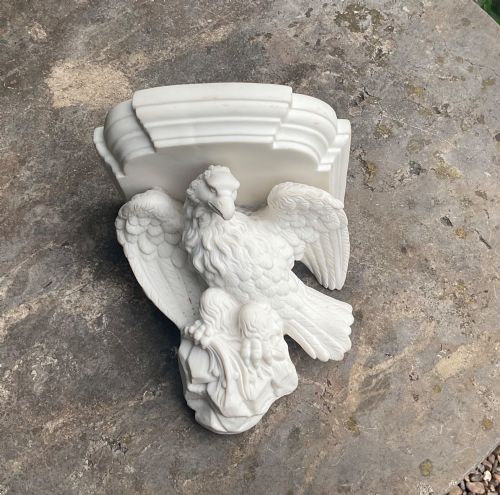
Makers shaped these pieces from a mix of hardwoods such as walnut, mahogany and oak alongside softer pine and carved giltwood. Metal elements utilise cast iron and ormolu, while specific decorative brackets incorporate parian ware, plaster and ceramic.
Construction relies heavily on hand-carving for wooden corbels and brackets, alongside fretwork piercing for multi-tiered shelves. Giltwood pieces combine carved wooden bases with applied gold leaf or gilding, while cast iron brackets employ foundry moulding techniques.
Current and archive entries feature styles ranging from Rococo Revival and Neoclassical to Victorian Gothic and industrial.
Distinctions in craftsmanship and finish
Quality reveals itself in the crispness and depth of the hand-carving on wooden corbels and display brackets, where sharp foliage and animal details distinguish finer work. Superior giltwood and ormolu finishes show careful application and intact metallic lustre, whereas lesser examples appear flat or heavily worn.
Material selection dictates the structural integrity of the piece, with dense hardwoods like walnut and red walnut offering superior durability compared to softer pine or plaster mounts. The complexity of the design, such as multi-tiered fretwork or integrated mirrored panels, marks out ambitious workshop production.
The Victorian Decorative Wall Shelf Glossary
- Corbel
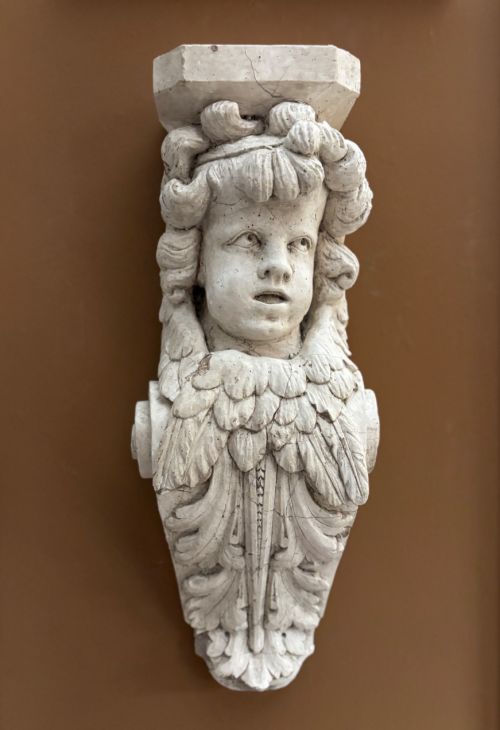
- A structural bracket projecting from a wall to support a weight, often carved with scroll or acanthus leaf motifs. They function both as weight-bearing architectural elements and purely decorative wall shelves.
- Giltwood
- Wood that has been covered with a thin layer of gold leaf or gold paint. This finish creates a bright, reflective surface popular on Victorian display brackets and mirrors.
- Ormolu
- Gilded bronze or brass applied to decorative objects and furniture mounts. It provides a rich metallic accent on ceramic and wood wall brackets.
- Parian
- A fine white porcelain resembling marble, developed in the nineteenth century. It was frequently used for figurative wall brackets and sculptural mounts.
- Fretwork
- Ornamental woodwork perforated with patterns, often seen in tiered hanging shelves. This technique creates a lightweight, intricate silhouette.
- Overmantel
- A decorative framework or mirror placed above a fireplace mantelpiece. Surviving examples often incorporate matching gilded brackets or shelves.
Victorian Decorative Wall Shelf: Frequently Asked Questions
How were wall shelves used in Victorian homes?
Victorians mounted these shelves to display ceramic plates, clocks, figurines and small ornaments, keeping surfaces clear and drawing the eye upward.
They appeared in parlours, hallways and studies where wall space offered an extra opportunity to showcase decorative objects and personal collections.
What materials are most common for these shelves?
Timber forms the majority of pieces, with walnut, mahogany and oak favoured for their grain and strength alongside carved pine.
Cast iron appears on industrial and structural brackets, while giltwood, plaster, porcelain and brass define the more ornate decorative sconces.
How do I securely mount a heavy cast iron bracket?
Heavy cast iron and large wooden corbels require direct anchoring into wall studs or solid masonry using appropriate fixings.
Due to the weight of the iron or dense hardwoods, checking the wall structure ensures the bracket safely supports additional display items.
How can I tell a Victorian bracket from a later copy?
Examine the rear fixing points, screw types, tool marks and the natural ageing of the wood, metal or gilt surface.
Victorian pieces often show hand-cut joinery, period-specific fixings and authentic wear patterns that modern reproductions struggle to replicate.