


Victorian Decorative Porcelain Ornament
These Victorian decorative porcelain ornaments bring expressive nineteenth-century craftsmanship into your home through painted figures, vases, and sculptural table pieces.
Victorian Decorative Porcelain Ornament
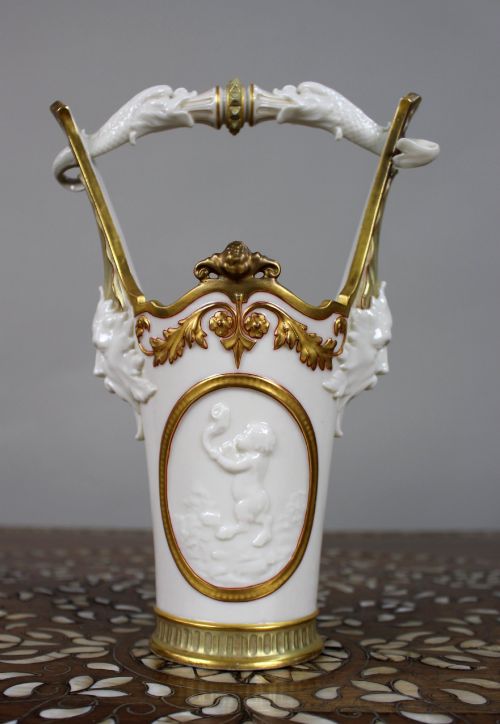
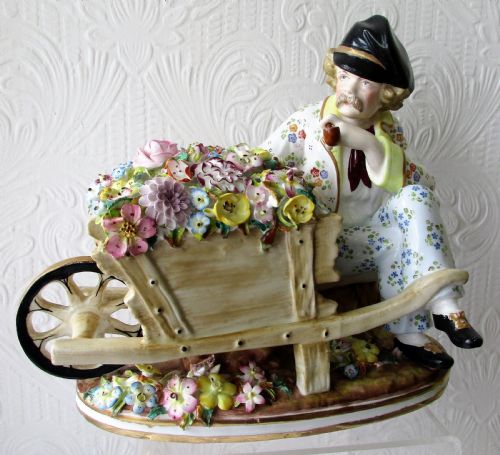
A Victorian decorative porcelain ornament encompasses nineteenth-century ceramic figures, vases, and jardinieres designed to adorn domestic interiors. These pieces take the form of human figurines, mythological subjects, animal studies, and structural vessels intended purely for display.
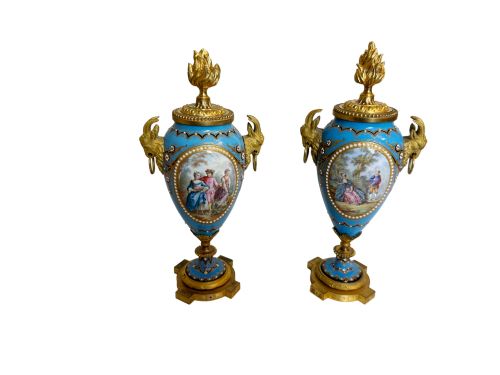
The versions most commonly met on this page include nineteenth-century porcelain and bisque figures, ewers, and posy holders shaped during the Victorian era and the Edwardian period. Makers utilise varied styles ranging from Rococo Revival to Neo-Classical and Orientalism.
Buyers encounter subjects such as rustic fisher folk, musicians, cherubs, and children modelled with distinct regional and factory characteristics. These objects reflect the Victorian appetite for narrative sculpture and finely painted domestic ceramics.
Materials and production methods
Potters shape these ornaments using porcelain, earthenware, and unglazed bisque porcelain, applying coloured glaze, enamel, and gold leaf for surface enrichment. Bisque porcelain provides a matte, marble-like texture favoured for sculptural figures and portrait groups.
Factories combine slip casting and manual modelling to build complex forms such as cassolettes, ewers, and multi-figure groups. Painters then apply delicate enamels and gilding before firing the ceramics in kilns to fix the colours.
Listings feature nineteenth-century and Edwardian materials including glazed ceramic, enamel, gold leaf, and unglazed bisque porcelain.
Distinctions in craftsmanship
Quality rests in the crispness of the modelling and the precision of the hand-painted enamels, gilding, and pate-sur-pate decoration. Finer pieces retain sharp facial expressions, delicate fingers, and intricate surface textures without blurring in the kiln.
The ambition of the design separates standard factory output from exceptional sculptural groups, exhibition vases, and marked studio pieces. Master modellers and renowned factories achieve a lifelike fluidity in drapery and anatomy that simpler wares lack.
Royal Worcester·John Bevington·James Hadley·Royal Dux·Sitzendorf
The Victorian Decorative Porcelain Ornament Glossary
- Bisque porcelain
- Unglazed ceramic fired to a matte, porous finish that resembles white marble. This material is frequently used for nineteenth-century portrait sculptures and piano babies.
- Cassolette
- A decorative vessel designed with a reversible lid that functions either as a vase or a perfume burner. These twin-handled containers often feature enamel and gilt details.
- Pate-sur-pate
- A method of porcelain decoration where wet white slip is built up in successive layers on a coloured clay body to create a low relief cameo effect. Minton famously utilised this technique.
- Flatback
- A ceramic figure modelled with a detailed front and a flat, unpainted reverse side designed to sit flush against a wall. Staffordshire potters produced these figures in large quantities for mantelpiece display.
Victorian Decorative Porcelain Ornament: Frequently Asked Questions
What are piano babies?
Piano babies are bisque porcelain figures of resting infants and toddlers produced during the late nineteenth and early twentieth centuries. Manufacturers originally designed these heavy ceramic figures to sit on the polished wood of upright pianos.
Over time, collectors repurposed them as decorative shelf ornaments and cabinet pieces. Their untreated matte surfaces display the fine hand-modelled details typical of Victorian bisque production.
How do I care for antique porcelain?
Antique porcelain requires gentle dusting with a soft, dry brush to prevent dirt accumulation on painted surfaces and gilt details. Avoid using water or chemical cleaners, particularly on unglazed bisque or delicate enamel work.
Keep these ornaments away from direct sunlight and areas prone to sudden temperature changes. Stable indoor conditions protect fragile applied elements such as porcelain flowers and delicate fingers.
What is Parian ware?
Parian ware is a type of fine white bisque porcelain developed in the nineteenth century to imitate carved marble. Copeland and other British factories used this dense material to cast portrait busts and sculptural group figures.
The smooth, grainless texture allows light to penetrate slightly beneath the surface, giving figures a luminous quality. Parian ornaments celebrate classical subjects and contemporary narrative scenes.
How do I date these ornaments?
Dating relies on factory registration marks, impressed numbers, and stylistic cues linked to the Victorian, Edwardian, and nineteenth-century periods. Stylistic shifts from Rococo Revival curves to classical Neo-Classical symmetry help narrow the era of production.
Examining the base for maker ciphers or artist signatures provides further chronological clues. Comparative study of known factory output confirms specific decades of manufacture.