


Victorian Decanter Frame
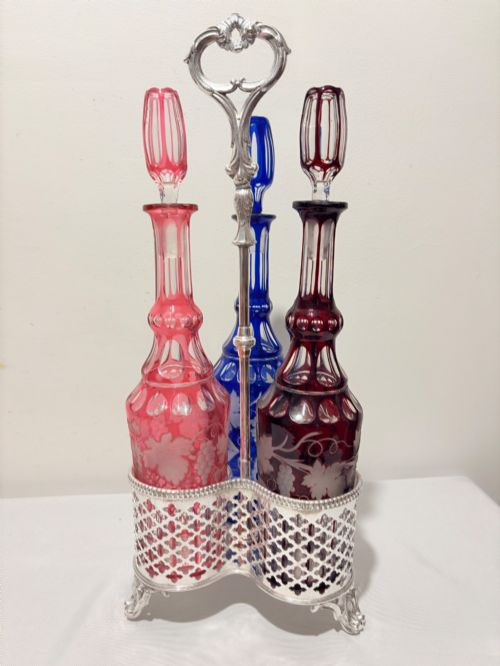
A victorian decanter frame holds your bottles securely in silver plate and wood, bringing period hospitality straight to the sideboard.
Victorian Decanter Frame
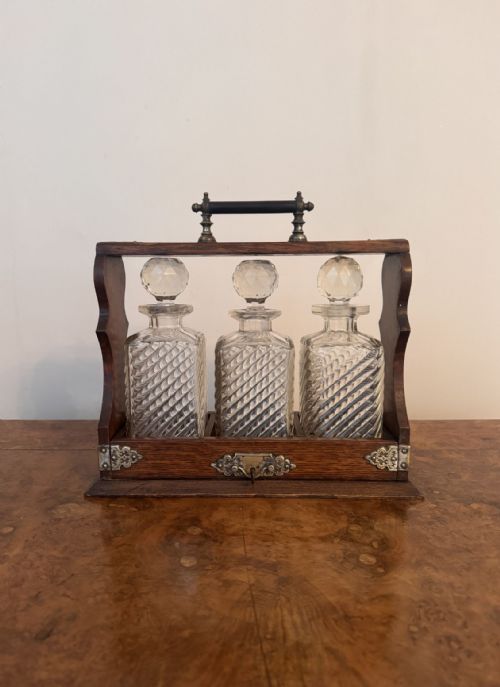
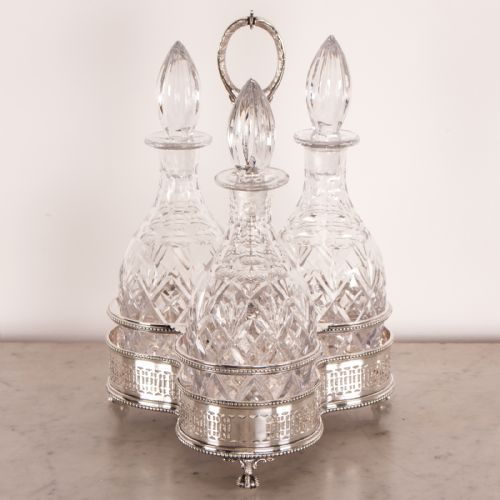
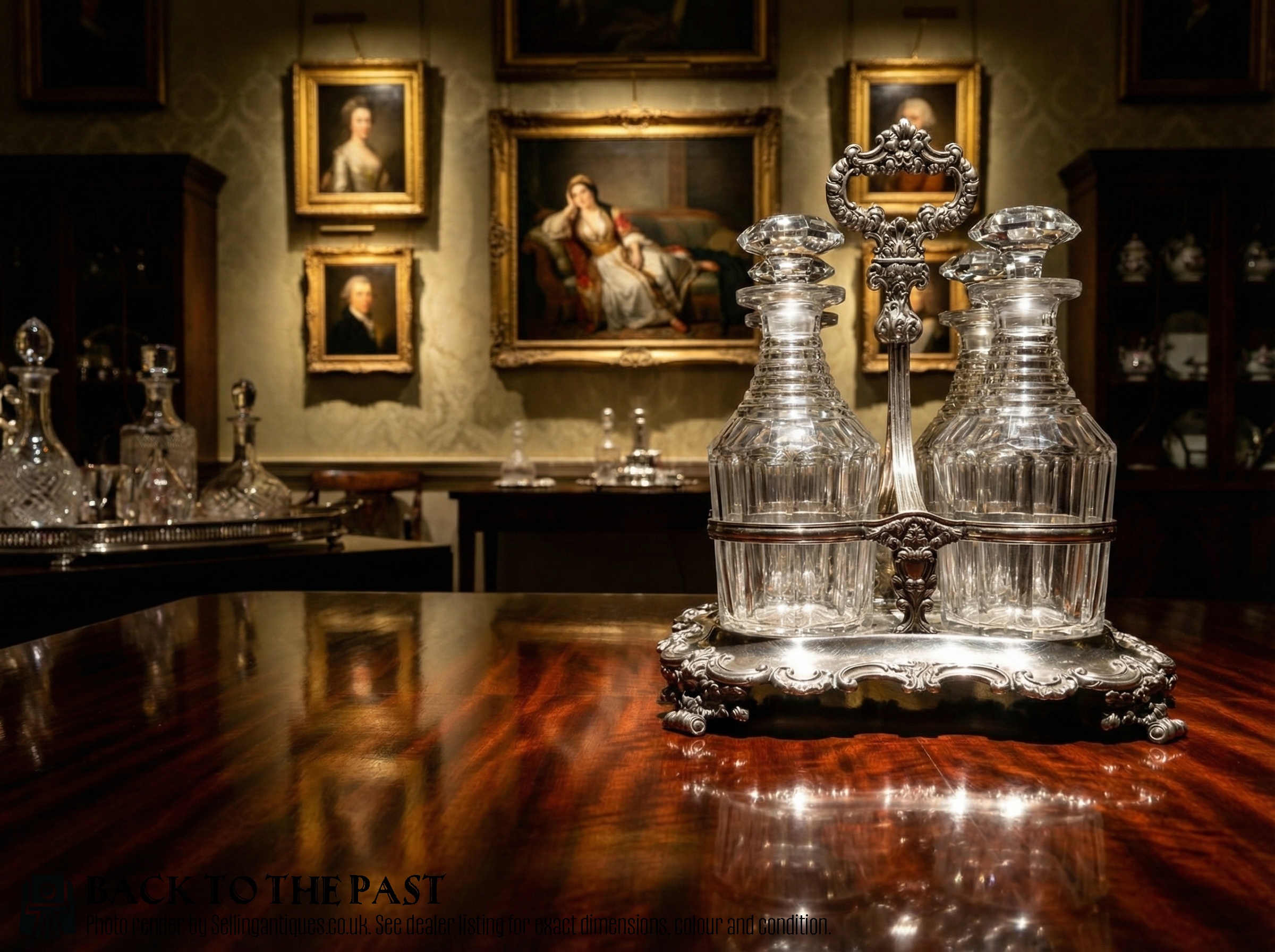
A victorian decanter frame organises several bottles within a portable metal stand or a fitted wooden box, often incorporating locking mechanisms to secure the contents. These pieces appear primarily from the Victorian and Edwardian periods, stretching from the mid-nineteenth century into the early twentieth century.
The versions you meet most frequently on this page combine silver plated stands with cut glass or cut crystal decanters, alongside oak or walnut cased tantalus designs. Formats range from simple single bottle holders and liqueur stands up to substantial three bottle and seven bottle arrangements.
Makers housed these vessels in open metal frameworks or enclosed them in wooden boxes featuring central shields and carrying handles. The object types span decanter sets, stands, tantaluses, and cruet sets intended for entertaining.
Materials and construction
Silversmiths and manufacturers formed the metal frameworks using silver plate over a base metal, alongside solid silver or brass components. Wooden cases utilised oak, walnut, coromandel, and inlaid woods to house the glass vessels securely.
The glass elements relied on cutting and engraving techniques to create faceted surfaces on clear, coloured, blue, green, and cranberry glass. Makers integrated locking bars and hinges to secure the bottles within their respective stands.
Locking mechanisms were invented specifically to keep servants from sampling the master's best whisky.
Assessing quality and craftsmanship
Quality rests on the depth of the metal plating and the presence of maker marks from established firms. Heavier timber construction and intricate wood inlays separate standard frames from finer cased examples.
The clarity and precision of the cut glass or crystal decanters dictate the standard of the set, particularly when paired with matching original stoppers and intact locking mechanisms.
Walker & Hall·Elkington·The Goldsmith Co·Hukin and Heath·Philip Ashberry
The Victorian Decanter Frame Glossary
- Tantalus
- A locking drink cabinet or frame that holds decanters securely so they remain visible yet inaccessible without a key. This mechanism typically slides a bar across the bottle stoppers.
- Silver Plate
- A thin layer of silver fused to a base metal such as copper or brass. This technique allowed manufacturers to produce durable tableware with the appearance of solid silver.
- Cut Glass
- Glass shaped and patterned by holding it against rotating wheels, creating sharp geometric facets. It catches the light differently than mould-pressed glass.
- Cruet Set
- A matched collection of small bottles or jars held in a single frame for holding condiments, oils, or vinegars. They appear in nineteenth-century dining settings.
- Coromandel
- A dense, heavy timber imported from Asia, featuring dark brown colouring with dramatic black grain patterns. Cabinetmakers used it for luxury nineteenth-century boxes and frames.
Victorian Decanter Frame: Frequently Asked Questions
What is the difference between a decanter frame and a tantalus?
A decanter frame is an open stand that holds bottles for easy lifting and pouring at the table. A tantalus encloses the bottles within a locking framework that prevents removal until unlocked with a key.
While both serve the same fundamental purpose of holding barware, the locking variant provides security for expensive spirits.
How do I date a silver plated decanter stand?
Dating relies on maker marks stamped into the metal, stylistic cues from the period, and construction methods. Victorian pieces frequently display registration marks or manufacturer stamps from the mid to late nineteenth century.
Compares the framing style and wood types against documented production eras to narrow down the decade.
Are the decanters in these frames usually original?
Many surviving frames retain their original cut glass or crystal decanters, often shaped specifically to fit the contours of the metal stand. Replacements do occur due to breakages over generations of use.
Examining the wear patterns on the base of the decanters and inside the frame helps determine if they belong together.
How should I clean a silver plated frame?
Clean silver plate gently using a soft cloth and a specialised silver polish formulated for plated items. Avoid harsh abrasives that can wear away the thin silver layer over the base metal.
Wooden cases benefit from appropriate furniture wax to nourish the grain without harming any metal mounts.