



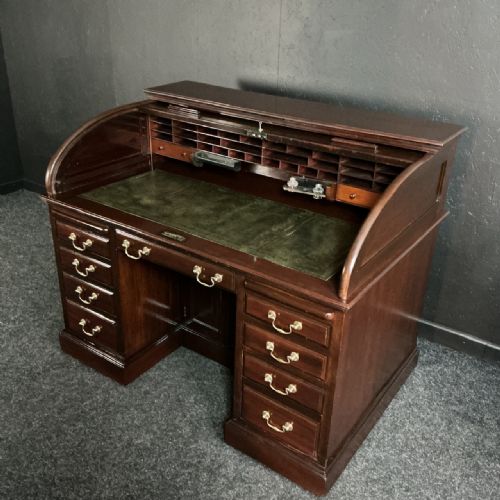


Victorian Cylinder Top Desk
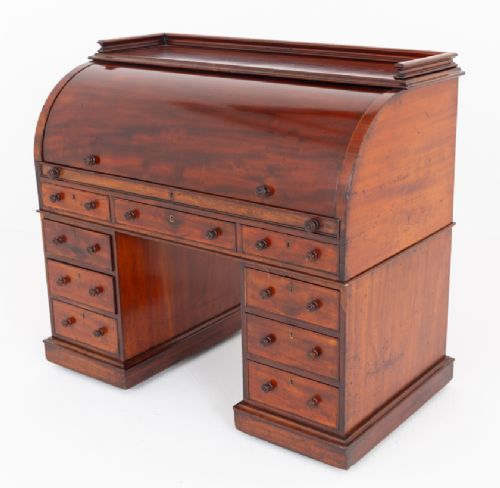
A victorian cylinder top desk conceals your papers beneath a curved wooden shell that rolls smoothly away.
Victorian Cylinder Top Desk
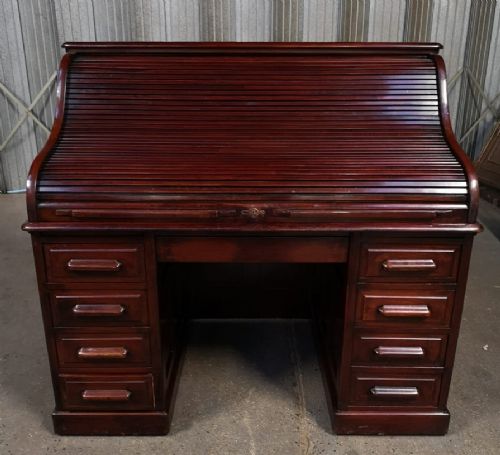
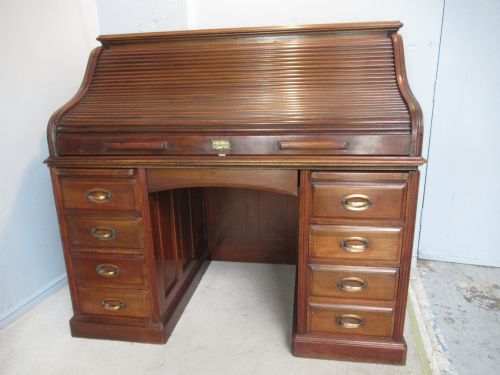
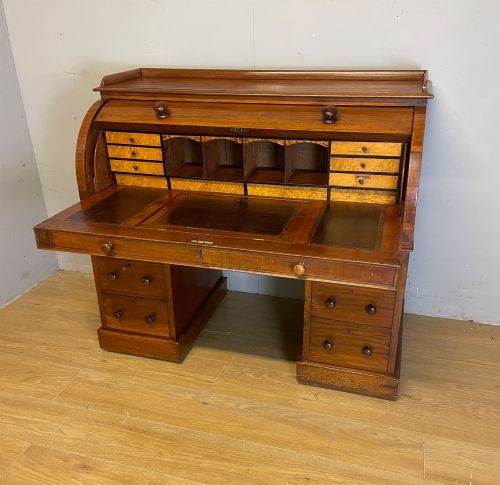
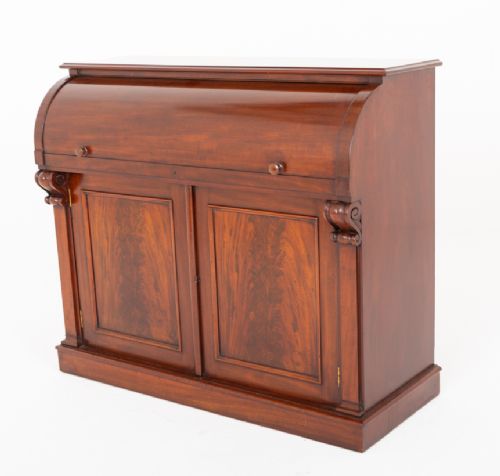
A victorian cylinder top desk provides a private working space by enclosing the writing surface behind a rounded wooden shutter. This mechanism slides upwards into the body of the furniture to reveal pigeonholes, small drawers and a pull-out leather-lined writing slide.
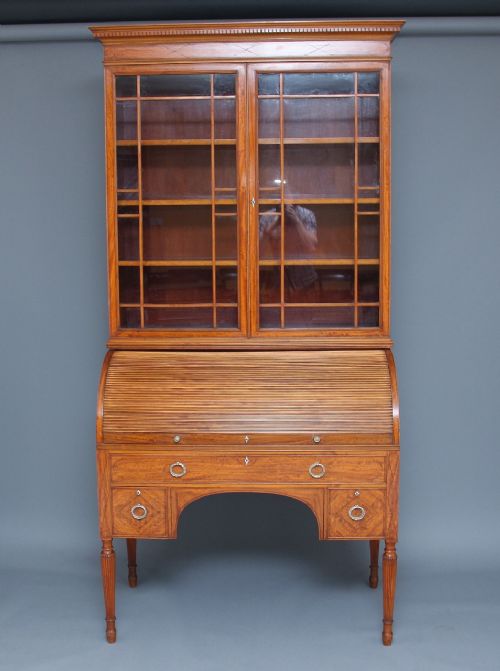
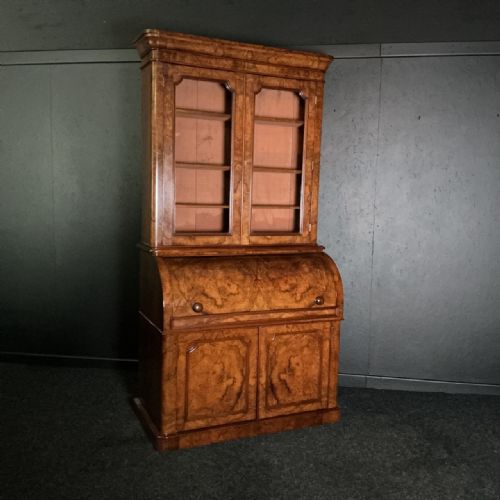
The pieces appearing most frequently on this page date from the nineteenth century and the Edwardian period, constructed primarily in mahogany or walnut. Forms range from compact single-pedestal writing tables to large twin pedestal desks and tall bureau bookcases with glazed display top sections.
Materials and Construction
Cabinet makers constructed the curved cylinder fronts using tightly fitted wooden slats glued to flexible fabric backing or by shaping solid timber to run in routed grooves. Main carcases utilised dense hardwoods like mahogany and walnut, frequently accented with satinwood veneers, brass hardware and inlaid marquetry.
Writing surfaces incorporated inset panels of tooled leather to provide a durable writing plane. Larger pedestal versions utilised a multi-part construction method to allow easier transport of heavy furniture through domestic doorways.
Some desks hide miniature secret drawers behind sliding pigeonhole partitions, designed to keep family letters entirely out of sight.
Assessing Craftsmanship and Distinction
Superior examples demonstrate precision in the rolling cylinder mechanism, which travels smoothly within its tracks without binding or sagging. The choice of timber grain, such as figured walnut or deeply polished mahogany, elevates the visual presence of the furniture.
Internal secondary timbers, dovetail jointing on the small drawers, and the subtlety of brass handles or floral inlay distinguish standard production pieces from workshop commissions bearing maker signatures.
Edwards & Roberts·Jas Shoolbred·Boston Chair Company·Wiggers
The Victorian Cylinder Top Desk Glossary
- Cylinder top
- A curved wooden shutter that rolls back to cover the desk interior. This mechanism differs from a tambour top by using a solid or slat-built curved panel rather than narrow wooden strips.
- Pedestal desk
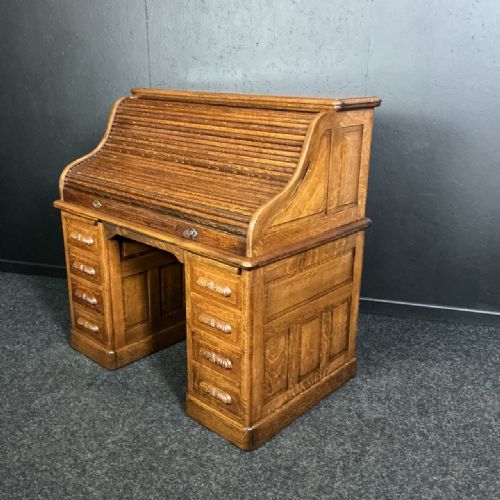
- A heavy writing table built on two supporting stacks of drawers. These units flank a central kneehole space.
- Bureau bookcase
- A combination furniture form featuring a writing desk base with a shelved cabinet top. The upper section frequently incorporates glass panel doors.
- Marquetry
- Decorative veneer work forming pictorial patterns using various coloured woods. Artisans inlaid these geometric or floral designs onto drawer fronts and desktop surfaces.
- Pigeonhole
- A small open compartment built into the upper interior of a desk. These spaces organise letters, envelopes and documents.
Victorian Cylinder Top Desk: Frequently Asked Questions
How do I use the cylinder mechanism?
The curved wooden shutter slides upwards into the body of the desk along curved tracks, often connected to an internal mechanism where pulling out the writing slide automatically retracts the cylinder.
Keep the tracks clean and lightly waxed to ensure the wooden shutter moves smoothly without catching or jamming during daily operation.
How were these desks used historically?
Owners used these desks for private correspondence, storing sensitive documents securely out of sight when the cylinder shutter was locked down.
The fitted interior compartments and pull-out writing surfaces provided a dedicated station for letter writing and household administration before the widespread use of freestanding side tables.
How do I care for the leather writing surface?
The inset leather panel requires gentle cleaning with a slightly damp cloth followed by a neutral leather cream to prevent drying and cracking.
Avoid placing damp items or heavy writing pressure directly onto antique leather surfaces to preserve the original gold tooling and surface texture.
How can I tell a Victorian from an Edwardian desk?
Victorian examples typically feature heavier proportions, dense mahogany or walnut timbers, and darker traditional finishes reflecting nineteenth-century tastes.
Edwardian pieces and Sheraton Revival revivals often exhibit lighter satinwood veneers, brighter inlay work, and more slender proportions suited to turn-of-the-century interiors.