

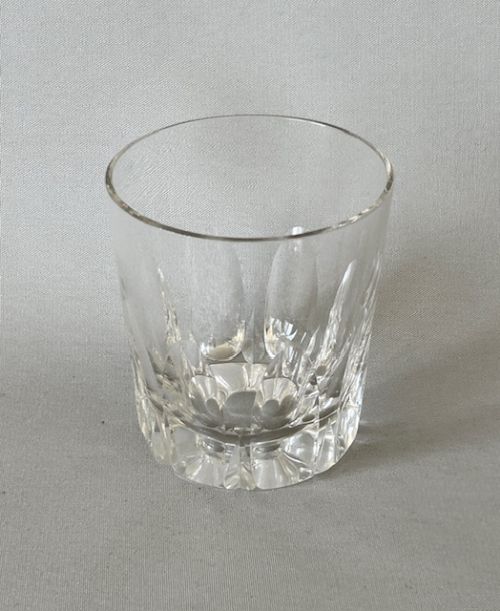


Victorian Cut Lead Crystal
Victorian cut lead crystal gathers the heavy glass vessels and table objects shaped by nineteenth-century wheel cutters to catch the light.
Victorian Cut Lead Crystal
Victorian cut lead crystal comprises heavy domestic and decorative glass objects created during the nineteenth century, ranging from large decanters and rummers to centrepiece bowls and perfume bottles. Buyers looking for victorian cut lead crystal will encounter numerous decanters and drinking vessels alongside pedestal bowls, lustres, and table lamps.
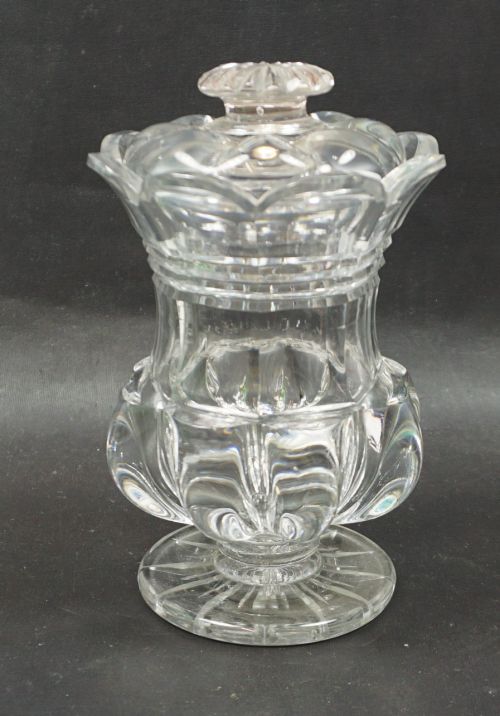
The objects stem predominantly from the Victorian period, with specific pieces dated across decades from eighteen-fifty to nineteen-hundred, alongside related nineteenth-century examples. Forms vary from functional barware like whiskey tumblers and wine decanters to decorative items such as lidded vases and tazza stands.
Materials and production methods
Pieces are formed from lead crystal, lead glass, and clear cut glass, sometimes paired with brass mounts for lighting and door furniture. Artisans shaped the heavy material by blowing and pressing the glass before applying deep wheel cuts and intaglio engraving.
Facet-cut stems and intricate surface patterns were ground into the thick metal by hand, exploiting the high refractive index of lead glass to maximise brilliance and light dispersion.
Victorian Cut Lead Crystal Retail Price Guide 2026
Typical asking prices for victorian cut lead crystal among the pieces listed under this phrase on Sellingantiques today, from the lower quarter to the upper quarter. They describe what is for sale here now, not the wider market.
A heart-shaped Victorian perfume bottle proves that nineteenth-century romance required substantial lead weight.
Distinctions in standard and execution
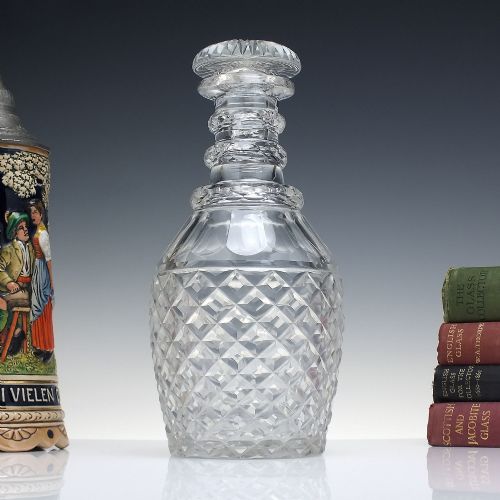
Quality rests upon the crispness and depth of the wheel-cut facets, where sharper angles and cleaner polish distinguish superior examples from softer, shallower cutting. The weight and clarity of the base metal also dictate the standard, with heavy lead crystal offering superior resonance and light play.
Design harmony separates standard production from exceptional work, seen in balanced proportions on decanter bodies, evenly spaced stem facets, and refined engraving rather than hurried surface marking.
Osler
The Victorian Cut Lead Crystal Glossary
- Rummer
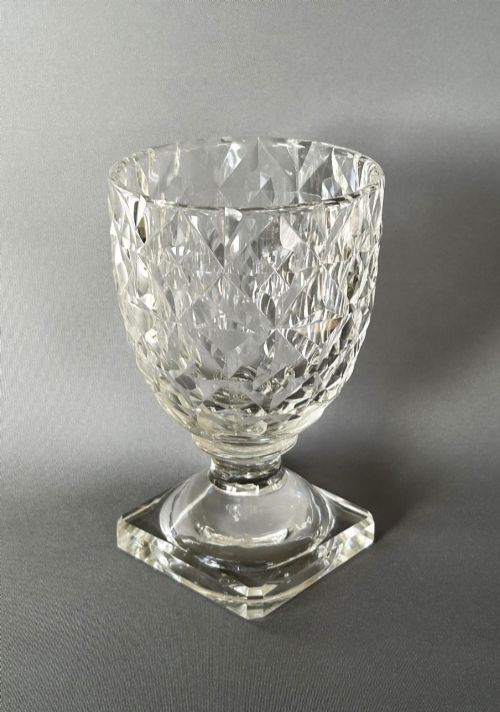
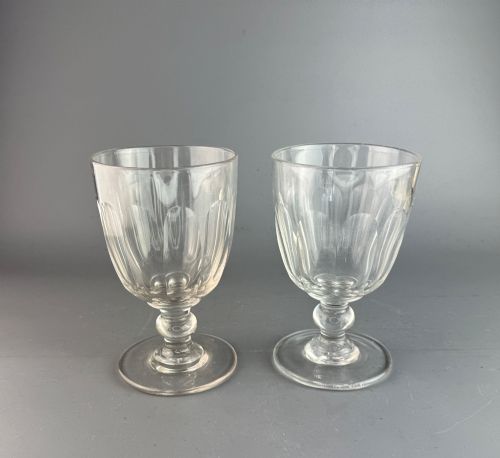
- A large, heavy drinking glass with a short stem and a capacious bowl used for ale or wine during the nineteenth century. These sturdy vessels often display deep vertical flutes or diamond cutting around the lower bowl.
- Tazza
- An ornamental pedestal plate or shallow bowl raised on a central foot for serving fruit or small cakes. Victorian examples frequently combine moulded lead crystal with delicate wheel-etched borders.
- Lustre
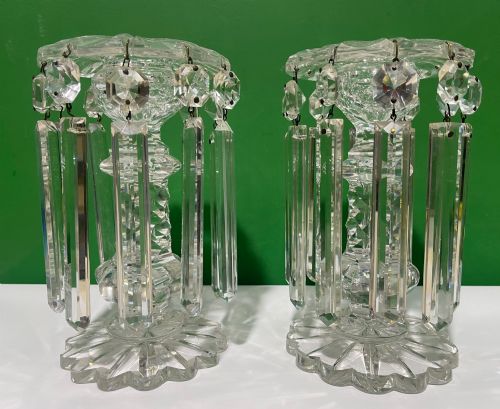
- A decorative tabletop vase fitted with a ring of hanging glass prisms designed to catch and refract candle or gas light. The cut lead crystal pendants dangle from the rim to create shimmering visual effects.
- Intaglio
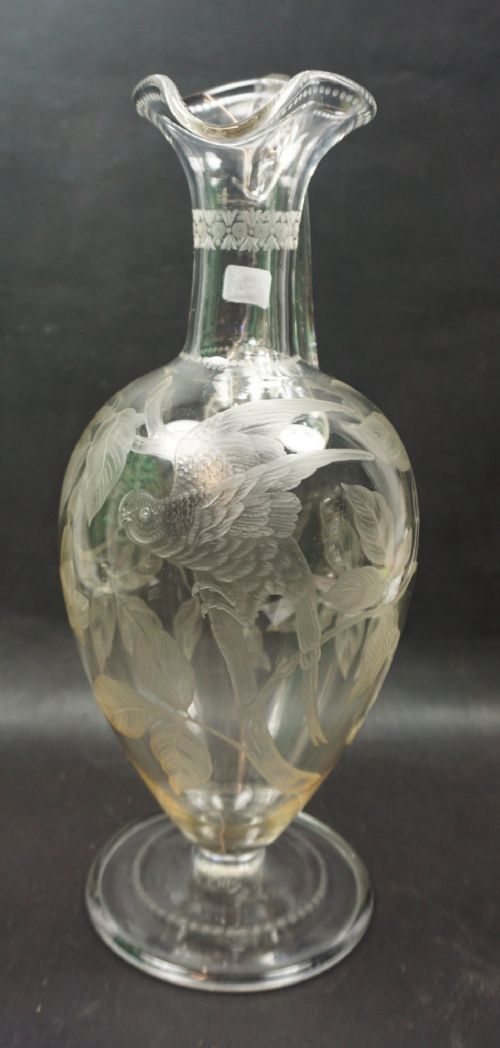
- A design carved into the surface of the glass rather than left in relief, creating a sunken frosted pattern. This technique requires steady hand-control against the rotating cutting wheel.
- Facet cut
- Flat polished planes ground into the surface of the glass to multiply reflections. Stems and shoulders of decanters frequently employ this geometry to give a prismatic grip.
Victorian Cut Lead Crystal: Frequently Asked Questions
Were these decanters meant for daily use?
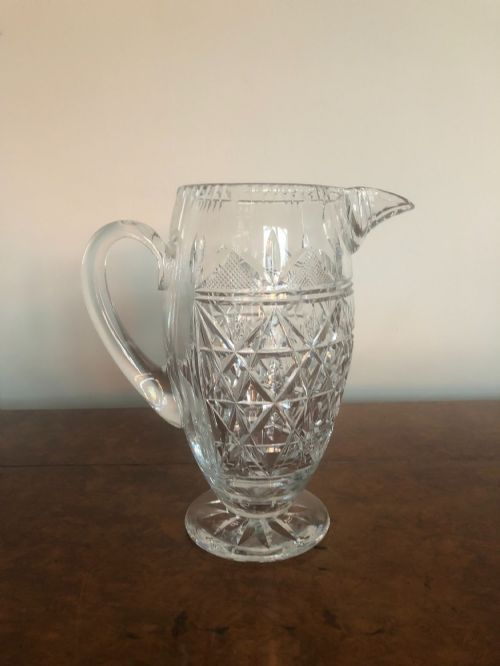
Victorian households utilised heavy lead crystal decanters for serving port, sherry, and whisky at the dining table and sideboard. Their thick walls were specifically engineered to withstand regular handling during evening entertaining.
Today, these vessels continue to hold spirits safely, provided they are washed by hand and stored away from extreme heat.
How can I tell early Victorian from late Victorian pieces?
Early Victorian items from around eighteen-fifty often display heavier, deeper facet cutting and simpler geometric arrangements. The glass metal itself can carry a slightly darker, denser feel suited to robust forms like rummers and celery vases.
Late Victorian examples from the eighteen-eighties and nineties frequently incorporate lighter proportions, combined etched foliage with shallow cutting, and more delicate star-cut bases.
Why are some cut glass items so heavy?
The inclusion of lead oxide in the glass batch increases the density, weight, and refractive index of the material. This heavy metal formula allowed nineteenth-century glassmakers to cut deeper patterns without compromising the structural integrity of the vessel.