




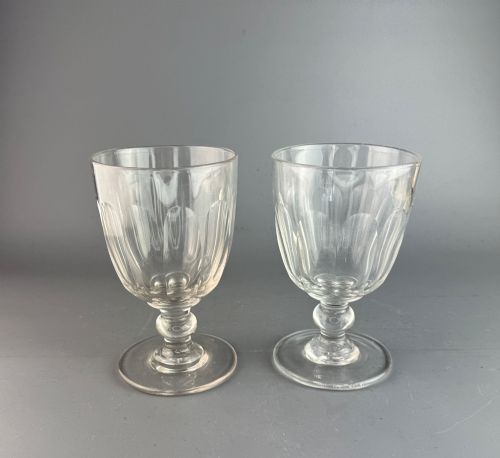
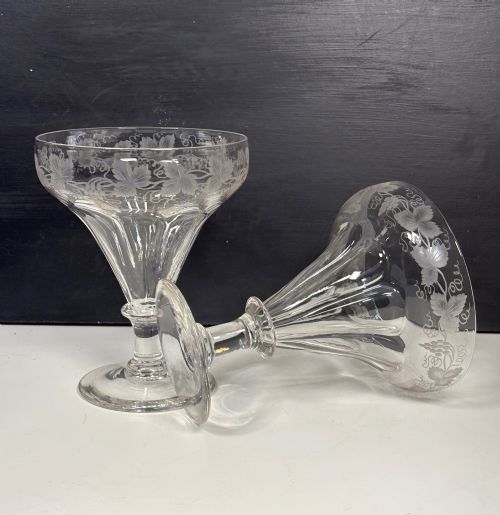


Victorian Cut Glass Pair
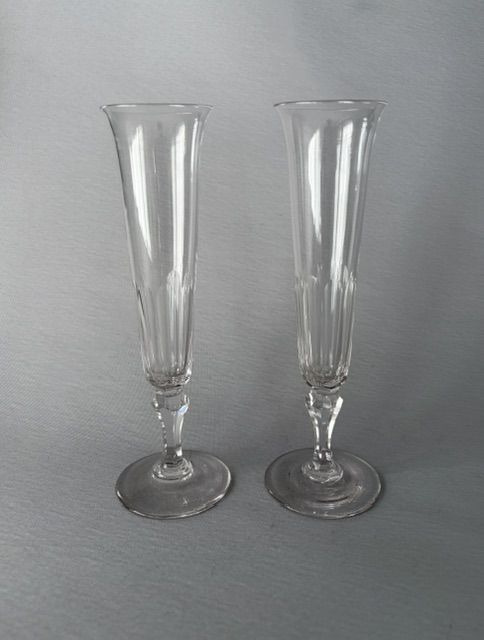
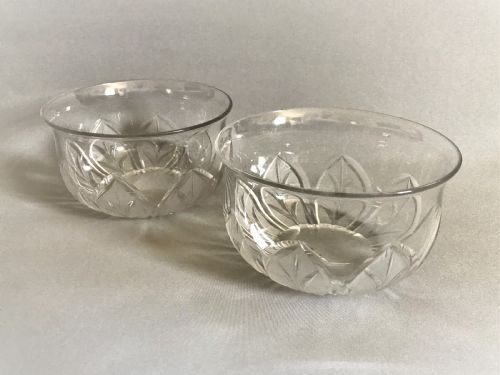
A victorian cut glass pair brings symmetrical brilliance to a room, offering matched antique vessels shaped by nineteenth-century wheel-cutting.
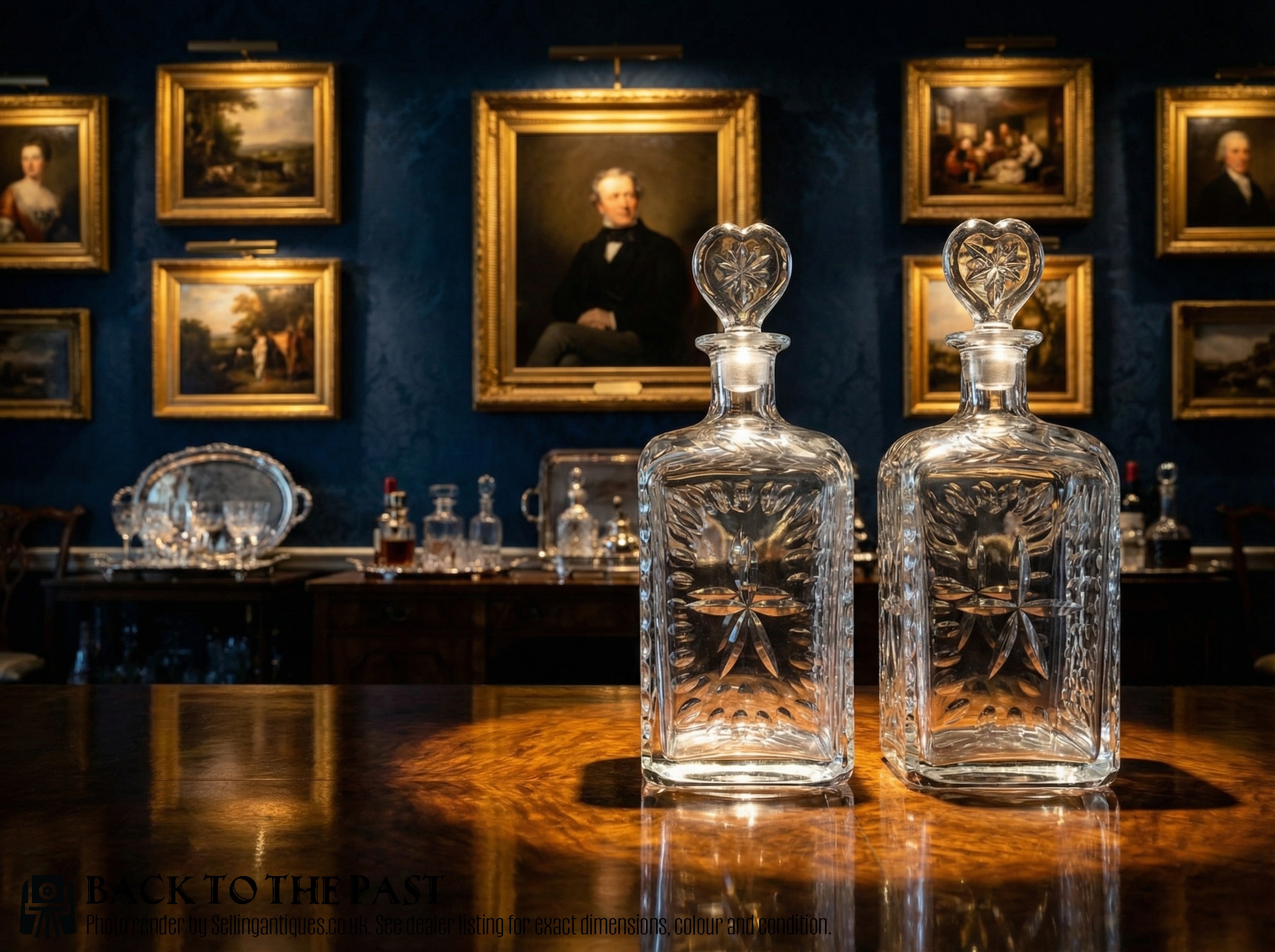
Victorian Cut Glass Pair
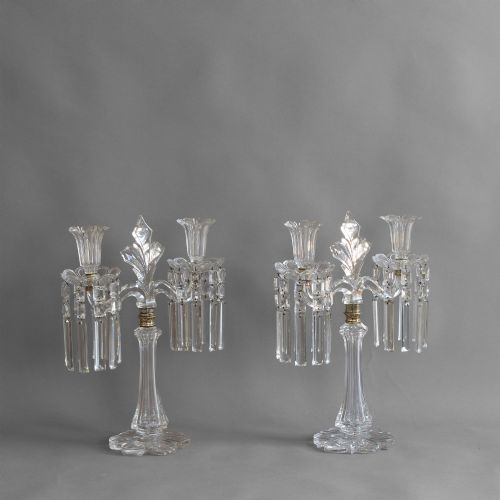
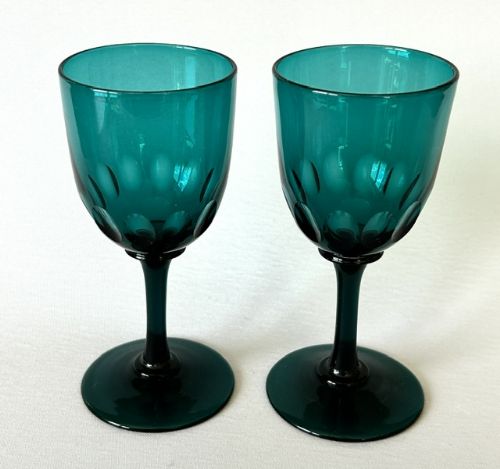
A victorian cut glass pair encompasses matching functional and decorative vessels produced primarily during the nineteenth century, ranging from tall decanters and table lustres to wine glasses, champagne bowls, and lidded jars.
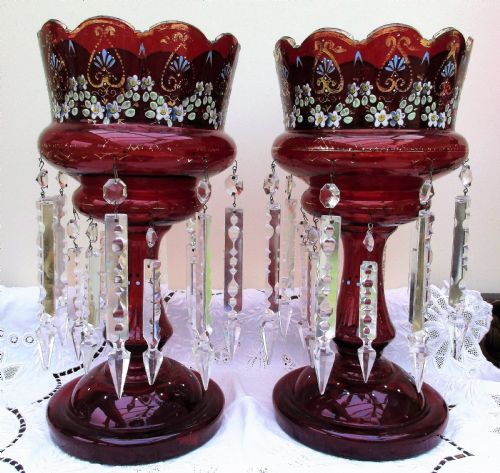
The selections span early mid-century rummers and champagne flutes alongside later decanters and mantel lustres, often incorporating coloured glass overlays in ruby, cranberry, or green alongside clear crystal.
Buyers encounter matching pieces designed for dining, lighting, and display, reflecting the domestic routines and decorative tastes of the Victorian period.
Materials and production methods
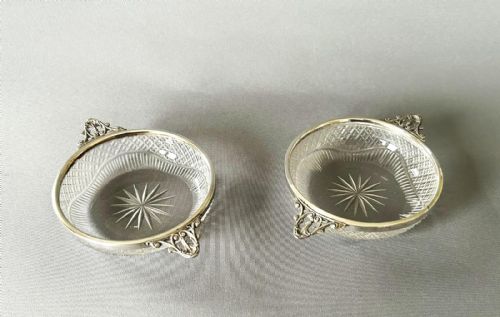
Makers utilised heavy lead crystal and glass blown into moulds or free-blown before artisans applied deep wheel-cut facets, flutes, and geometric patterns by hand.
Coloured glass effects were achieved through flash-cased or overlay techniques, where thin layers of ruby or green glass were fused over clear crystal and subsequently cut through to reveal the contrasting layer beneath.
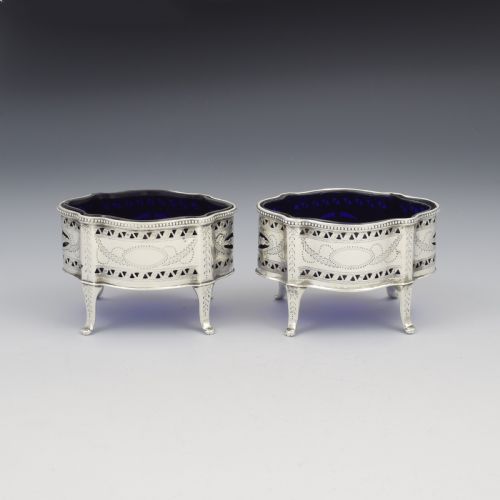
Metal mounts in silver, brass, and gilt added structural support to scent bottles, decanters, and table lustres.
Victorian households loved matched glass door handles so much they turned everyday entryways into sparkling decorative statements.
Standards of craftsmanship
Superior examples display crisp, deep wheel-cutting with sharp edges and minimal surface variation between the two matched items, ensuring complete visual harmony when displayed together.
The weight and clarity of the lead crystal indicate the purity of the metal, while finer engraved floral or vine motifs require advanced skill from the glass-cutter.
Original matching mounts, stoppers, and crystal drops elevate the integrity of a set.
Roberts And Belks·John Newton Mappin·Stevens And Williams
The Victorian Cut Glass Pair Glossary
- Lead crystal
- Glass containing lead oxide that increases weight, refractive brilliance, and softness for easier wheel-cutting. This material forms the heavy, sparkling body of superior Victorian tableware.
- Mantel lustre
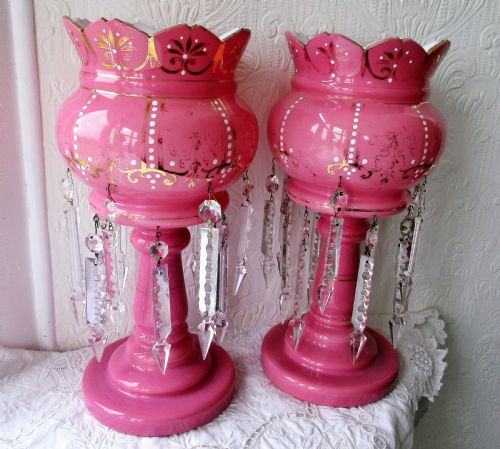
- A decorative glass vase hung with prismatic crystal pendants designed for placement on a fireplace mantel. These pieces reflect candlelight through suspended glass drops.
- Rummer
- A large, heavy-stemmed drinking glass used historically for ale, wine, or punch. Victorian examples often feature generous faceted bowls.
- Overlay
- A glass-blowing technique involving layers of different coloured glass fused together before cutting. Cutting through the outer layer reveals the contrasting colour underneath.
- Claret jug
- A vessel specifically shaped for serving red wine, usually featuring a glass body paired with a hinged silver or plated mount and handle.
Victorian Cut Glass Pair: Frequently Asked Questions
How were glass lustres used?
Glass lustres served as decorative mantel ornaments during the nineteenth century, often paired with candles to illuminate the room. The hanging crystal pendants caught and refracted the flickering light.
While they had a decorative function rather than a practical drinking purpose, they demonstrated the owner's status and taste for ornate table and mantel ware.
Are these decanters safe for wine?
Most antique decanters can still hold wine, provided the interior is clean and free from old sediment. Lead crystal requires gentle hand washing rather than modern dishwashers to preserve the surface.
Checking the original stopper fit ensures proper sealing for storage or serving during meals.
How do I date Victorian glassware?
Dating relies on stylistic shifts, pontil mark evidence, and the specific depth and pattern of the wheel-cutting. Early pieces often display heavier lead weights and simpler facet cuts.
Later Victorian and Edwardian examples introduce more complex acid etching, coloured overlays, and paired metal mounts that help narrow the production decade.
What is flash-cut glass?
Flash-cutting involves applying a thin outer layer of coloured glass over a clear crystal core before grinding patterns through the top layer. This technique exposes the clear glass beneath in striking geometric or floral designs.
It allowed makers to combine intense colour with sparkling transparency in a single vessel.