


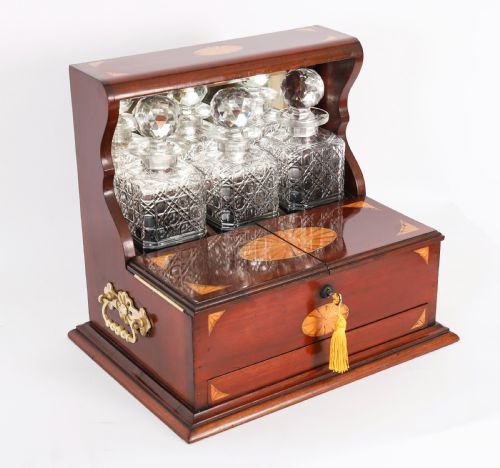


Victorian Cut Glass Box
A victorian cut glass box brings heavy prism-cut crystal and shining mounts together to hold trinkets, biscuits, or spirits.
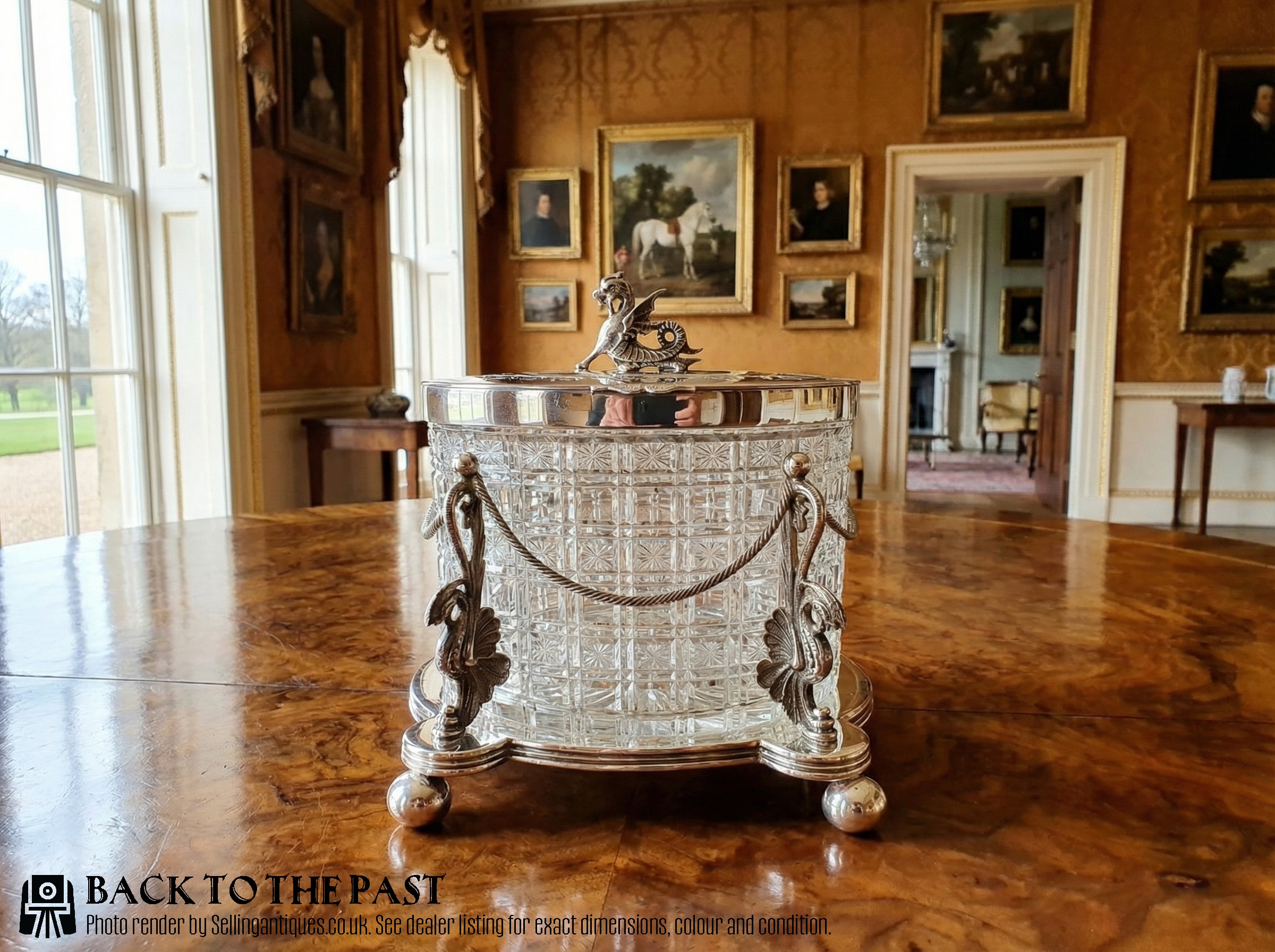
Victorian Cut Glass Box
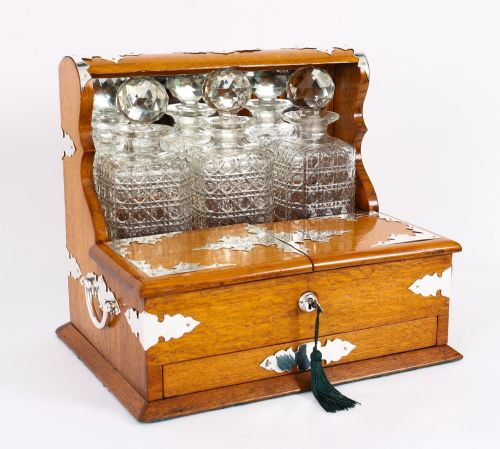
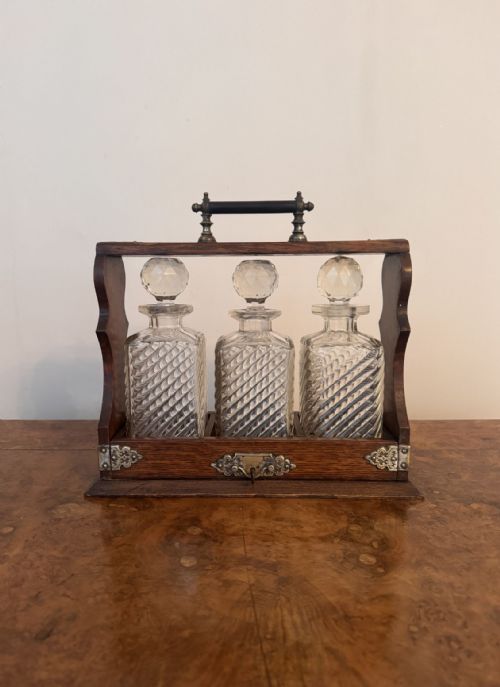
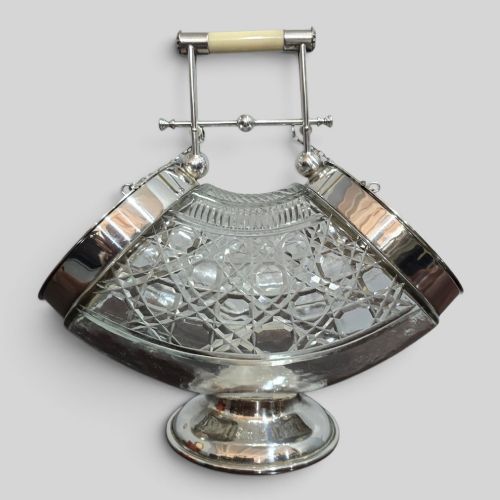
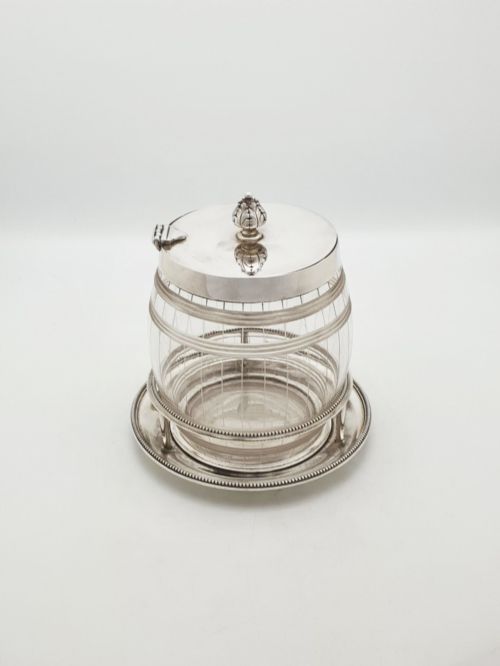
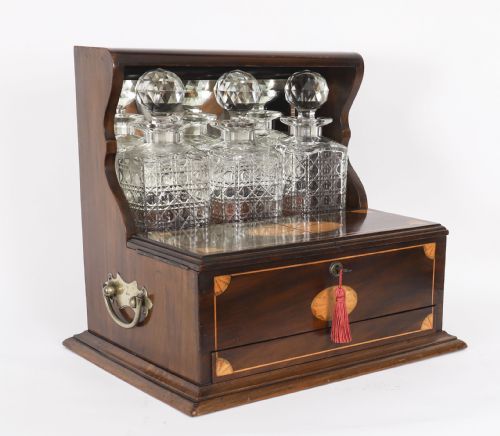
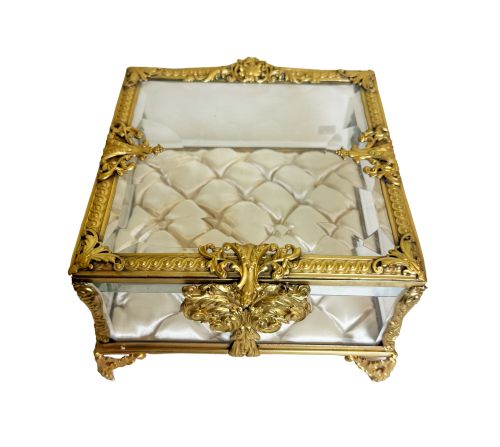
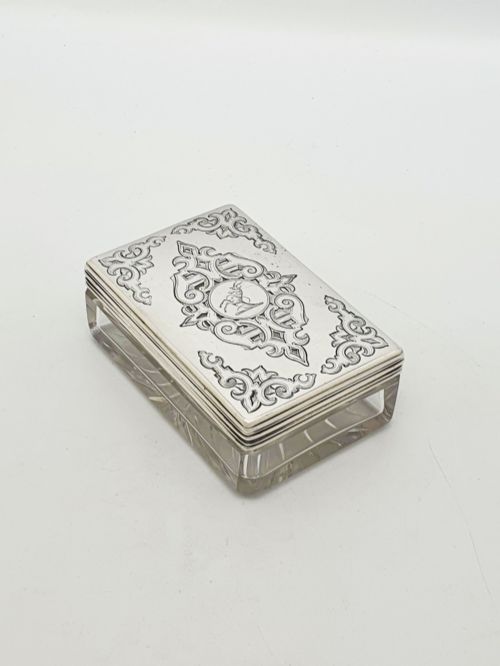
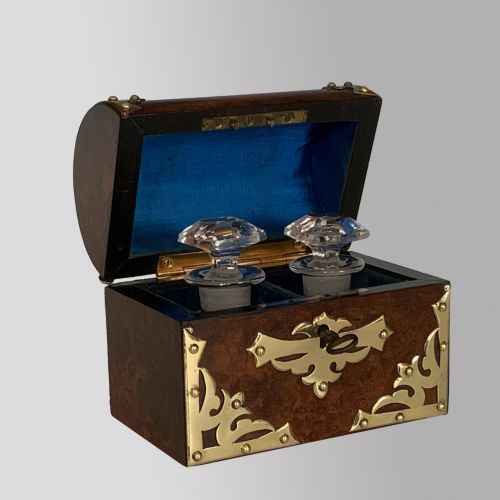
When you search for a victorian cut glass box, you encounter heavily faceted vessels, lidded biscuits barrels, and fitted caskets designed for the Victorian and Edwardian parlour. These items range from small trinket containers with sterling silver lids to large oak tantalus sets and silver-plated biscuit boxes.
The selection on this page leans heavily towards nineteenth-century craftsmanship, drawing from Victorian and Edwardian periods with occasional French Napoleon III influences. Forms vary from simple inkstands and single bottle cases to elaborate three-decanter dry bars and games compendiums.
What varies in quality
Quality separates in the crispness of the glass faceting and the structural integration of the framing. Superior examples display deep, sharp hobnail cutting that catches the light cleanly, alongside dense exotic hardwoods and heavy cast metal mounts.
Makers who invested time in detailed silver plating, precise dovetailing for the wooden carcasses, and robust internal fittings produced pieces that survived heavy daily use. Lesser items rely on simpler pressed glass patterns and lighter plated mounts with minimal cabinetry detailing.
One exceptional smoking compendium takes the literal shape of a Victorian fire carriage to hold its matches and tobacco.
Elkington·Walker And Hall·W M F·Philip Ashberry·James Dixon And Sons
The Victorian Cut Glass Box Glossary
- Tantalus
- A locking wooden frame designed to secure decanters of spirits while allowing the contents to remain visible. The locking mechanism prevents unauthorised access to the bottles.
- Hobnail
- A decorative glass-cutting pattern featuring rows of small, raised pyramidal facets. This texture creates intense light refraction across the surface of the piece.
- Ormolu
- Finely ground high-carat gold applied to a bronze base metal object. It provides a bright golden finish on decorative mounts and frames.
- Coromandel
- A dense, dark East Indian cabinet wood with contrasting dark brown and black streaks. It was frequently utilised for luxury nineteenth-century boxes and caskets.
- Compendium
- A multi-purpose container holding various accessories such as games, drinking vessels, or smoking equipment in a single fitted case. These items served as comprehensive social aids in the Victorian home.
Victorian Cut Glass Box: Frequently Asked Questions
What was a biscuit box used for?
Victorian households utilised these lidded containers to keep dry sweet biscuits fresh and presentable for afternoon tea guests. The cut glass bodies allowed visitors to view the contents before lifting the hinged silver-plated lid.
Servants would fill the barrels in the kitchens before placing them in the drawing room or parlour. The addition of handles made passing the container around the gathering straightforward.
How do I care for cut crystal?
Wash the glass elements in lukewarm water using mild detergent and a soft cloth to protect the sharp faceted edges. Avoid sudden temperature changes to prevent thermal shock and cracking in heavy nineteenth-century crystal.
Dry the pieces thoroughly with a lint-free cloth to restore the sparkle of the hand-cut surfaces. Polish metal mounts separately with appropriate cleaners while keeping substances away from the glass.
Are these items marked with dates?
Many silver-mounted pieces carry British hallmarks that indicate exact assay office years and maker marks. Wooden carcasses and glass bodies rely on stylistic clues and construction methods for dating.
Cabinetry styles, lock mechanisms, and hinge types help narrow the decade of manufacture when hallmarks are absent. Comparing the depth of the glass cutting also provides context for the production period.
How are tantalus sets different from decanter boxes?
A tantalus secures bottles within an open wooden framework that locks from the top to prevent removal. Decanter boxes enclose the bottles entirely within a hinged wooden case fitted with carrying handles.
Both forms protect valuable spirits, but the tantalus displays the cut crystal vessels permanently to the room. Decanter boxes offer more privacy and often include integrated games compartments or drinking glasses.