



Victorian Cut Crystal Vase
A victorian cut crystal vase brings heavy brilliance and sharp facet-work to a room, catching the light in a way ordinary pressed glass simply cannot manage.
Victorian Cut Crystal Vase
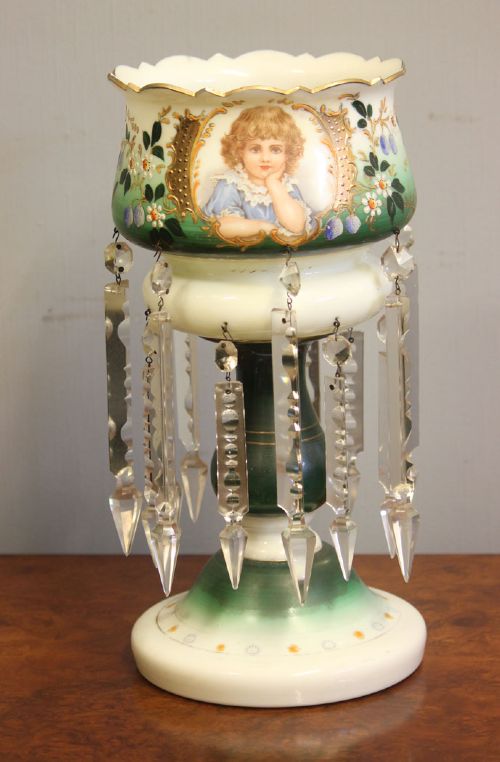
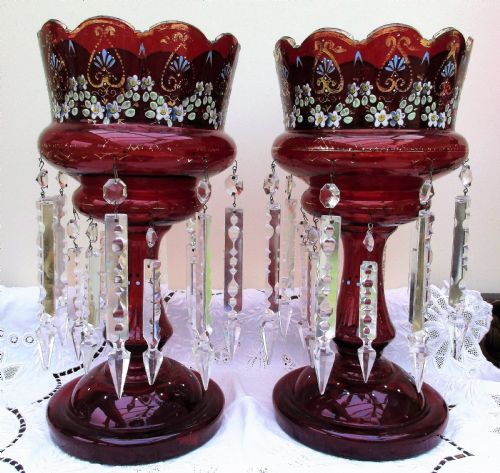
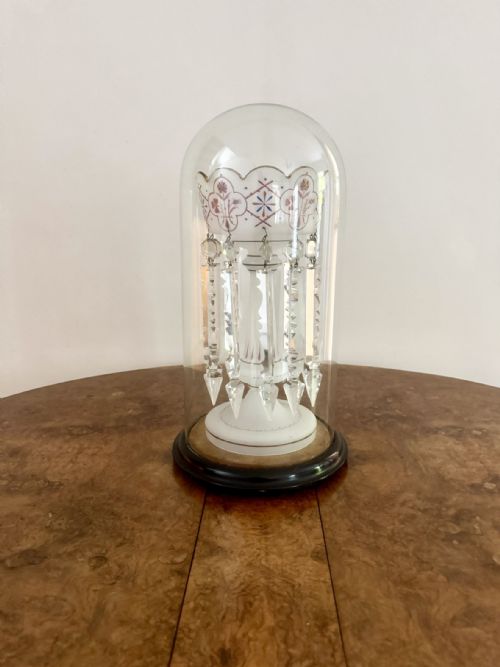
When you search for a victorian cut crystal vase, you encounter heavy decorative vessels and mantel lustres produced across the nineteenth century. These pieces range from substantial lidded vases to table lustres hung with glass drops.
The items found here frequently originate from English and Bohemian workshops, spanning periods from the early nineteenth century into the Edwardian era. Ruby, cranberry, cobalt blue, and green glass variants appear regularly alongside clear crystal.
Mantel lustres and centrepieces dominate the selection, often surviving in pairs designed to flank a clock or adorn a dining table. The forms combine deep facet-cutting with applied enamelling, gilt highlights, and intricate overlays.
How they were made
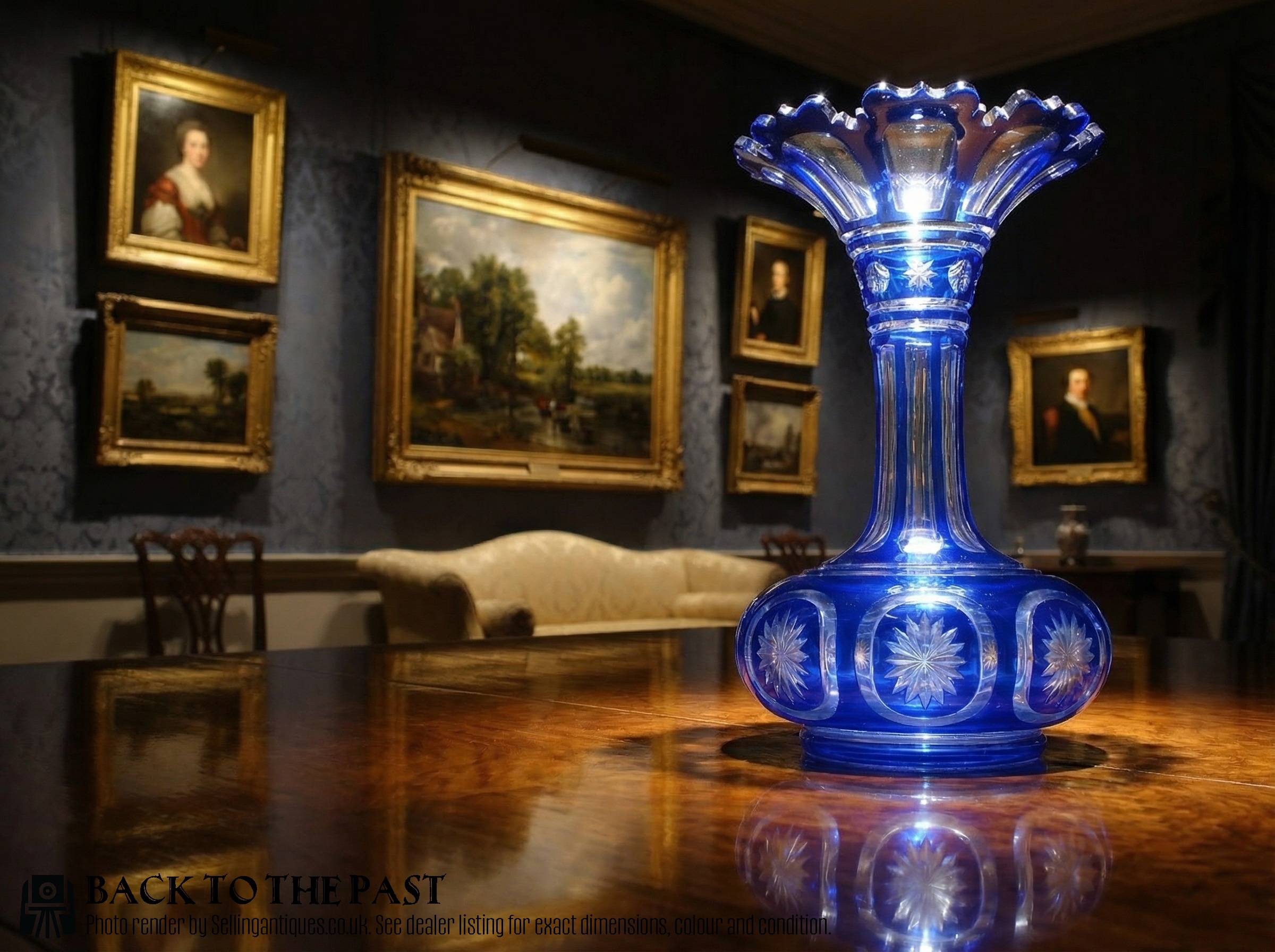
The makers relied on heavy lead crystal and coloured glass bodies, often casing layers of different coloured glass together before cutting through the top layer to reveal the contrasting hue beneath. Skilled artisans then applied deep wheel-cuts, fluting, and facet patterns by hand.
Surface decoration frequently included fine gold leaf details, hand-painted enamel motifs, and delicate etching. Lustres required additional labour to drill the rims and hang crystal prisms from brass or gilt metal posts.
Table lustres were designed to flicker and multiply candle flames across the dining room, essentially serving as eighteenth-century mood lighting.
What varies in quality
The crispness of the facet-cutting dictates the primary distinction between standard production and the finest output, as sharp, clean edges refract light far more intensely than soft, rounded cuts. The weight and clarity of the base crystal also indicate the standard of manufacture.
The preservation of original gilding and enamel work influences the desirability of a piece, alongside the complete survival of matching crystal drops on lustres. Bohemian overlay pieces demand precision in the thickness of the cased glass layers to achieve a balanced colour contrast.
The Victorian Cut Crystal Vase Glossary
- Lead crystal
- Glass containing a high proportion of lead oxide, which increases the weight, refractive index, and brilliance of the material. This composition allows for deeper and sharper cutting.
- Mantel lustre
- A decorative ornamental vase fitted with a ring of hanging crystal prisms or drops. They were traditionally displayed on fireplace mantels to catch and multiply candlelight.
- Overlay glass
- A technique where a layer of coloured glass is fused over a clear or contrasting body. The outer layer is then cut away in specific patterns to expose the under-layer.
- Flash glass
- A thin coating of coloured glass applied over a clear or differently coloured base. Artisans cut through this thin outer flash to create contrasting designs.
- Celery vase
- A tall pedestal vessel used on dining tables in the nineteenth century to serve upright stalks of celery. They frequently feature deep cut glass and heavy lead crystal construction.
Victorian Cut Crystal Vase: Frequently Asked Questions
What is the difference between glass and crystal?
Crystal contains specific metal oxides, traditionally lead oxide, which add considerable weight and increase the refractive index of the material. This higher density permits sharper wheel-cutting and creates a clearer ring when struck.
Standard glass lacks these additives, resulting in a lighter body and softer edges in decorative work.
Are lustre drops always original?
Many surviving lustres have lost one or more of their original hanging crystal prisms over the decades. Replacements are frequently sourced to complete the piece for display.
Close inspection of the attachment wires and the slight variations in glass tint or wear patterns helps determine if the drops match the period of the vase.
Where were these pieces made?
Production centred primarily in England and Bohemia during the nineteenth century. English makers produced heavy lead crystal items, while Bohemian workshops excelled in coloured glass and complex overlay techniques.
Export networks distributed both traditions widely across British homes.