




Victorian Cranberry Jug
These vibrant victorian cranberry jug examples bring a rich ruby warmth to the table, combining deep glass tones with period forms.
Victorian Cranberry Jug
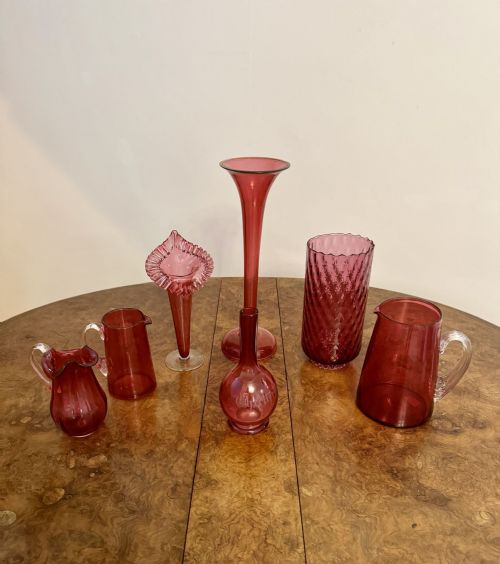
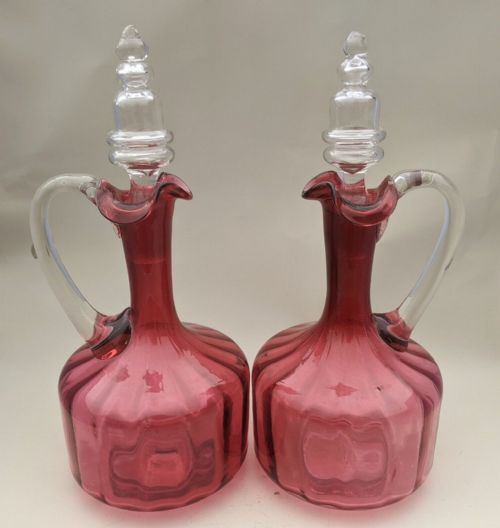
When searching for a victorian cranberry jug, collectors encounter distinctive glassware produced primarily during the nineteenth century and the Edwardian era. These pieces range from cream jugs and water pitchers to wine decanters and claret jugs fitted in metal frames.
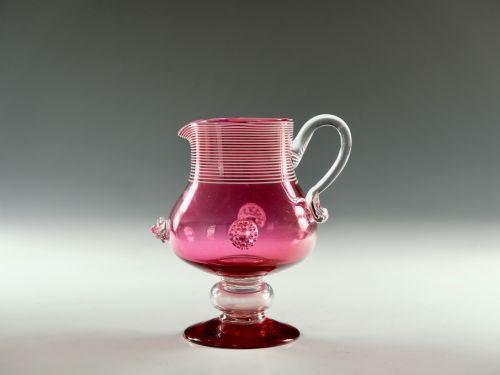
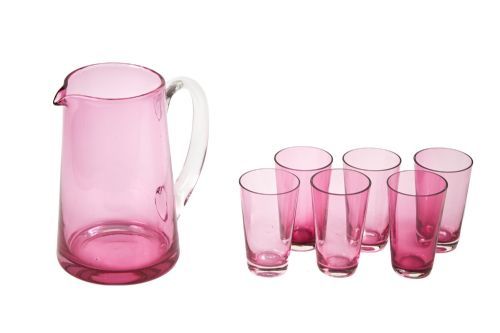
The version most commonly met on this page is the nineteenth century table jug, often formed with a clear handle and shaped pouring lip. Such vessels served practical purposes at the dining table while displaying the intense coloration characteristic of the period.
Makers shaped these items into various functional forms, including water jugs, cream jugs, and matched sets complete with glasses or bowls. Their presence on the table reflects the Victorian taste for richly coloured glassware during afternoon tea or evening dining.
How they were made
The characteristic colour of a victorian cranberry jug comes from the addition of gold salt to the molten glass batch during production. Artisans blew the glass into moulds or worked it by hand before attaching applied handles in clear or contrasting glass.
Surface decoration often involved additional techniques such as white enamel piping, delicate engraving depicting fruiting vines, or specialised thermal treatments that created crackle and overshot textures. Some examples feature applied silver plated mounts, frames, or hinged lids that secure the glass body.
Listings feature items spanning the nineteenth century through the Edwardian period, utilising cranberry glass, clear glass, enamel, and silver plate.
What varies in quality
Quality across a victorian cranberry jug depends heavily on the depth and evenness of the colour distribution within the glass. Superior examples show a rich, saturated ruby tone without murky patches or uneven pooling.
The refinement of secondary components also separates standard items from finer works. Finishes like hand-engraved fruiting vines, crisply applied white enamel piping, or substantial silver plated mounts indicate greater craftsmanship.
The Victorian Cranberry Jug Glossary
- Cranberry Glass
- A transparent pinkish red glass produced by adding gold chloride to the molten metal. This distinct hue defines the primary aesthetic of these nineteenth century tablewares.
- Claret Jug
- A specialised vessel designed for serving red wine at the table. These pieces frequently incorporate silver plated frames, handles, and hinged lids alongside glass bodies.
- Overshot Glass
- A decorative glass technique where fine threads of glass are trailed across the hot surface of the vessel. This creates a textured exterior finish that catches the light.
- Crackle Glass
- A type of glassware plunged into cold water while hot to produce a network of small internal fractures. The glass is then reheated and blown further to stabilize the texture.
- Silver Plate
- A thin layer of silver fused to a base metal substrate, commonly used for the mounts, rims, and handles of nineteenth century drinks service items.
Victorian Cranberry Jug: Frequently Asked Questions
What were cranberry jugs used for originally?
These vessels served functional roles in nineteenth century domestic life, primarily holding cream, water, lemonade, or claret for table service.
Larger pitchers provided water or wine during formal meals, while smaller versions accompanied tea and dessert courses.
How do I clean and care for antique glass?
Wash these pieces gently by hand using warm water and mild detergent, avoiding harsh abrasives that might scratch the surface.
Take particular care with examples featuring applied enamel piping or delicate silver plated mounts, which require gentle drying.
Can I use my antique jug daily?
While these items were built for practical use, their age warrants careful handling during everyday dining or special occasions.
Sudden temperature changes can stress nineteenth century glass, so avoid pouring boiling liquids directly into cold vessels.
How can I tell the difference between periods?
Pieces from the mid nineteenth century often display simple blown forms, sometimes featuring hand engraving or crackle textures.
Later Edwardian examples frequently show standardised manufacturing traits and refined silver plated hardware associated with turn of the century production.