


Victorian Country Scene Artwork
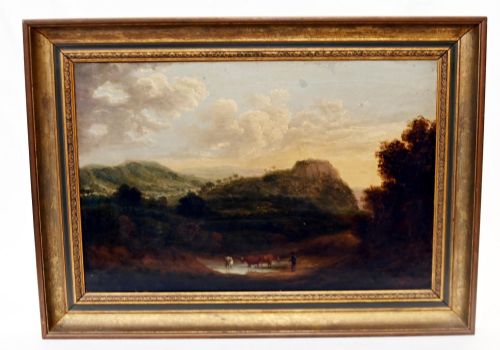
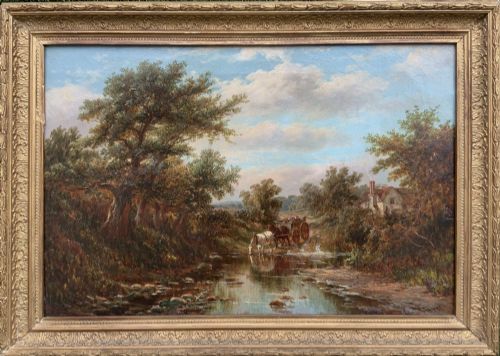
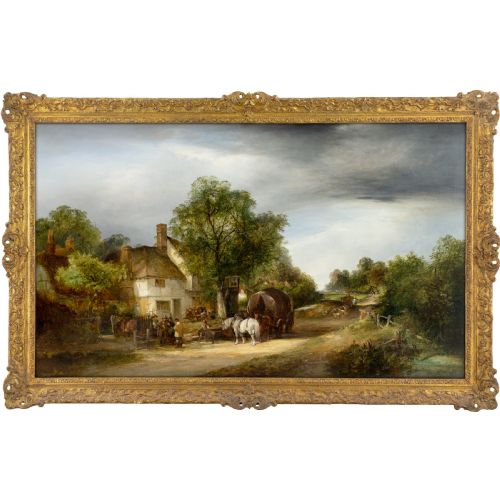
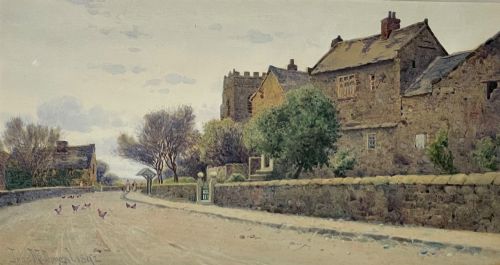
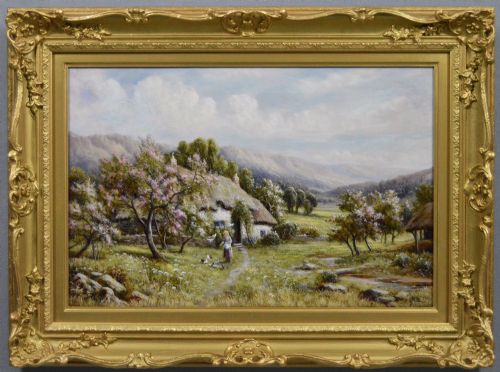
These pieces of victorian country scene artwork capture 19th-century rural life through oil and watercolour, offering a direct window into pastoral history.
Victorian Country Scene Artwork
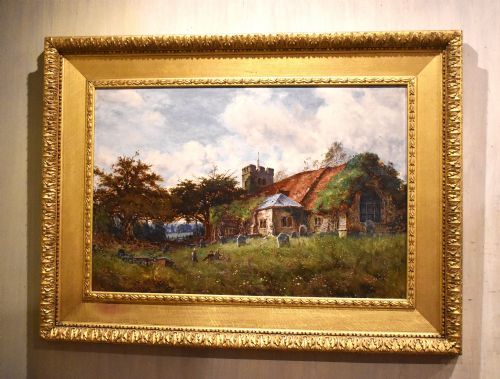
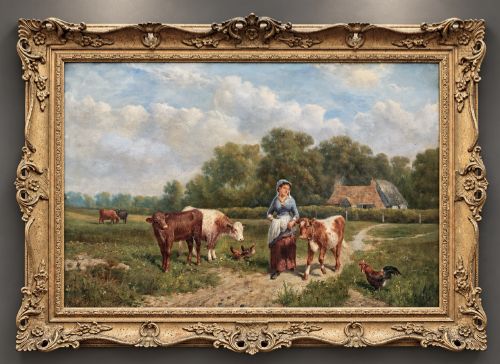
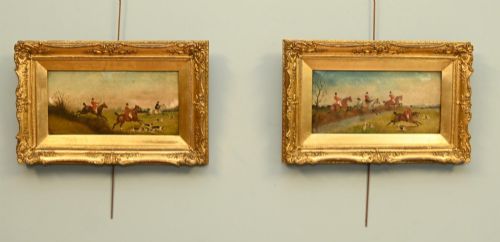
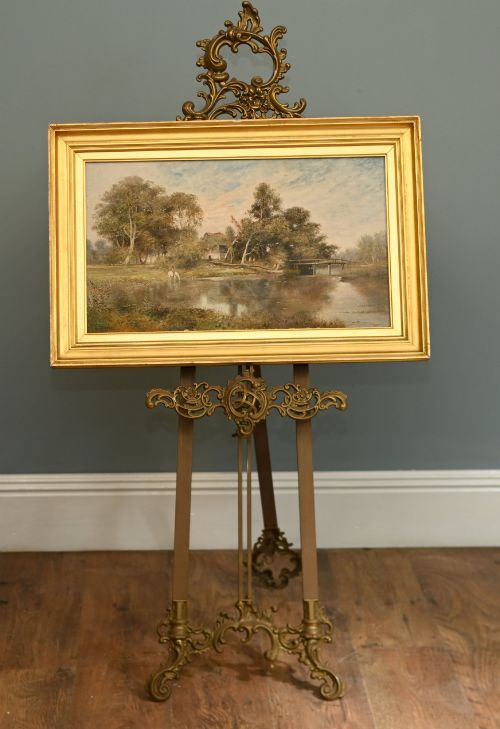
When you search for victorian country scene artwork, you encounter paintings and works on paper that depict rural landscapes, farming life, and domestic scenes from the nineteenth century. The examples on this page span several decades of the 1800s and early 1900s, moving from pastoral river views to intimate farmyard studies.
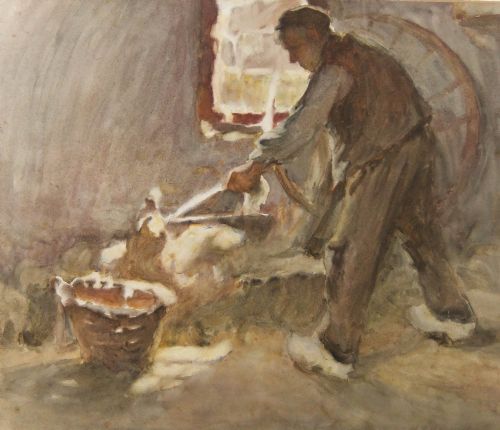
The most common formats you meet here are framed oil paintings and watercolours. Subjects range from cattle and sheep in open fields to figures outside country cottages and blacksmiths at work.
Origins stretch across British and continental European schools, reflecting a period when artists turned away from grand historical narratives to record the everyday rhythms of the countryside.
How They Were Made
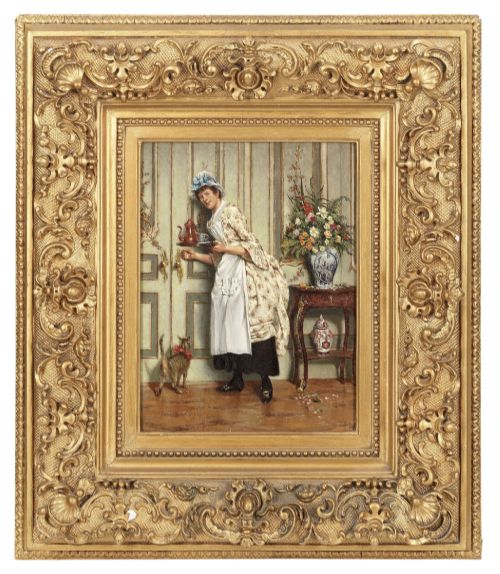
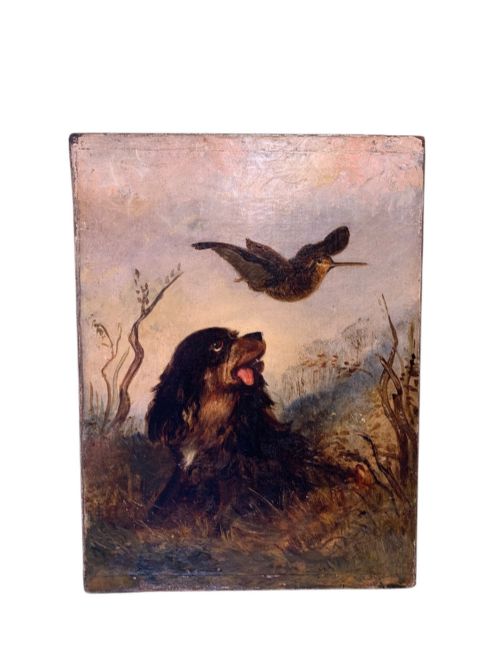
The works rely heavily on oil on canvas or oil on board, alongside watercolour and gouache on paper. Canvases are stretched over wooden frames and often housed in ornate giltwood and gesso frames enriched with gold leaf.
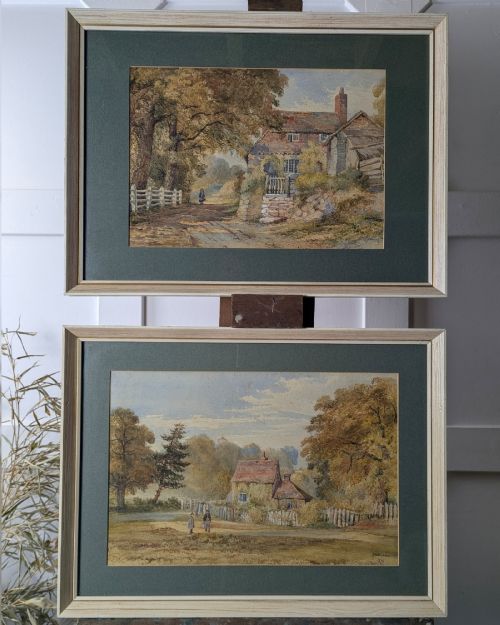
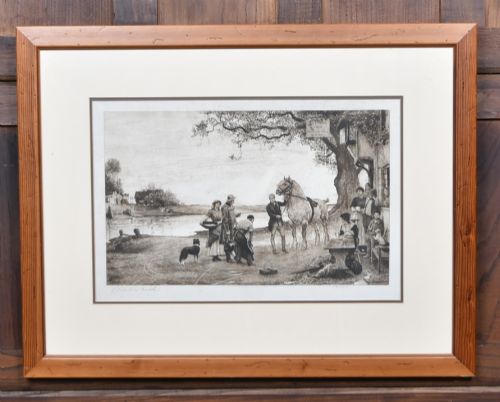
Watercolours utilise pigment applied to heavy paper, frequently capturing light and atmosphere with transparent washes. Etchings and lithographs provide printed interpretations of original compositions using ink on paper.
Pigs, chickens, ducks, and foxes frequently interrupt the scenery, proving that Victorian animals had plenty to say.
What Varies in Quality
Quality rests in the fidelity of the draughtsmanship and the artist's handling of light and texture. Superior canvases show confident brushwork and precise anatomical rendering in figures and animals.
The preservation of the original medium, the clarity of the paper or pigment, and the integrity of the period framing contribute substantially to the standing of an individual piece.
William Howard Hardy·John Horace Hooper·John McDougal·Stephen Samuel Lewin·Henry Silkstone Hopwood·Robert John Hammond·Robert W. Macbeth·Robert Thorne Waite·Howard Helmick·George Augustus Holmes·Thomas Sidney Cooper·Joseph H Barnes·Frederick Walker·Frederick James Kerr·Edgar Hunt·Johann Friedrich Voltz·Henry H Parker·Miles Birkett Foster·Herman S Melville·Charles Edward Wilson·Claude Cardon·Joseph Knight·John Arthur Lomax·Henry John Kinnaird·John Frederick Herring Jnr
The Victorian Country Scene Artwork Glossary
- Oil on Canvas
- A traditional painting medium where pigments suspended in oil are applied to a woven fabric support. This technique allows for rich colour blending and textured brushwork.
- Watercolour
- A painting method in which natural pigments are suspended in a water-soluble vehicle. It produces translucent washes that catch the light from the underlying paper.
- Giltwood
- Wood that has been coated with a thin layer of gold leaf or metallic powder. It is frequently seen on the elaborate frames enclosing Victorian paintings.
- Gesso
- A plaster-like mixture applied to wood or canvas as a base for painting or gilding. It provides a smooth, prepared surface for detailed framing ornaments.
- Genre Painting
- Art depicting scenes from ordinary life, such as farm work or domestic interiors. These works offer social insight into the period in which they were created.
Victorian Country Scene Artwork: Frequently Asked Questions
What subjects appear in these works?
The compositions feature rural landscapes, farm animals, river scenes, and domestic chores. Artists recorded cattle, sheep, horses, and figures outside cottages.
Many pieces document specific regions across Britain, capturing local trades and pastoral traditions.
How do I date a painting?
Dating relies on recorded artist lifespans, stylistic markers of the Victorian period, and sometimes direct signatures or dates inscribed on the canvas or reverse.
Framing styles and materials also offer clues to the era of production.
Where should I hang these?
These works suit traditional reception rooms, studies, and hallways where their pastoral subjects can be viewed closely. Keeping them away from direct sunlight protects the pigments.
Pairing them with period furniture enhances their historical context within a room.
How do I care for a framed artwork?
Maintain a stable room temperature and avoid humid environments that can affect canvas tension or paper integrity. Dust frames gently without using liquid cleaners on the gilt surface.
Glazed watercolours benefit from being kept away from strong light sources to prevent fading.