

Victorian Country Furniture
Victorian country furniture brings practical vernacular forms into domestic spaces, offering sturdy utility shaped by regional British traditions.
Victorian Country Furniture
Victorian country furniture comprises utilitarian domestic objects made during the nineteenth century, including chests of drawers, tables, benches, and chairs. These pieces emerge from regional British vernacular traditions, prioritising straightforward function and domestic utility over formal urban refinement.
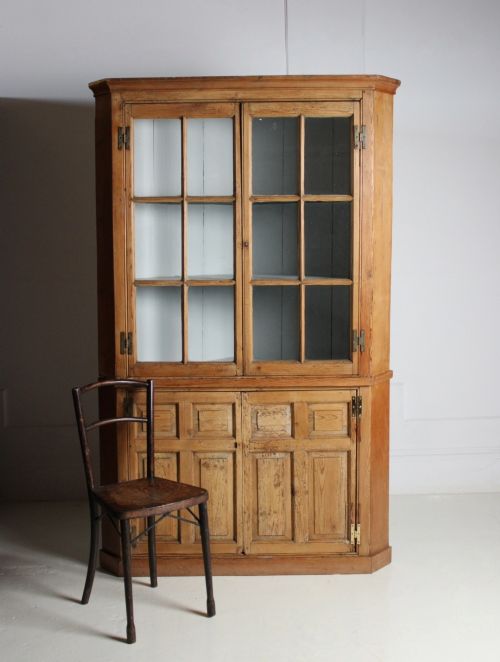
The pieces seen here span the Victorian era, with dates clustering through the nineteenth century up to the early twentieth century. Buyers encounter robust seating, storage cabinets, and tables designed for everyday use in kitchens, hallways, and estate offices.
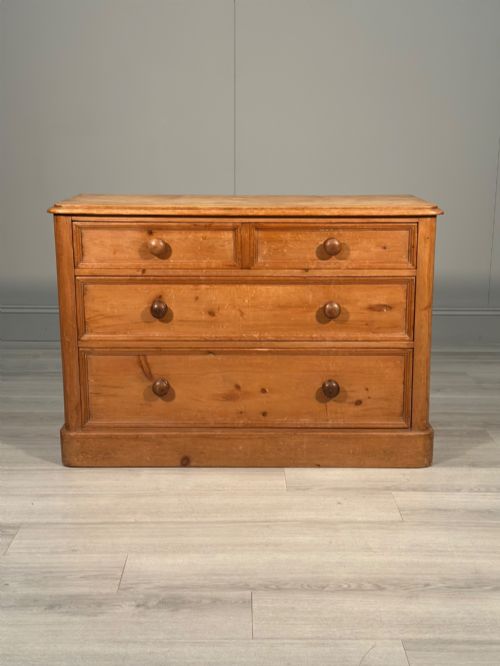
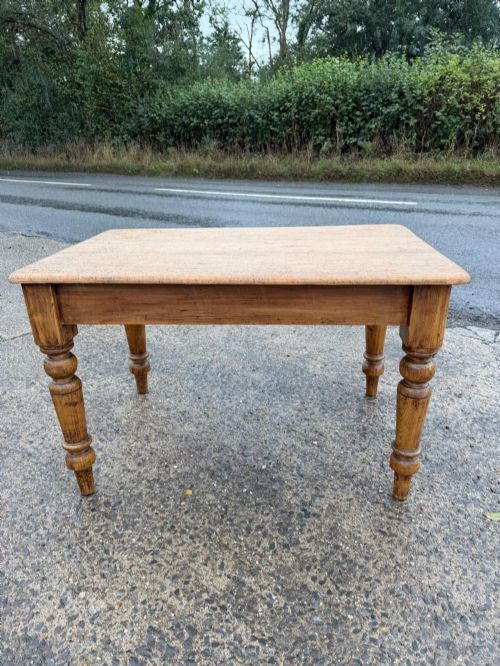
Pine and oak form the backbone of this category, often paired with elm, ash, and sycamore. Forms range from simple tavern stools and cricket tables to large kitchen dresser bases and multi-drawer chests.
Assessing Quality and Character
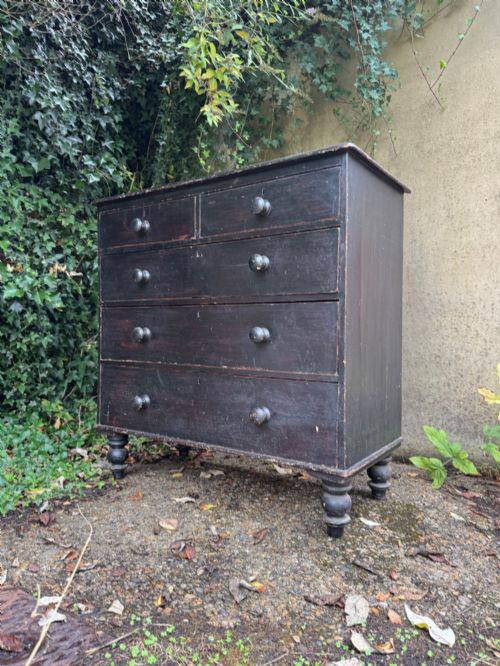
Quality in this category rests on the integrity of the timber and the honesty of the surfaces. Pieces retaining original paint or aged patination from decades of use command greater appreciation than those stripped back to bare wood.
Proportion and structural survival dictate the standing of a piece. Well-proportioned tables, chairs with tight joinery, and cabinets retaining their original brass or iron hardware demonstrate superior domestic craftsmanship.
Boot racks and tavern stools survive here because their sturdy construction outlasted the boots and drinkers.
Johnston’s of London·Morison and Co·Howard & Sons
The Victorian Country Furniture Glossary
- Vernacular
- Everyday objects made by local tradesmen using regional styles and materials, rather than following metropolitan fashion. These items prioritise direct utility.
- Cricket table
- A small, lightweight three-legged table traditionally used beside the fire or for general household tasks. They often feature simple wooden tops.
- Settle
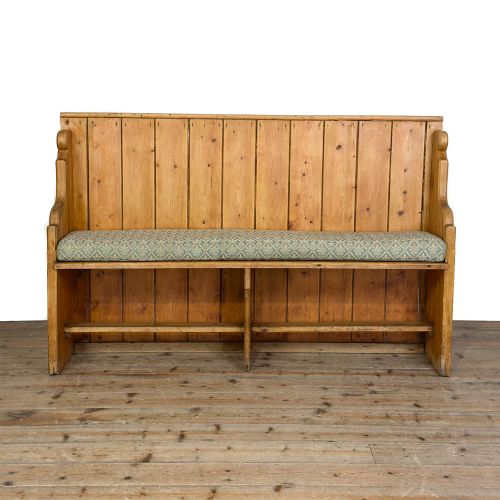
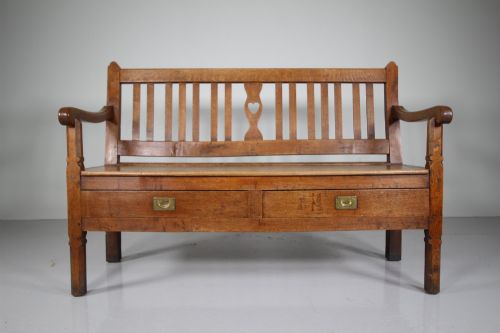
- A wooden bench featuring a high back and solid arms designed to block draughts in farmhouse kitchens. Under-seat storage sometimes forms part of the construction.
- Windsor chair
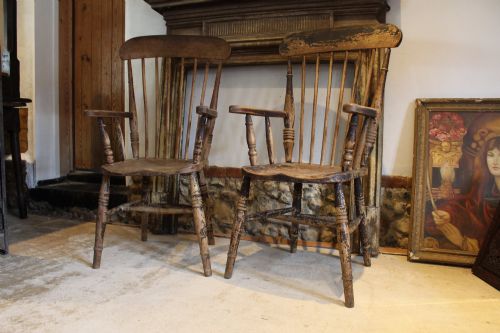
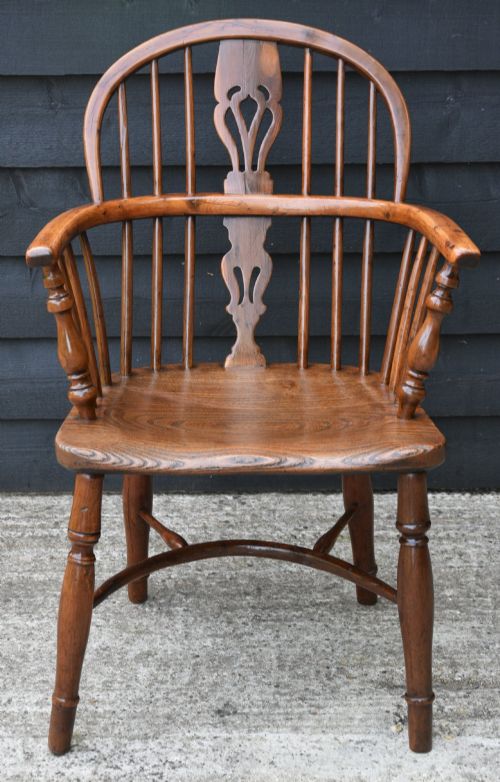
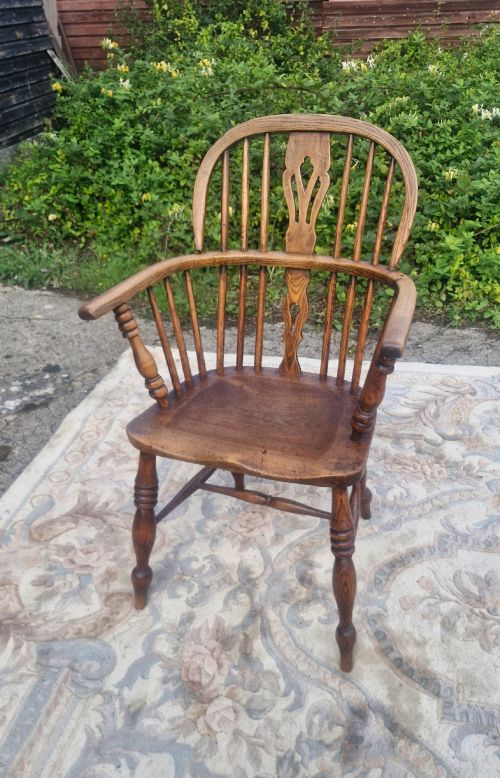
- A wooden chair characterised by a solid saddle-seat into which legs and spindles are wedged. The back construction employs bentwood parts.
- Dresser base
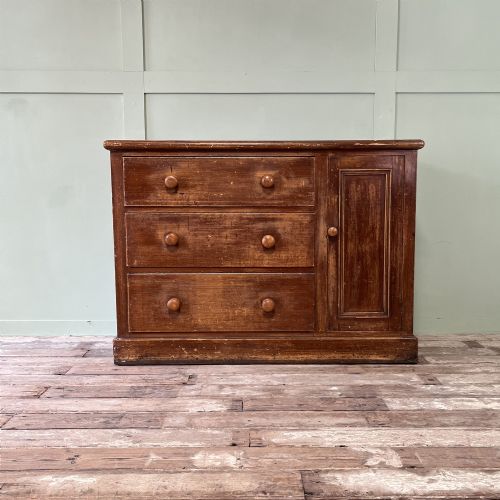
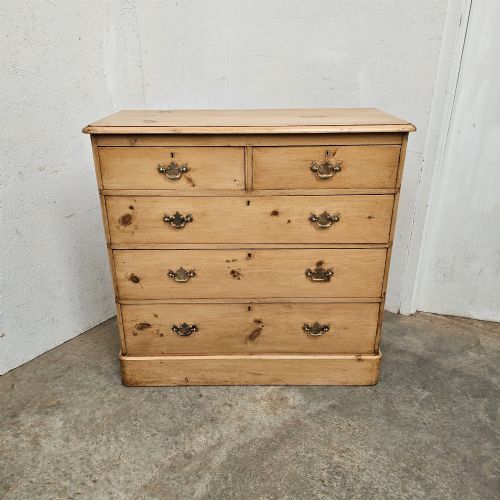
- The lower section of a kitchen storage unit, typically containing cupboards and drawers beneath a robust wooden work surface. They served as central food preparation stations.
Victorian Country Furniture: Frequently Asked Questions
How do I identify genuine Victorian country furniture?
Examine the timber species, construction methods, and surface patination to determine age and origin. Look for native woods like pine, oak, and elm joined with traditional hand-cut joints rather than modern fasteners.
Surface wear should appear consistent with nineteenth-century domestic use. Original painted finishes or waxed surfaces provide strong indicators of period authenticity.
Where were these pieces used in the home?
These items served functional roles in kitchens, hallways, and estate rooms across nineteenth-century households. Benches and boot racks furnished entryways, while tables and dressers equipped working kitchens.
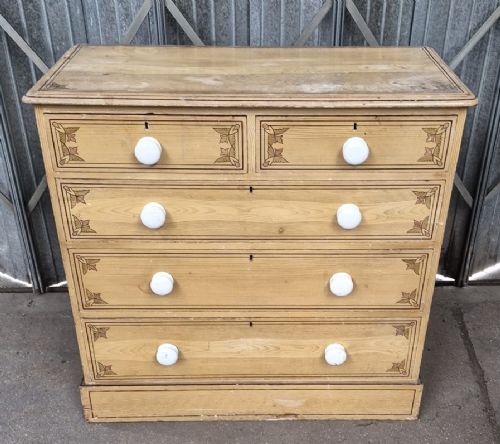
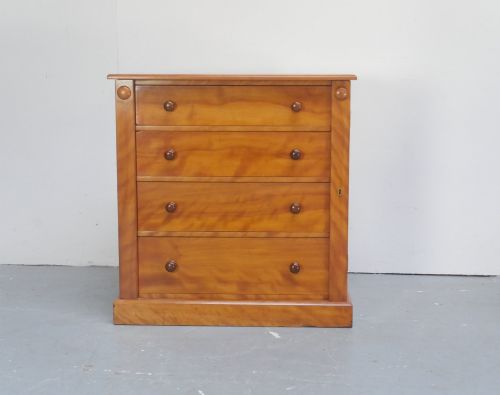
Chests of drawers and cabinets provided essential bedroom and office storage. Their robust construction suited demanding daily environments.
How should I care for waxed pine furniture?
Maintain waxed pine surfaces by applying a quality beeswax polish periodically to nourish the dry timber. Avoid placing pieces near direct heat sources or in strong sunlight, which causes wood to warp and crack.
Dust regularly with a soft, dry cloth to protect the historic patina. Gentle care preserves both the finish and the structural integrity of the wood.
What is the difference between rustic and formal Victorian furniture?
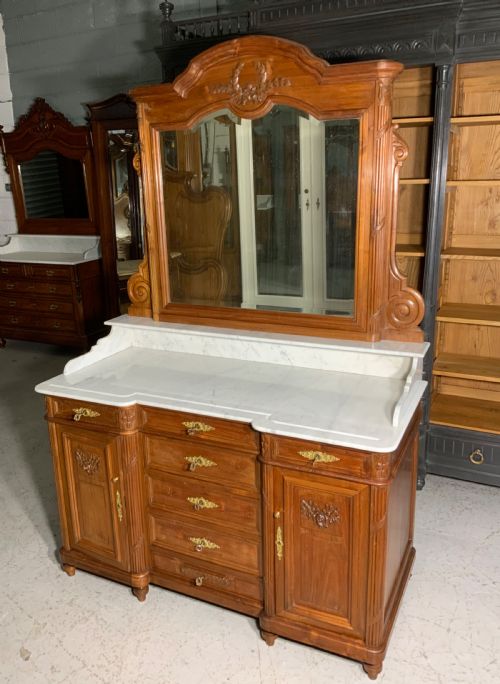
Rustic country pieces focus on utilitarian function and regional craftsmanship using accessible native timbers. Formal Victorian furniture employs exotic veneers, intricate carving, and urban stylistic conventions.
Country items value straightforward durability over ornamental display. Their simpler lines reflect the practical needs of rural and provincial life.