




Victorian Cottage Art
Victorian cottage art brings pastoral scenes, rustic dwellings and rural domestic life into rooms through period paintings, watercolours and prints.
Victorian Cottage Art
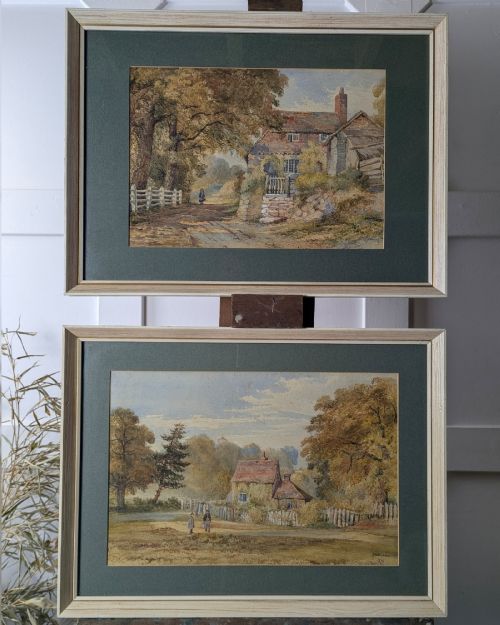
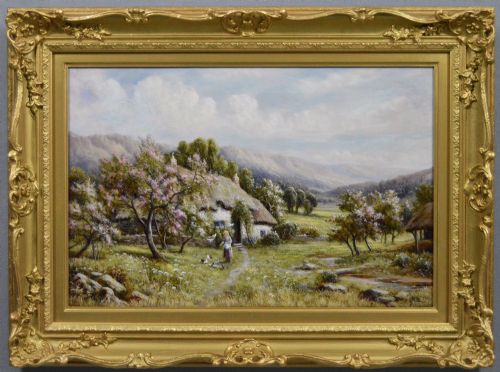
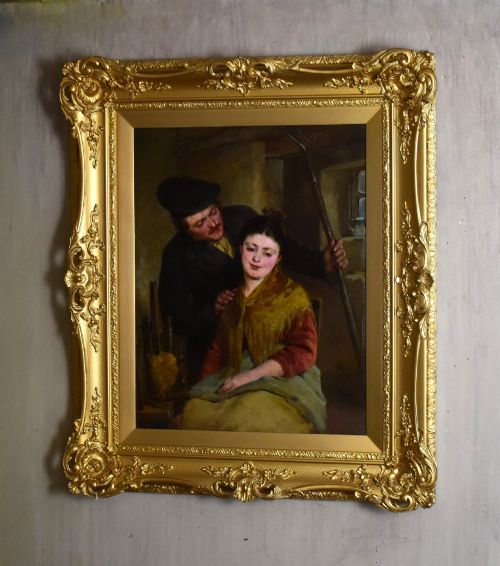
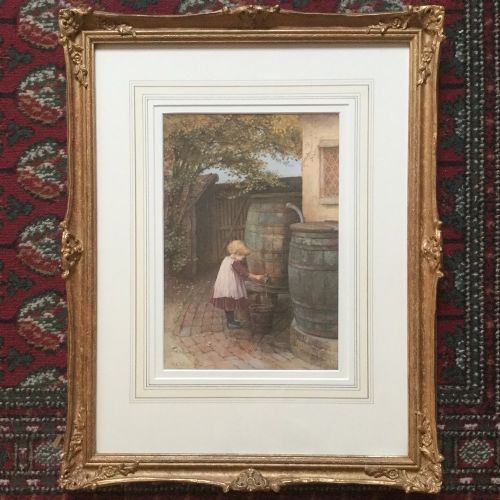
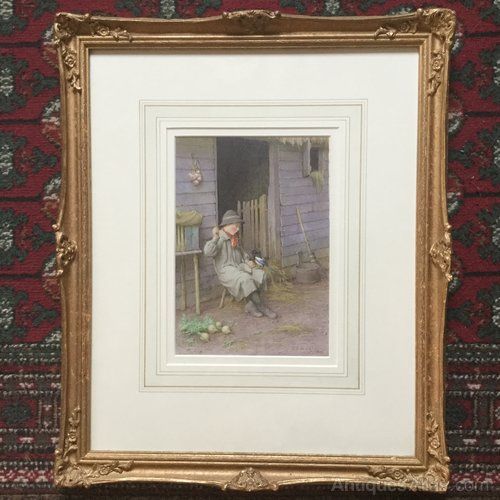
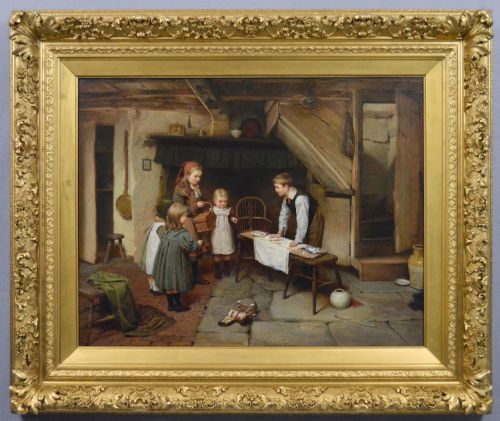
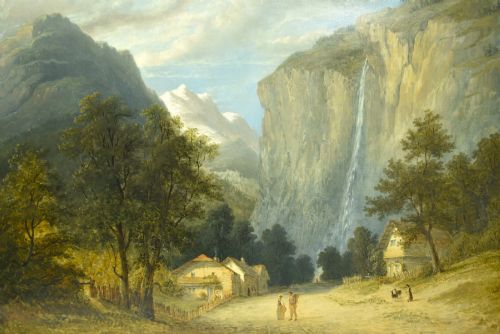
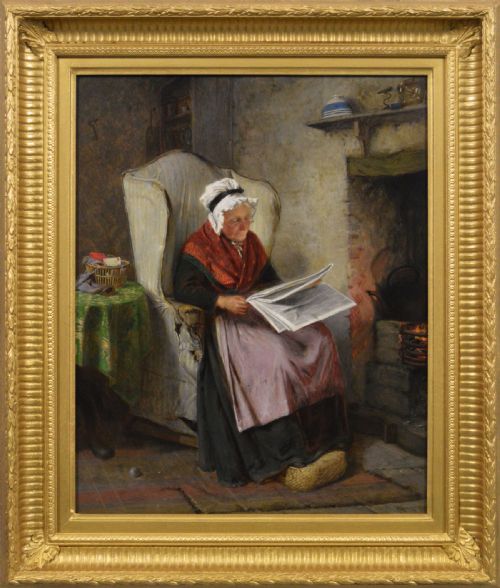
Victorian cottage art encompasses paintings, watercolours and lithographs depicting rural dwellings, farming landscapes and domestic scenes from the nineteenth and early twentieth centuries. These works record pastoral life, village settings and domestic interiors through the eyes of period artists.
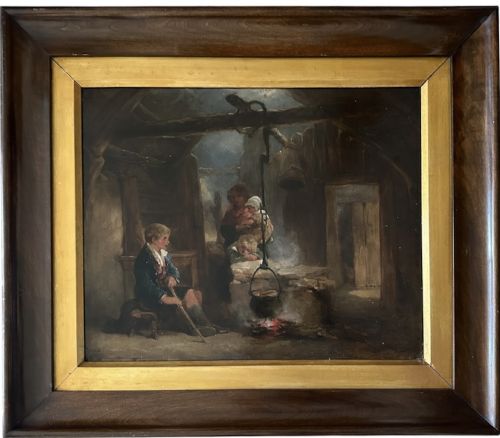
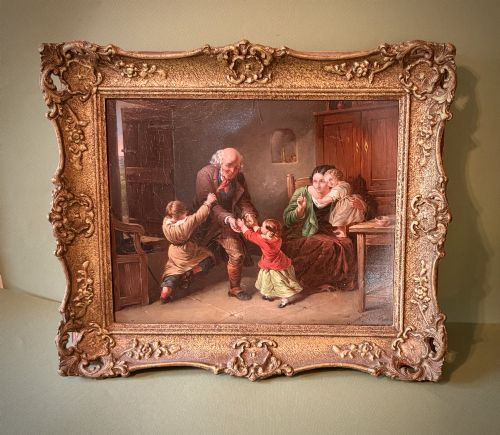
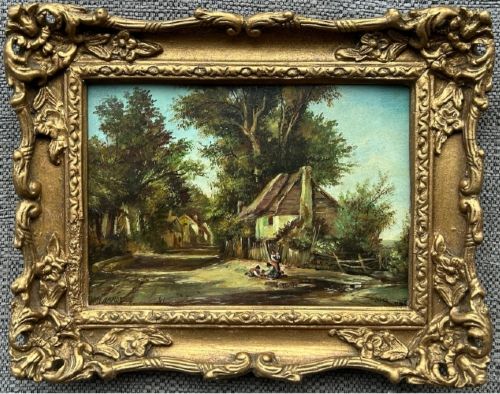
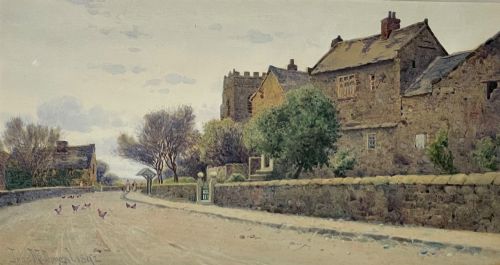
The pieces most frequently met on this page are oil paintings on panel or canvas and paper watercolours produced during the Victorian and Edwardian eras. They range from small coastal views and river watercolours to larger genre scenes featuring figures outside or inside rustic homes.
Materials and methods
Artists of this period utilised oil paint on canvas or wooden panel, watercolour pigments on paper, and occasionally lithographic printing after original compositions. Gilt wood frames frequently house these works, providing decorative borders that complement the pastoral subjects.
The physical components reflect standard studio practices of the late nineteenth and early twentieth centuries, combining organic pigments with prepared supports. Framed prints and watercolours rely on paper preservation, whilst oil works utilise stable panel or canvas foundations.
Listings span periods from the 1870s through the 1930s, featuring watercolours, oil paintings on panel and canvas, and lithographic prints.
Distinctions in quality
Quality in these works rests upon the precision of brushwork, the handling of light within landscape or interior settings, and the fidelity of anatomical and architectural detail. Stronger examples demonstrate confident draughtsmanship and careful composition rather than formulaic execution.
The presence of artist signatures, exhibition records or notable provenance elevates specific paintings and watercolours above unsigned or purely decorative workshop pieces. Frame construction and the original condition of the pigment layer further distinguish superior examples.
William Howard Hardy·John McDougal·Robert A Nottingham·Robert John Hammond·Howard Helmick·Charles Edward Wilson·Harry Brooker·John Horace Hooper·Alexander Rosell·Haynes King·James Kyd·J S Ainley·James Hardy Junior·Frederick James Knowles·George Smith·Charles Vickers·William Henry Knight·Robert Finley McIntyre·Helena Maguire·Linnie Watt·Ralph Hedley·Harry Sylvester Stannard·Henry Charles Fox·Will Anderson·Robert Hollands Walker
The Victorian Cottage Art Glossary
- Watercolour
- A painting method where water-soluble pigments are applied to paper supports. These works often capture delicate light effects in rural and coastal scenes.
- Genre painting
- The depiction of aspects of everyday life by portraying ordinary people engaged in common activities. Such works frequently feature figures inside cottages or working outdoors.
- Lithograph
- A print made from a flat stone or metal plate on which an image is drawn with a greasy substance. This technique allowed popular paintings to be reproduced for wider distribution.
- Panel
- A flat piece of wood used as a rigid support for oil paintings. Artists frequently utilised wooden panels for smaller landscape and interior subjects.
Victorian Cottage Art: Frequently Asked Questions
What subjects appear in victorian cottage art?
These works display rural cottages, farming landscapes, coastal villages and domestic interiors involving figures. Scenes often capture children playing, farm workers, or elderly residents by the fireside.
Artists drew inspiration from rural communities across Britain, recording village life and natural surroundings before widespread industrialisation altered the countryside.
How do I date these artworks?
Dating relies upon artist biography dates, stylistic markers of the Victorian and Edwardian periods, and framing materials. Signatures and exhibition records inscribed on the reverse or front provide direct chronological clues.
Support materials such as panel types and early paper watercolours also assist in placing a piece within the nineteenth or early twentieth century.
Where were these pieces displayed originally?
Victorian households hung these paintings and watercolours in parlours, drawing rooms and sitting rooms to bring a sense of pastoral tranquility indoors. Framed prints and watercolours adorned domestic wall spaces alongside larger oil canvases.
Today, these works suit similar domestic settings, pairing naturally with period furniture such as carved wooden chairs and rustic tables.
How should I care for these paintings?
Protect watercolours and prints from direct sunlight to prevent fading of the paper and pigments. Maintain stable room humidity to safeguard wooden panels and canvas supports against warping or cracking.
Keep framed works away from excessive moisture and handle them by the frame rather than the backing board when moving pieces.