


Victorian Copper Pitcher
A victorian copper pitcher brings warmth and utility to a room through heavy metalwork shaped for service in the nineteenth century.

Victorian Copper Pitcher
When you search for a victorian copper pitcher, you encounter vessels designed for measuring, pouring, and serving across the nineteenth century. These utilitarian containers range from large harvest jugs and flagons holding multiple gallons to smaller domestic vessels and miniature apprentice pieces.
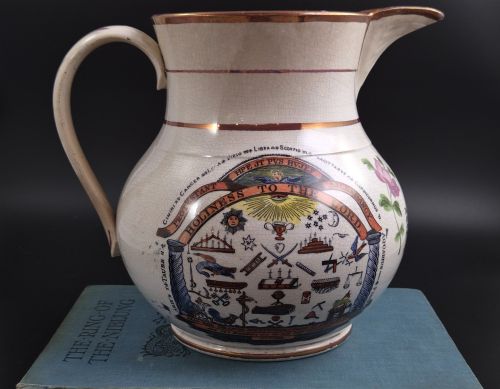
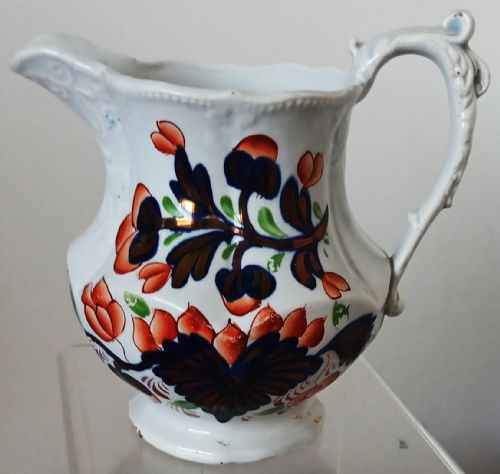
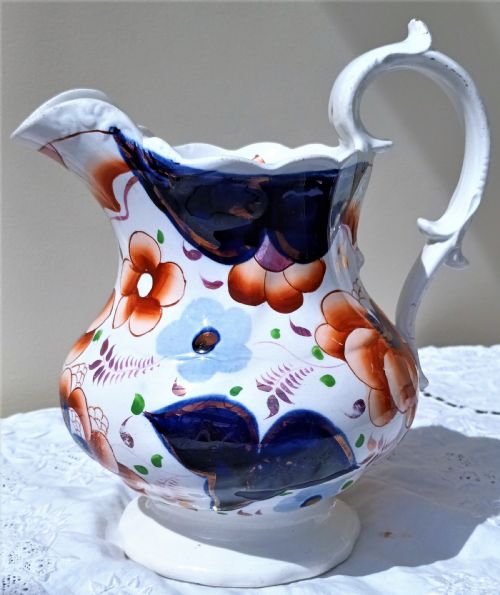
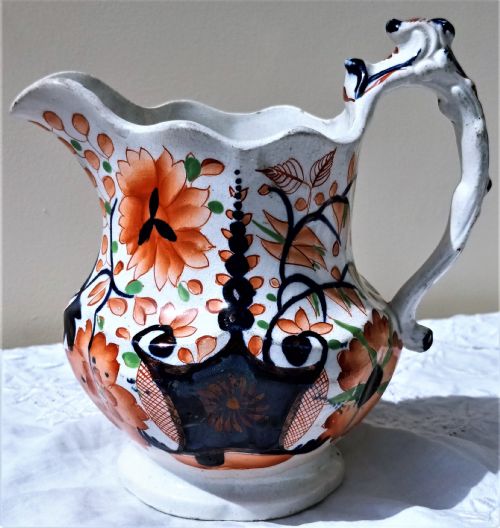
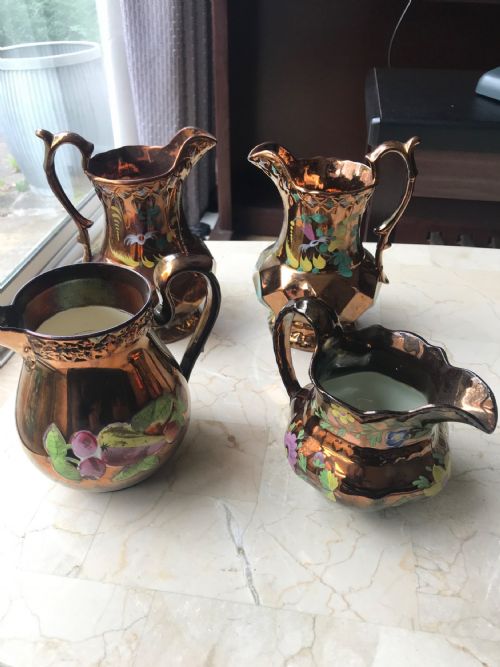
The selection on this page centres on sturdy British metalwork spanning the Victorian era alongside related ceramic forms like copper lustre earthenware. You find pieces bearing regional British styles such as Jersey cans and haystack measures sitting alongside decorative arts and crafts kitchenware.
Most examples originate from nineteenth-century workshops and domestic environments where reliable metal containers handled liquids daily. The forms vary from tall tapered measures stamped with capacity marks to broad vessels with applied brass handles suited for heavy lifting.
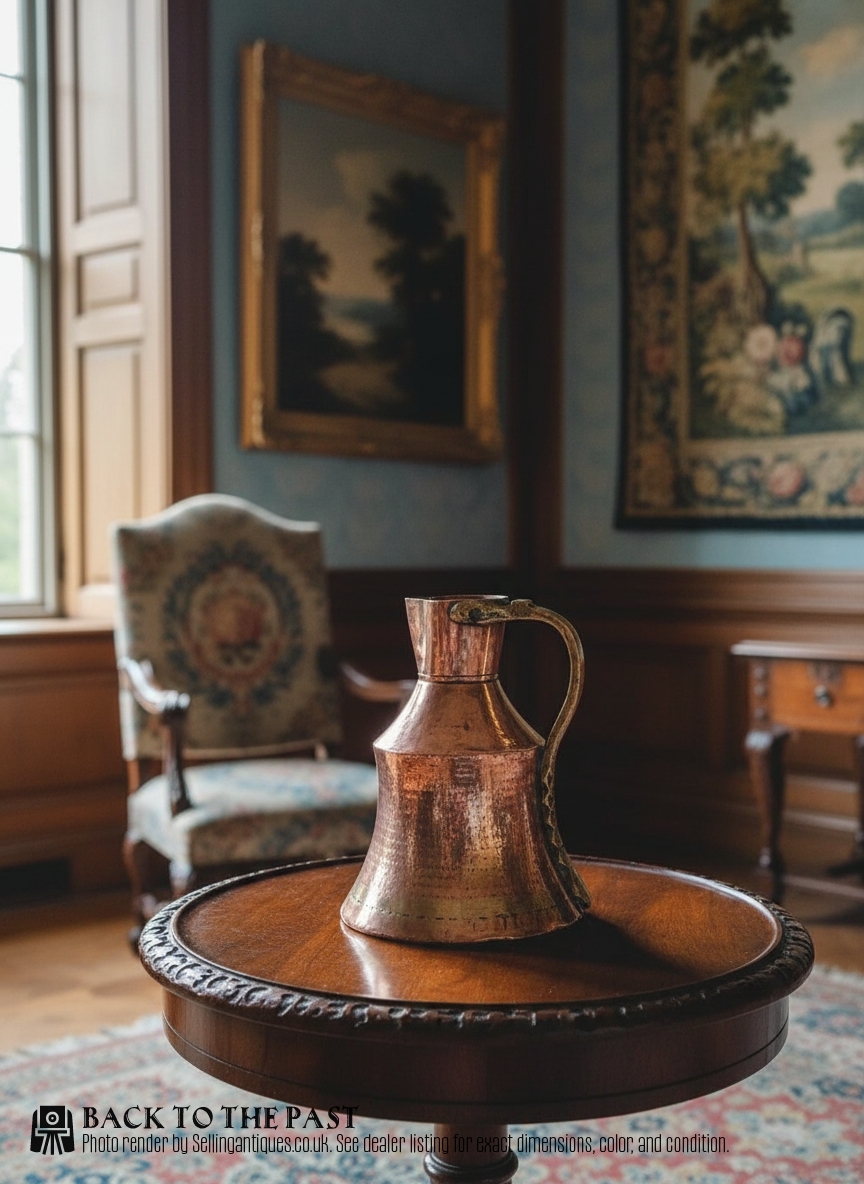
Judging Quality and Proportion
The distinction between ordinary utility items and superior examples lies in the weight of the metal and the crispness of the forming. Heavy-gauge copper retains its structural integrity better and displays cleaner lines along spouts and seams.
Proportion and scale dictate visual success in these pitchers, particularly in graduated sets and large capacity vessels. Pieces with balanced handles, well-formed pouring lips, and clear capacity stamps demonstrate superior workshop execution.
Victorian Copper Pitcher Retail Price Guide 2026
Typical asking prices for victorian copper pitcher among the pieces listed under this phrase on Sellingantiques today, from the lower quarter to the upper quarter. They describe what is for sale here now, not the wider market.
Listings feature items spanning the 1850s to the 1910s, utilising copper, brass, earthenware, and ceramic glaze materials.
J. Bower·Livesley Powell & Co
The Victorian Copper Pitcher Glossary
- Jersey can
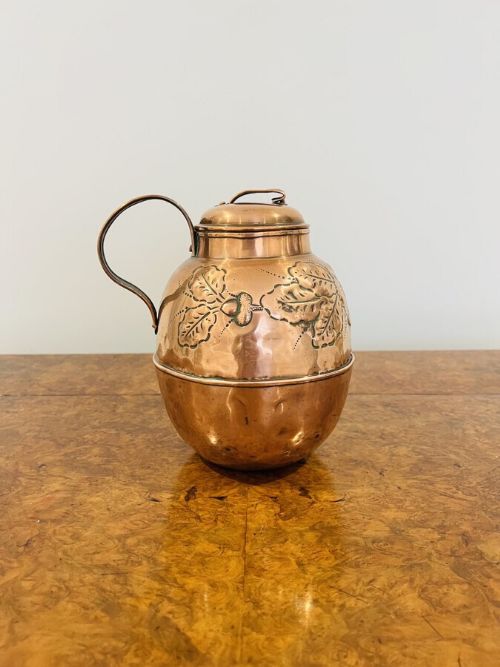
- A distinctive cylindrical metal container with a hinged lid and long spout, originating in the Channel Islands and utilised for measuring milk or cider.
- Haystack measure
- A traditional British liquid measure featuring a distinctive tapered body resembling a piled stack of hay, typically constructed in copper or brass.
- Copper lustre
- A ceramic glaze technique incorporating metallic copper nanoparticles to produce a reflective, iridescent surface finish on earthenware bodies.
- Flagon
- A large drinking or pouring vessel with a handle and often a lid, designed for holding substantial quantities of liquid at table or in taverns.
- Apprentice piece
- A miniature or scaled-down version of a standard object created by a trainee artisan to demonstrate mastery of metalworking skills.
Victorian Copper Pitcher: Frequently Asked Questions
How were copper pitchers used historically?
These vessels served practical roles in domestic households, farms, and taverns for carrying, measuring, and pouring liquids like milk, water, and ale.
Larger capacity pieces handled bulk transport and storage, while smaller jugs functioned directly at the table for serving beverages.
How do I clean an antique copper pitcher?
Maintenance typically involves preserving the natural aged surface rather than aggressive polishing, depending on the desired aesthetic. Gentle washing with warm soapy water removes dust and grease without stripping the historic patina built up over decades.
What is the difference between a jug and a flagon?
Jugs generally feature an open top with a defined pouring lip for everyday transfer of liquids into smaller cups or glasses.
Flagons are typically larger, heavier containers designed to hold substantial volumes, frequently associated with institutional service or tavern measures.
How can I tell a Victorian piece from an earlier one?
Dating relies on examining construction seams, weight, stamps, and stylistic markers recorded across nineteenth-century manufacturing traditions. Victorian examples often display standardised capacity marks and machinery-assisted sheet metal construction alongside traditional hand-beating.