



Victorian Copper Log Tub
A victorian copper log tub brings warmth and industrial utility to a hearth, formed from heavy metal to hold solid fuel or botanical displays.
Victorian Copper Log Tub
When you search for a victorian copper log tub, you find robust vessels originally constructed for domestic labour, cooking, or heating during the nineteenth century. These items appear in various forms, including log bins, planters, boilers, cauldrons, and large cooking vessels.
Surviving examples display a direct lineage from utilitarian workshop production to decorative fireside accessories. Their dual purpose as both functional containers and decorative vessels explains their lasting appeal in modern interiors.
How They Were Made
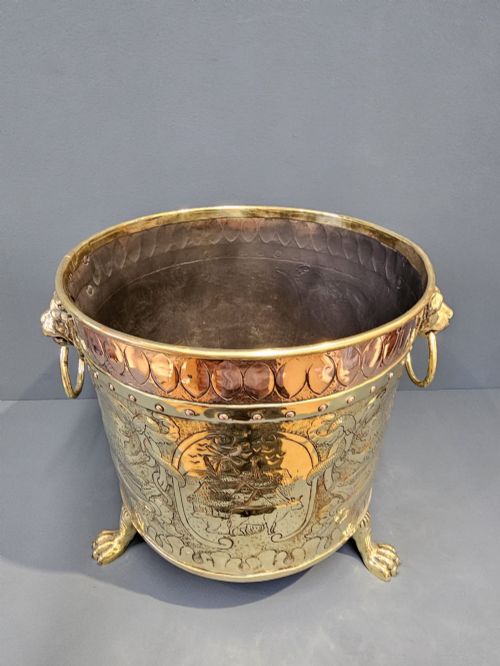
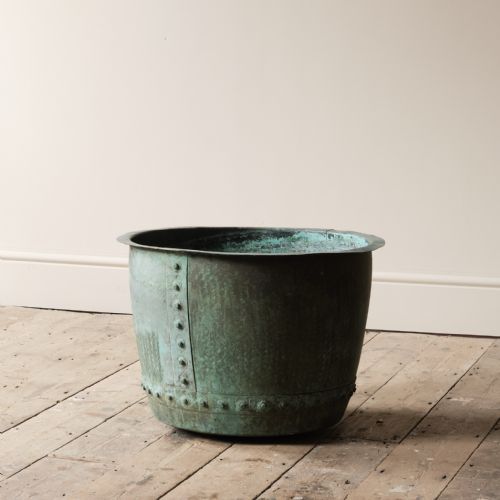
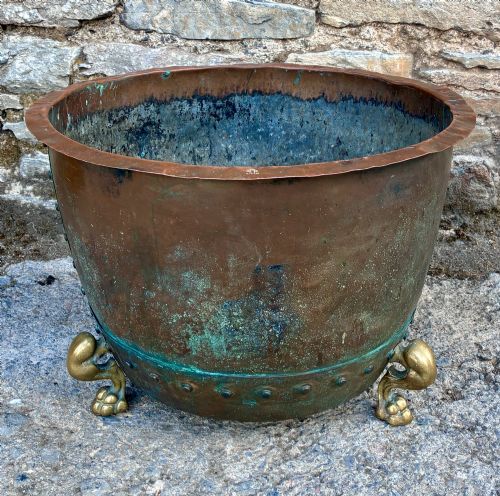
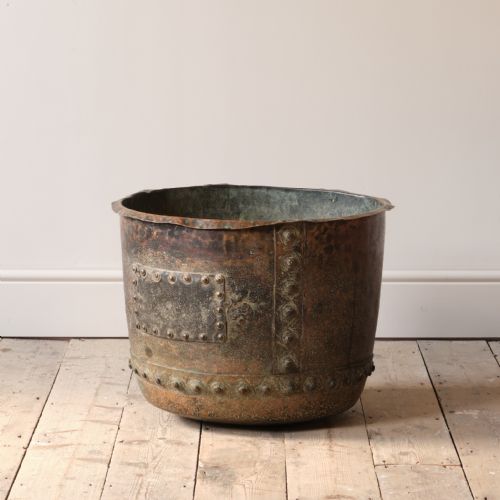
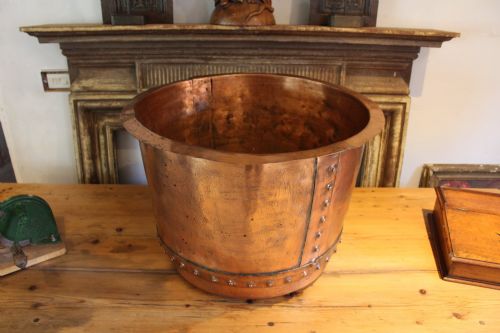
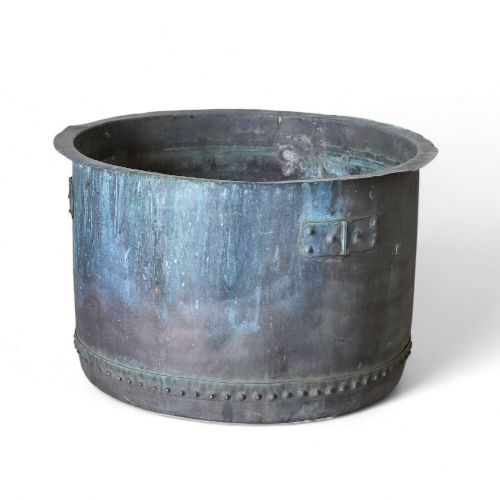
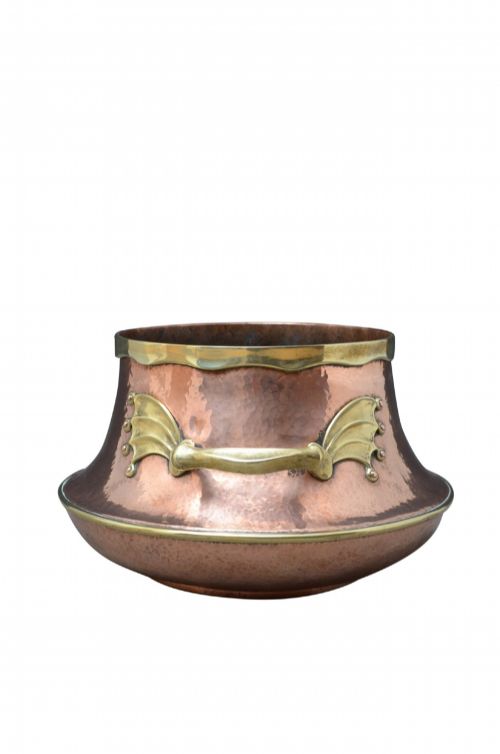
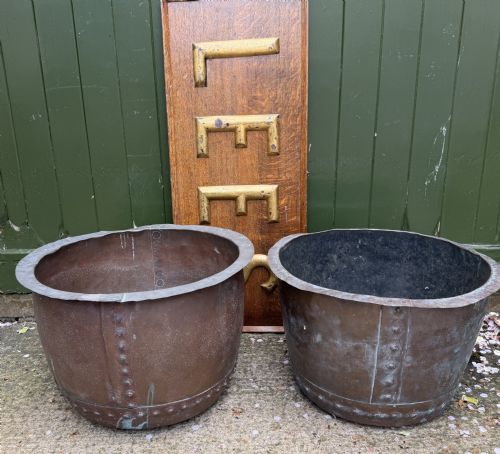
Metalworkers utilised sheet copper, joining heavy plates by hand-riveting seams to ensure structural strength for holding water, grain, or logs. Many pieces incorporate brass bands, iron swing handles, or wrought iron mounts to reinforce the soft copper body.
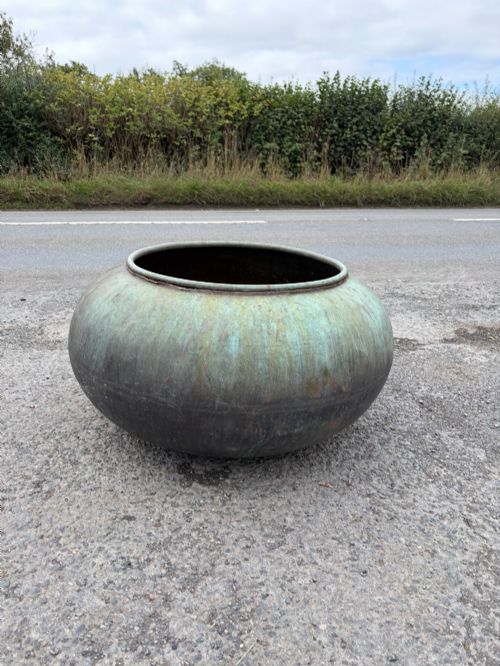
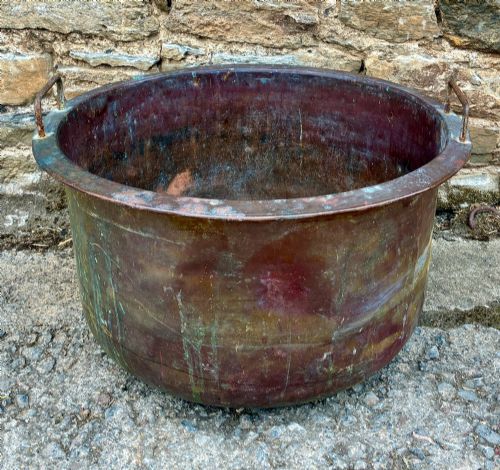
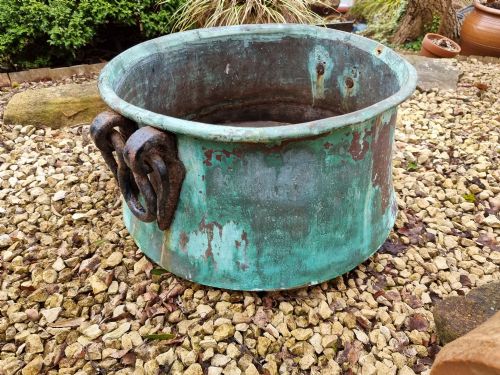
Surface finishes developed naturally through age, displaying rich patinas, hammered textures, and verdigris oxidation. Craftsmen also employed embossing techniques on specific brass and copper elements to add decorative banding to utilitarian shapes.
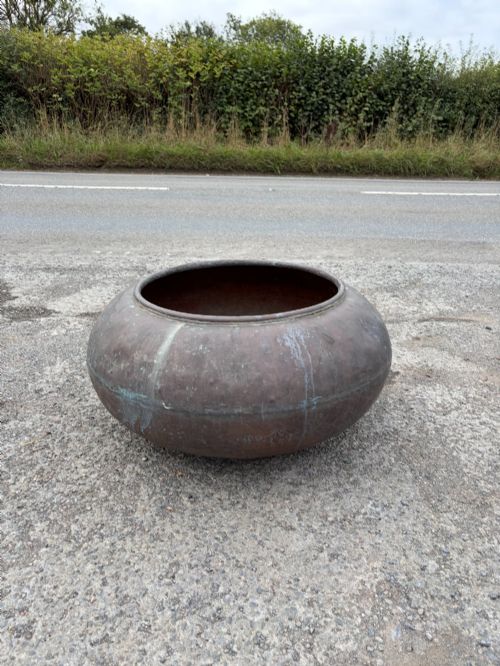
The inventory combines industrial grain measures, cauldrons, and wash tubs repurposed as fireside log bins and garden planters.
What Varies in Quality
The standard of a piece depends heavily on the integrity of its hand-riveted construction and the thickness of the original metal. Thicker gauge copper maintains its structural form better under the weight of logs or wet earth.
Visual character separates standard utility vessels from exceptional examples, governed by the depth of the natural patina and the presence of contrasting brass or iron fittings. Original handles and undisturbed surface oxidation elevate the overall presence of the object.
The Victorian Copper Log Tub Glossary
- Patina
- The surface sheen and colour acquired by copper through age and environmental exposure. This natural layer provides a key indicator of authenticity and historical depth.
- Verdigris
- The green crust or patina that forms on copper and brass through atmospheric oxidation. Collectors often value this chemical weathering for its visual texture.
- Cauldron
- A large round pot with a swing handle, traditionally used for heating liquids over an open fire. In modern settings, these heavy vessels serve as substantial log containers.
- Grain measure
- A standardised cylindrical vessel utilised for measuring dry agricultural produce. These stout containers translate well into deep fireside bins.
- Jardiniere
- An ornamental pot or stand designed to hold growing plants or floral displays. These decorative vessels frequently overlap in form with fireside log receptacles.
Victorian Copper Log Tub: Frequently Asked Questions
What were copper tubs originally used for?
These robust vessels served demanding domestic and agricultural roles, functioning as wash tubs, grain measures, and large cooking cauldrons over open fires.
Over time, many of these heavy-duty containers migrated from sculleries and farmhouses to hearths and gardens as their original utilitarian purposes faded.
How do I clean a vintage copper tub?
Most collectors prefer to leave the accumulated patina and verdigris intact, as these surface layers demonstrate genuine age and historical character.
If you choose to brighten the metal, use a gentle copper cleaner that avoids stripping the underlying texture and hand-hammered details.
Can I use an antique tub outdoors?
Many of these vessels function well as garden planters and log holders outdoors due to the natural weather-resistance of heavy copper.
Iron handles and fittings on certain pieces may require monitoring for rust if exposed to persistent moisture over many seasons.
How do I identify a Victorian piece?
Makers from the nineteenth century relied on hand-riveting techniques, heavy gauge copper sheets, and forged iron handles rather than modern machine welding.
Stylistic cues such as Arts and Crafts movement influences or utilitarian brass banding help anchor the object within the Victorian period.