



Victorian Copper Charger
These victorian copper charger plates are substantial decorative wall plates and trays that bring rich metallic warmth and texture to an interior.
Victorian Copper Charger
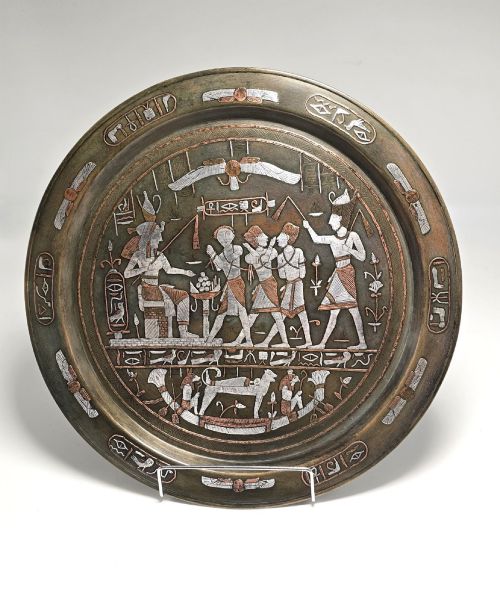
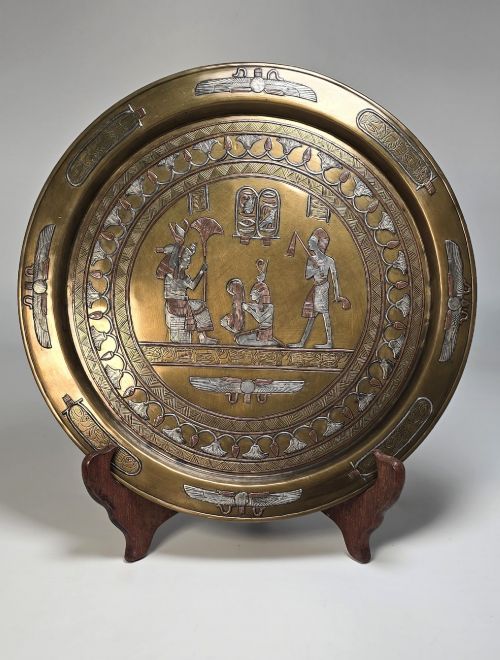
A victorian copper charger is a broad metal disc originally created for display or service, encompassing forms such as wall plaques, decorative trays, and heavy platters. These vessels appear in varied stylistic interpretations spanning the nineteenth century, including Gothic Revival, Arts and Crafts, and Egyptian Revival aesthetics.
The versions most frequently met on this page combine functional metalwork with elaborate surface ornament, reflecting global design influences from Anglo-Indian and Indo-Persian traditions alongside domestic British tastes. They range from plain hammered surfaces with pie crust edges to deeply chased pictorial scenes.
How they were made
Makers shaped these objects primarily from sheet copper, sometimes combining brass, bronze, and silver plating to create tonal contrast across the surface. Artisans utilised techniques such as hand hammering, piercing, and repoussé work to raise and depress the metal into intricate motifs.
Surface detail was further achieved through engraving and silver inlay, as seen in Cairo Ware and Kashmiri examples, while other pieces incorporated enamel or specialised border treatments like pie crust edges.
Victorian Copper Charger Retail Price Guide 2026
Typical asking prices for victorian copper charger among the pieces listed under this phrase on Sellingantiques today, from the lower quarter to the upper quarter. They describe what is for sale here now, not the wider market.
Materials across these listings include copper, brass, silver, bronze, enamel, and silver plate.
What varies in quality
Quality rests upon the depth and crispness of the hand-worked decoration, distinguishing pieces with sharp repoussé and precise piercing from softer, shallower stampings. The weight of the metal and the integrity of the joins or inlay work dictate the overall substance of the object.
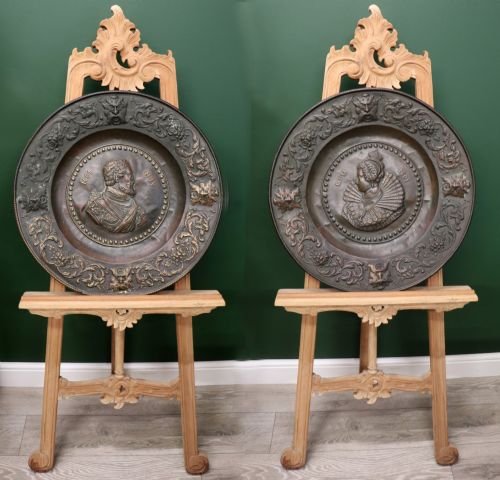
Design cohesion also marks the distinction between standard production items and superior examples, particularly where diverse stylistic elements such as animal motifs or historical portraits are integrated with skill.
The Victorian Copper Charger Glossary
- Repoussé
- A metalworking technique where the artisan hammers the design from the reverse side to form a raised relief on the front. This method creates tactile depth across the copper surface.
- Cairo Ware
- Metalware produced in Egypt during the late nineteenth century, typically featuring heavy brass or silver inlay on copper or bronze grounds. These pieces often reflect Grand Tour tastes.
- Pierced
- Work where portions of the metal sheet are cut completely through to create openwork patterns and borders. This technique lightens heavy trays and introduces intricate lace-like designs.
- Pie crust edge
- A decorative raised border shaped into undulating or scalloped curves resembling traditional pastry work. It provides a distinct finishing rim to large copper trays.
- Cloisonné
- An enamel technique where thin metal wires are soldered to a base to form compartments filled with vitreous paste. It adds vibrant colour to metallic trays and plates.
Victorian Copper Charger: Frequently Asked Questions
How were victorian copper chargers used?
These large metal discs served primarily as decorative wall plaques or display chargers rather than everyday tableware. They were hung in reception rooms or placed on sideboards to reflect candlelight and showcase artisanal skill.
In some contexts, they functioned as presentation trays or ceremonial vessels, particularly those featuring engraved or repoussé presentation inscriptions and intricate regional motifs.
How do I hang a wall charger safely?
Hanging a heavy metal charger requires a secure wall fixing that supports the full weight of the piece without stressing the rim or decorative edge. Spring-loaded brass plate hangers with rubber-tipped grips distribute pressure evenly around the circumference.
Alternatively, custom concealed brackets that support the base can be utilised for heavier plaques and shields to ensure stability on the wall.
How do I clean copper and brass safely?
Routine maintenance requires only gentle dusting with a soft, dry cloth to prevent the accumulation of grime within the repoussé recesses. Avoid harsh chemical dips or abrasive metal polishes that strip away the natural historic patina and fine surface details.
If cleaning is necessary, use a mild, non-abrasive metal cleaner specifically formulated for antique copper, testing a small hidden area first.
How do I tell different regional styles apart?
Regional styles reveal themselves through distinct decorative motifs and manufacturing techniques native to specific workshops and cultures. Indo-Persian and Raj period pieces often feature dense, hand-pierced foliage and deep repoussé work, while Cairo Ware is identified by contrasting silver and brass inlay on dark bronze or copper.
European interpretations lean towards Gothic Revival portraits or Arts and Crafts hammered textures with animal motifs.