
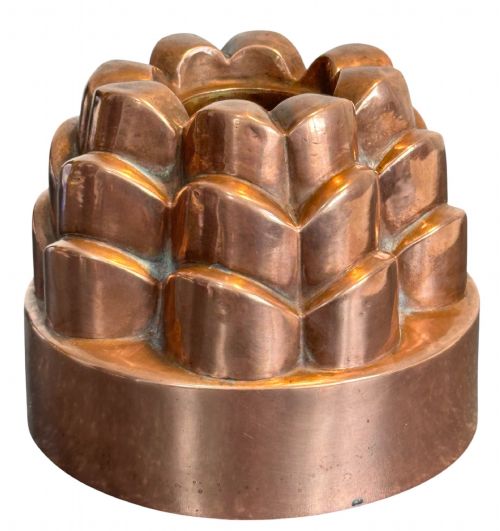

Victorian Copper Cake Mould
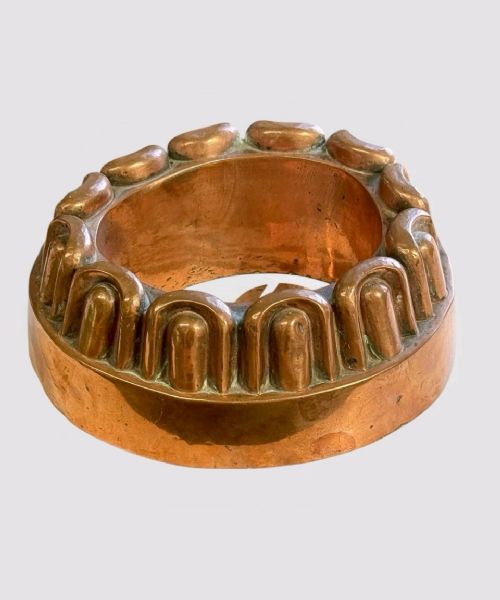
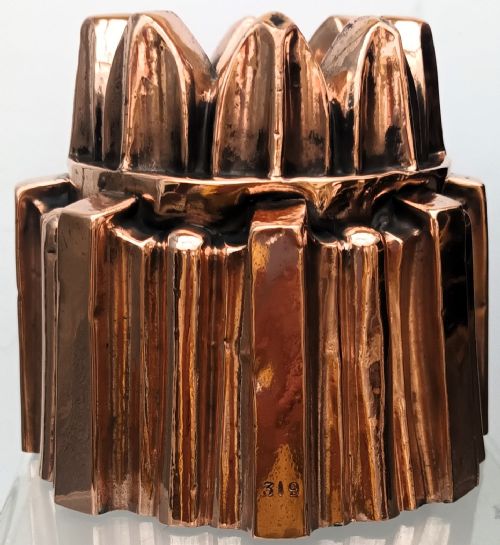
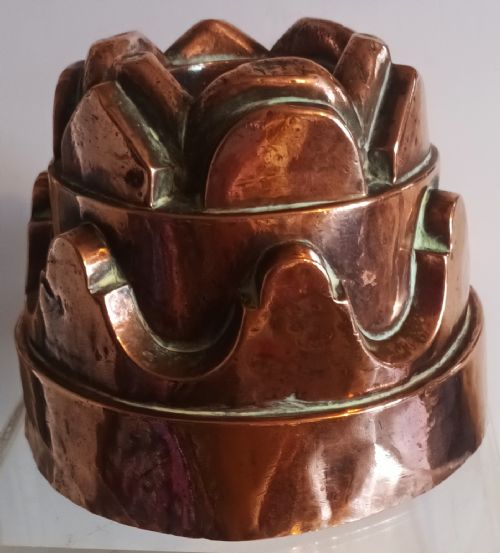
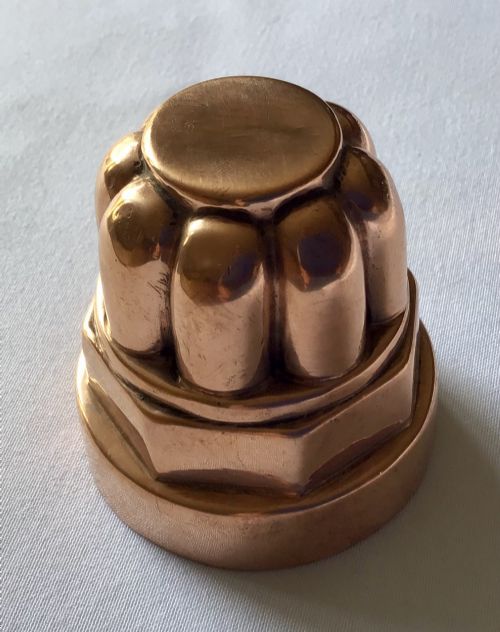
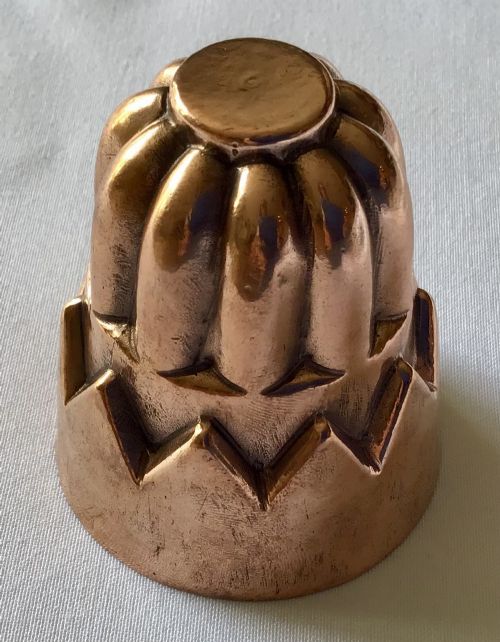
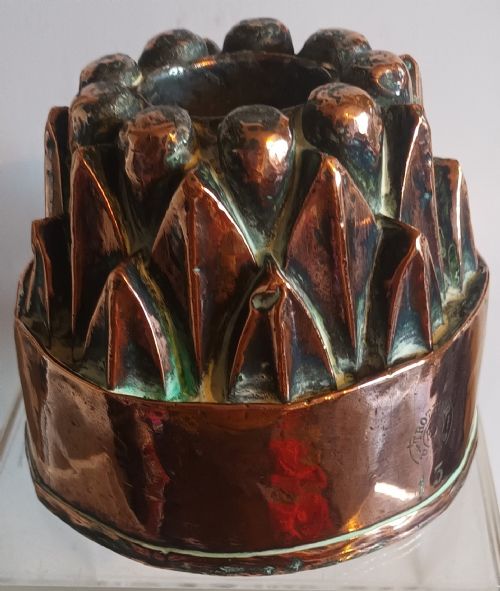
These Victorian copper cake mould pieces are solid kitchenalia built to shape jellies and bakes with sharp architectural detail.
Victorian Copper Cake Mould
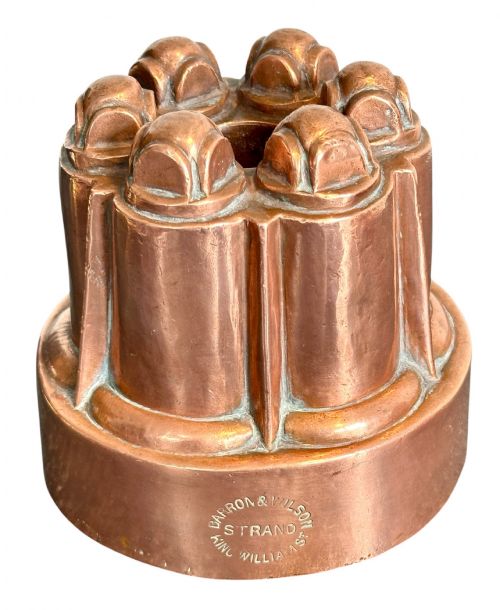
The selection ranges from English workshop pieces to nineteenth-century French kitchen moulds bearing maker marks. Buyers find utilitarian kitchenware designed both for heavy food preparation and display on kitchen walls.
Materials and Construction
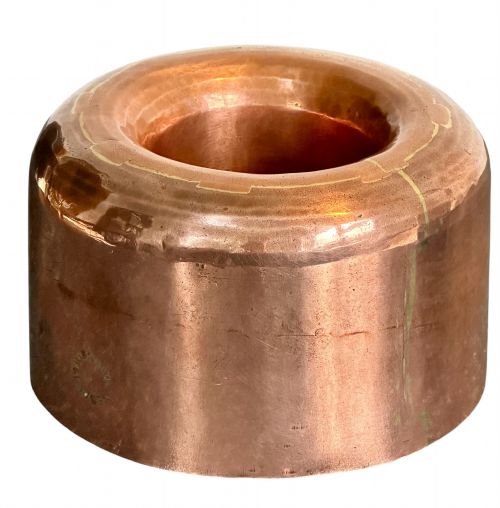
Each piece is formed from heavy sheet copper, shaped to create intricate fluted or figural designs on the interior. The exterior metal carries the characteristic warmth of nineteenth-century copper work.
Interiors are lined with tin to prevent food from reacting directly with the copper during use. This traditional tin lining appears duller and softer in colour than the polished exterior metal.
Miniature moulds let Victorian cooks serve single jellies small enough to sit comfortably in the palm of a hand.
Judging Quality
Quality rests upon the crispness of the interior stamping and the weight of the metal plate. Sharply defined turrets on a castle top or deep fluting denote superior workmanship.
The integrity of the internal tin lining and the smoothness of the external seams dictate the standard of survival. Heavier gauge copper maintains its structural form better over centuries of handling.
Trottier
The Victorian Copper Cake Mould Glossary
- Tin lined
- A protective coating applied to the interior surface of copper culinary vessels to ensure safe food contact. This layer prevents direct contact between acidic ingredients and the reactive copper beneath.
- Kitchenalia
- Domestic utensils and culinary equipment collected for historic interest and decorative display. These items reflect nineteenth-century domestic life and food preparation methods.
- Castle top
- A mould design featuring architectural ramparts, turrets or crenellations modelled after fortresses. This decorative motif produces elaborate shapes in set jellies and cakes.
- Miniature
- A scaled-down version of a standard domestic mould, produced for individual portions or ornamental purposes. These smaller pieces require precise metalwork to retain fine detail.
Victorian Copper Cake Mould: Frequently Asked Questions
What were these moulds used for?
These vessels were utilised in nineteenth-century kitchens to shape jellies, aspics, and baked puddings for the dining table.
The intricate internal designs transferred complex patterns onto the food before it was turned out for serving.
How do I clean my copper mould?
Maintenance requires washing the piece in warm soapy water and drying it thoroughly to preserve the metal.
Harsh abrasives should be avoided on the tin interior, whilst the exterior copper can be polished periodically with a dedicated metal cleaner.
Can I still use these for cooking?
Utilising them for modern baking depends entirely on the intact state of the internal tin lining.
If the tin has worn away to expose bare copper, the piece remains strictly for decorative display rather than food preparation.
How do I identify a Victorian piece?
Dating relies on observing the heft of the copper sheet, the method of seam construction, and the overall form.
Nineteenth-century examples display hand-beaten characteristics and specific historical shapes not found in modern reproductions.