




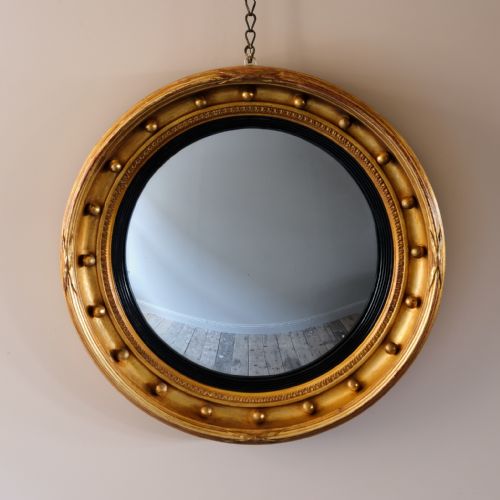


Victorian Convex Wall Mirror
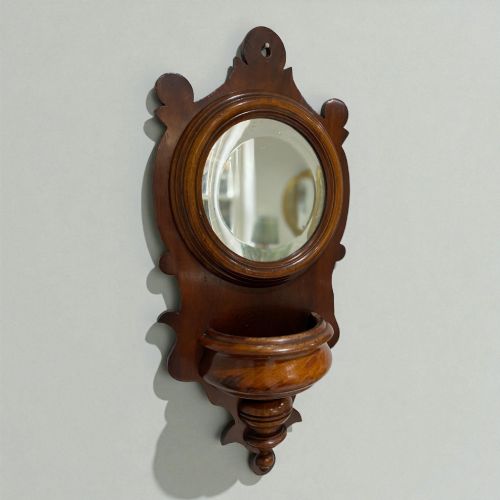
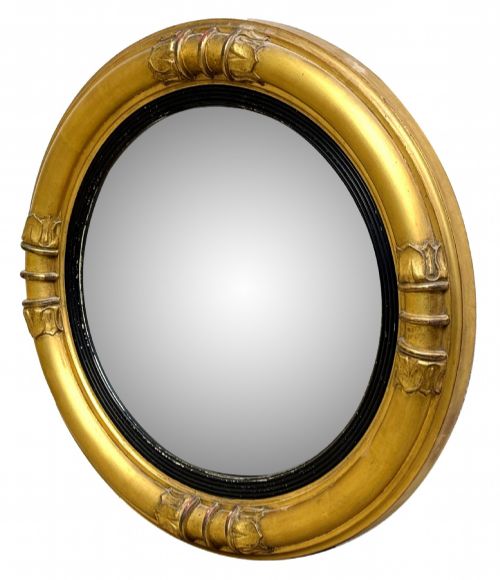
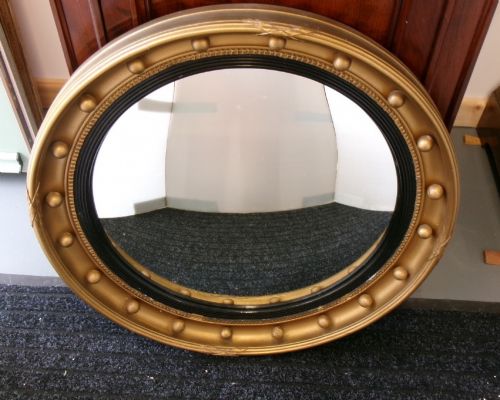
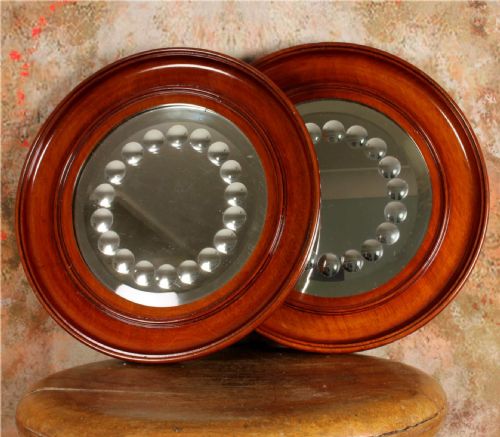
These Victorian convex wall mirror examples bring deep focal depth and curved reflection to a room, functioning as traditional interior optics.
Victorian Convex Wall Mirror
A Victorian convex wall mirror draws the eye with its globular glass surface, capturing a wide sweep of an interior within a compact circular frame. When exploring a Victorian convex wall mirror, you encounter forms ranging from modest hall glasses to large giltwood presentation pieces.
The selections span the nineteenth century, including examples from around eighteen eighty up to nineteen hundred. Many pieces adopt the circular format, while some incorporate multi-convex arrangements or pair formats.
Alongside dedicated wall mirrors, the category encompasses related circular optics and wheel barometers housed in timber cases. These objects reflect both domestic utility and ornamental display traditions of the period.
Materials and construction
Makers shaped these frames primarily from timber, employing giltwood, ebonised wood, mahogany, and carved gesso. Gold leaf finishes were frequently applied to create the reflective, luminous borders characteristic of the style.
The distinctive curved glass pane creates the wide-angle reflection central to the form. Frames often feature applied ornamentation, reeded ebony slips, and substantial wooden backing structures to secure the heavy curved glass.
Victorian Convex Wall Mirror Retail Price Guide 2026
Typical asking prices for victorian convex wall mirror among the pieces listed under this phrase on Sellingantiques today, from the lower quarter to the upper quarter. They describe what is for sale here now, not the wider market.
Periods represented span the Victorian era, nineteenth century, and specific decades from eighteen eighty to nineteen hundred.
Judging quality and character
Quality rests in the crispness of the carved gesso and the integrity of the original gold leaf or ebonised finish. Superior examples display refined joinery in the circular frame and minimal distortion or foxing in the heavy curved glass plate.
The presence of untouched period surfaces and original backboards elevates an example significantly. Lesser pieces may show heavy re-gilding or replacement glass that alters the historical balance of the object.
W.E. Pain of Cambridge
The Victorian Convex Wall Mirror Glossary
- Convex mirror
- A circular glass plate curved outward to reflect a wide-angle, distortion-heavy view of the surrounding room. It is often called a witch's mirror or sorcerer's mirror.
- Giltwood
- Timber carved and coated with a thin layer of gold leaf or metallic powder. This finish provides a bright, reflective border to the central glass.
- Gesso
- A plaster-like mixture applied to wood frames and carved or moulded into decorative details. It forms the base for subsequent gilding.
- Ebonised wood
- Timber treated with a dark stain or finish to imitate ebony. This technique creates a sharp contrast against gilt sight rings.
- Wheel barometer
- A domestic instrument housed in a circular wooden case that often incorporates a convex mirror at its centre. It measures atmospheric pressure while serving as wall decoration.
Victorian Convex Wall Mirror: Frequently Asked Questions
Where should I hang a convex mirror?
These mirrors excel in entrance halls, formal dining rooms, and narrow spaces where they bounce light and reflect a panoramic view of the interior. Placing them opposite a window maximises the distribution of natural daylight.
Because of their optical distortion, they function best at eye level where viewers can appreciate the miniature room projection without practical vanity use.
Why are they called witch mirrors?
Historical folklore suggested that the wide-angle reflection of a curved glass pane could monitor domestic spaces and ward off negative spirits. This protective superstition led to the alternative names of sorcerer or witching mirrors.
Over time, the moniker shifted from a term of magical utility to a descriptive title for nineteenth-century spherical glass optics.
How do I clean nineteenth-century mirror glass?
Use a dry, soft microfiber cloth to gently remove dust from the glass surface and carved frame details. Avoid harsh commercial cleaners that might seep behind the glass plate and damage the historical silvering.
Moisture can easily degrade old backing materials and original gesso, so keeping the cleaning process dry preserves the integrity of the piece.
Are these mirrors heavy to hang?
The combination of thick curved glass and dense timber framing makes these pieces surprisingly substantial. Secure wall fixings into masonry or structural studs are essential for safe support.
Checking the stability of the hanging ring and the wooden frame backboard before installation prevents accidental slips.