


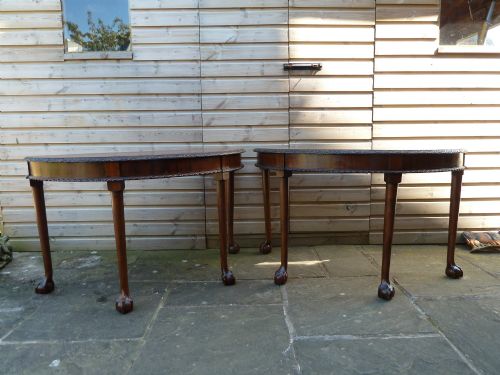


Victorian Console Tables Pair
These Victorian console tables pair pieces of matching design to anchor a room with balanced symmetry and period character.
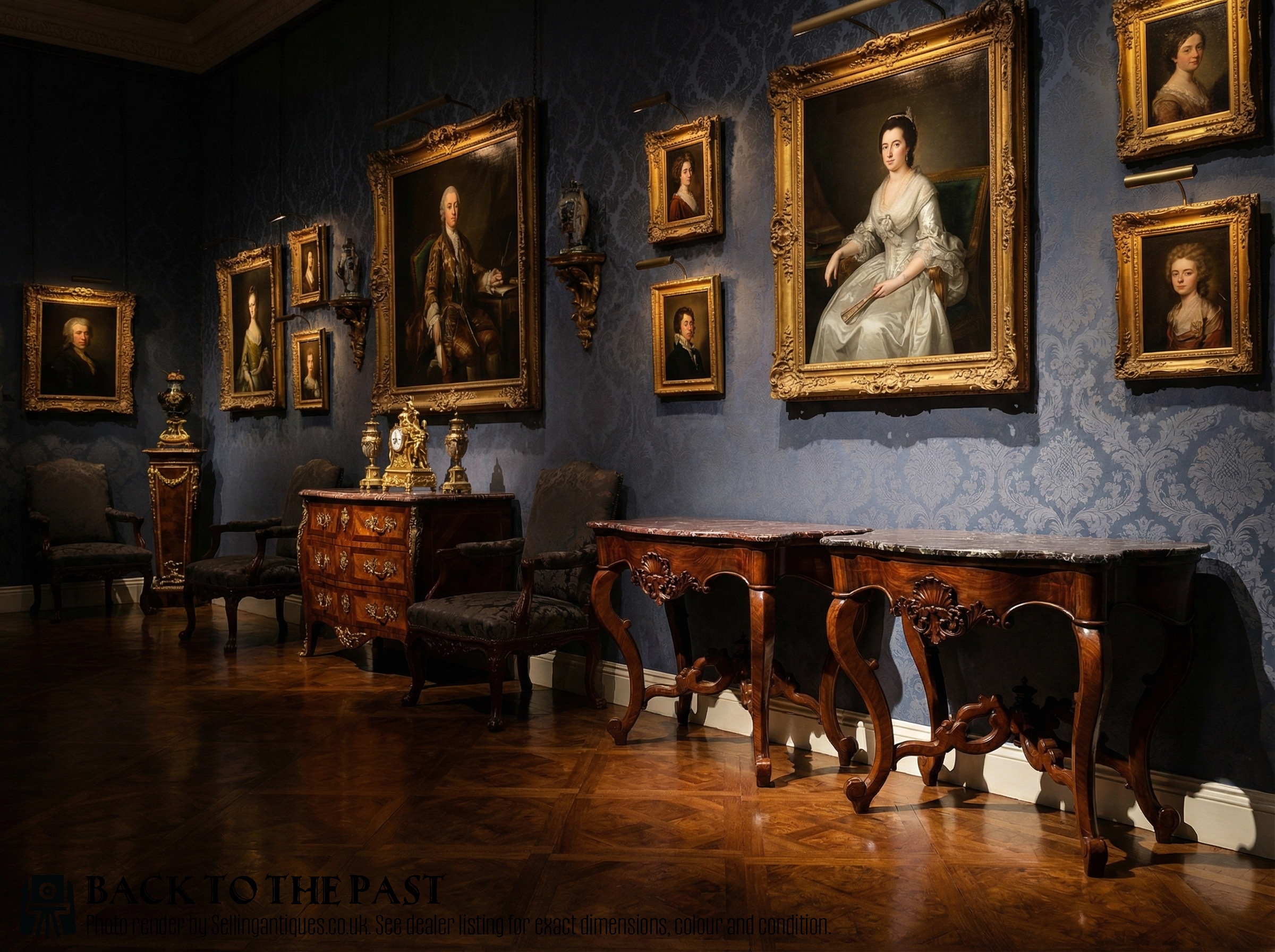
Victorian Console Tables Pair
A victorian console tables pair brings balanced symmetry to an interior through matching furniture created during the nineteenth century. These sets typically take the form of half-round demilune shapes or rectangular surfaces designed to stand against a wall, sometimes accompanied by matching wall mirrors.
The selections encountered here range from straightforward timber construction to elaborate revival designs influenced by earlier centuries. Examples include card tables, tea tables, and serving tables that share identical dimensions, timbers, and decorative vocabularies.
Origins span standard nineteenth-century workshops as well as Irish provincial pieces and continental revivals. Buyers select these matched sets to flank a fireplace, anchor a hallway, or furnish a formal reception room with architectural harmony.
Materials and construction
Cabinetmakers utilised dense hardwoods such as mahogany, walnut, burr walnut, rosewood, and satinbirch for the primary carcases and framing. Timber veneers and marquetry inlay added decorative surface pattern, while parcel-gilt and gesso treatments provided gilded highlights.
Heavy white marble tops appear frequently on nineteenth-century examples, providing a cool stone surface above wooden bases. Mirror glass and porcelain plaques are integrated into specific decorative schemes, supported by brass hardware and structural joinery.
Victorian Console Tables Pair Retail Price Guide 2026
Typical asking prices for victorian console tables pair among the pieces listed under this phrase on Sellingantiques today, from the lower quarter to the upper quarter. They describe what is for sale here now, not the wider market.
Listings feature mahogany, walnut, and burr walnut alongside marble and mirror glass across nineteenth-century periods.
Assessing quality
Quality depends upon the depth and crispness of carved detail, particularly on cabriole legs, scrollwork, and figurative elements such as the carved hounds seen in Black Forest examples. The choice of timber grain, notably figured burr walnut or well-matched mahogany veneers, dictates visual depth.
The cohesion of the pairing matters significantly, distinguishing tables made as a unified pair from later assembled matches. Superior pieces display consistent colour, uniform fading across the timber, and balanced proportions between the table base and the marble or wooden top.
Gillows·Donald Ross
The Victorian Console Tables Pair Glossary
- Demilune
- A half-moon shape used for console tables designed to fit flush against a wall. This curved form was popular during the nineteenth century for saving floor space.
- Marquetry
- Decorative patterns formed by fitting contrasting veneer pieces into a wood background. Cabinetmakers used floral and geometric marquetry to ornament tabletops.
- Gesso
- A plaster-like mixture applied to wood surfaces as a base for gilding or painting. It allowed carvers to achieve sharp relief details on Victorian frames.
- Girandole
- A branched wall mirror or candlestick holder designed to reflect light. These often accompanied console tables in formal nineteenth-century interiors.
- Parcel-gilt
- Partially gilded woodwork where gold leaf highlights specific carved details against a dark walnut or painted background.
Victorian Console Tables Pair: Frequently Asked Questions
How do I place a console table pair in a hallway?
Position the matching tables along opposite walls or side by side beneath a large mirror to create an expansive entry view. Ensure sufficient clearance remains for foot traffic around the furniture.
Alternatively, split the pair between a reception room and an entrance hall to repeat timber tones throughout the ground floor.
Were these tables always made as pairs originally?
Cabinetmakers frequently produced matching tables for grand nineteenth-century reception rooms to maintain symmetrical interior design. Some listings represent matched pairs assembled later from individual tables sharing identical timber and proportions.
Examine the grain patterns and construction marks to determine whether the pieces originated from the same workshop bench.
How should I care for marble tops on nineteenth-century tables?
Clean the stone surface using a soft cloth dampened with warm water and mild neutral soap, avoiding acidic cleaning solutions that etch polished marble. Protect the stone from heavy impacts and moisture rings by using coasters.
Wax the wooden bases separately using traditional furniture wax to maintain the finish without transferring residue to the stone.
What is the difference between a console table and a card table?
Console tables are designed primarily for display against a wall, frequently featuring fixed marble tops or decorative wooden surfaces. Card tables include a folding top mechanism that opens to reveal a baize-lined playing surface.
Both forms appear in nineteenth-century pairs, serving decorative and functional roles in period drawing rooms.