
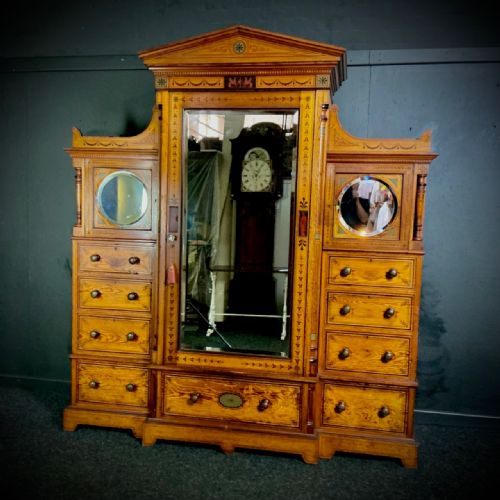
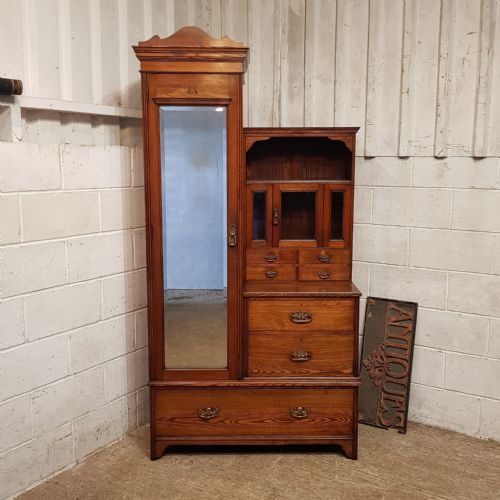
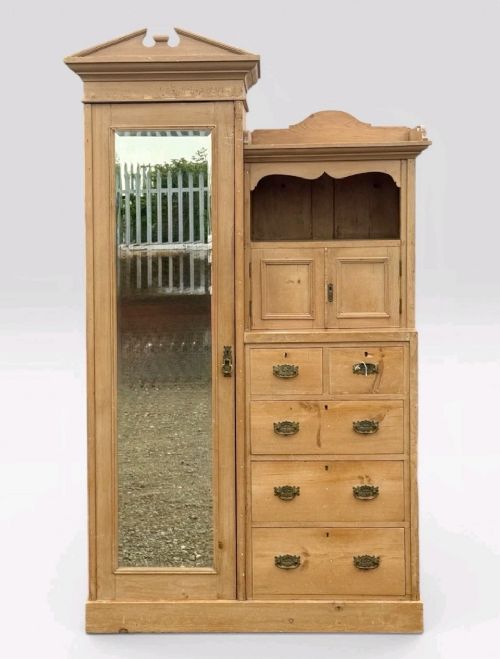


Victorian Combination Wardrobe
A victorian combination wardrobe brings hanging space, drawers and cupboards together in one substantial piece of bedroom furniture.
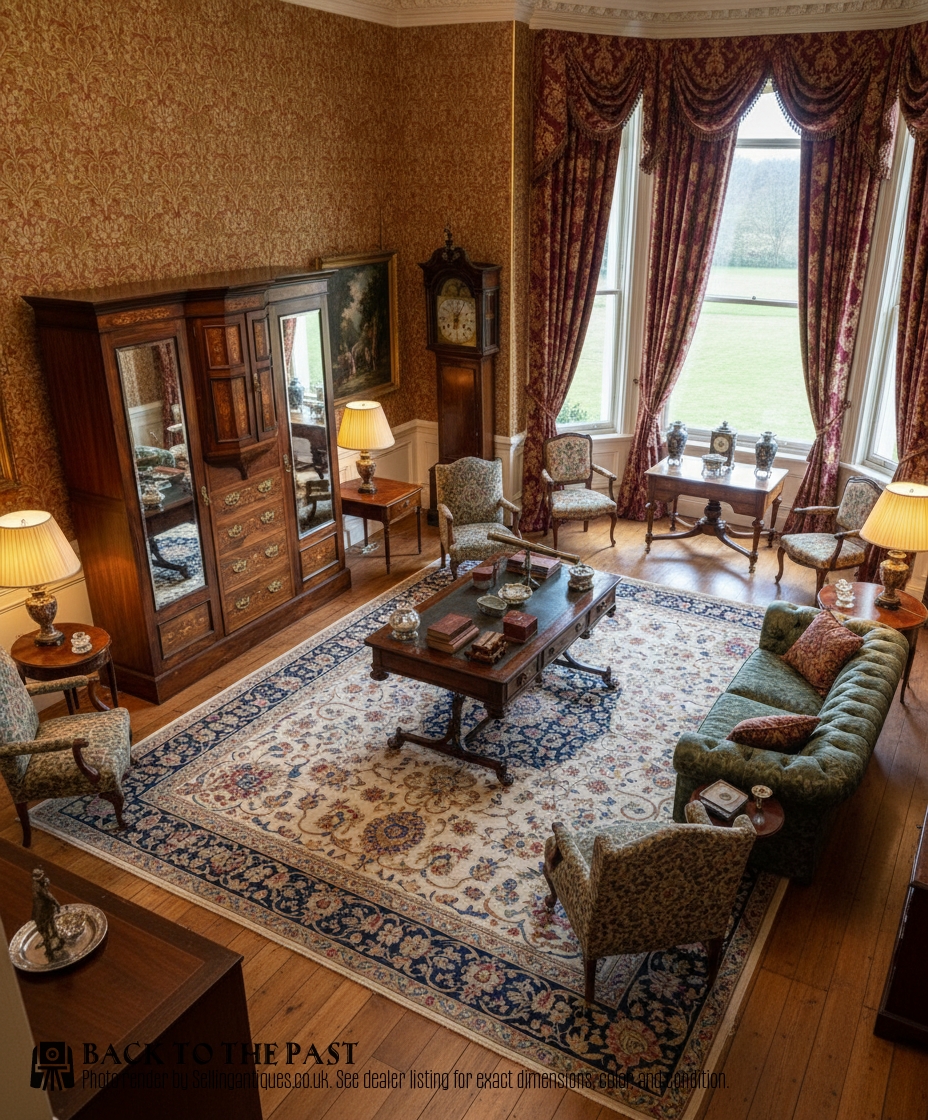
Victorian Combination Wardrobe
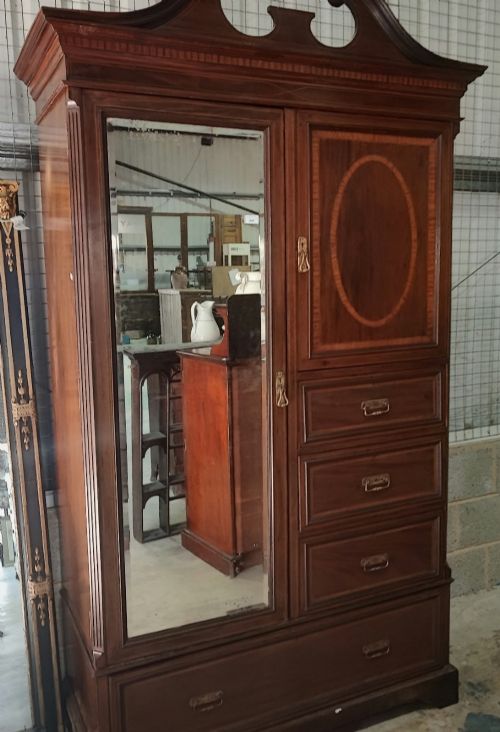
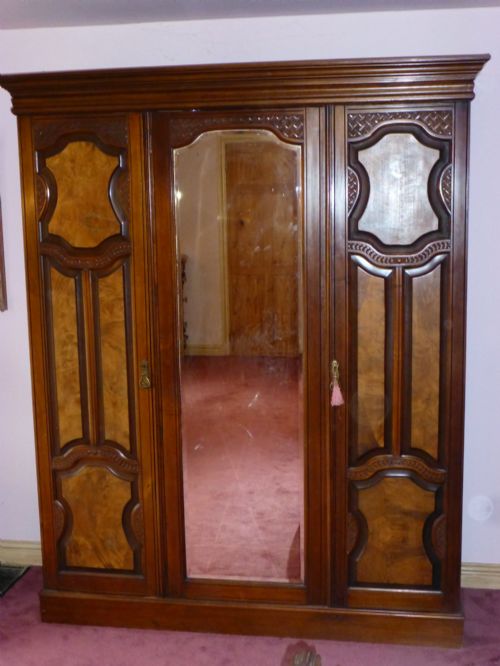
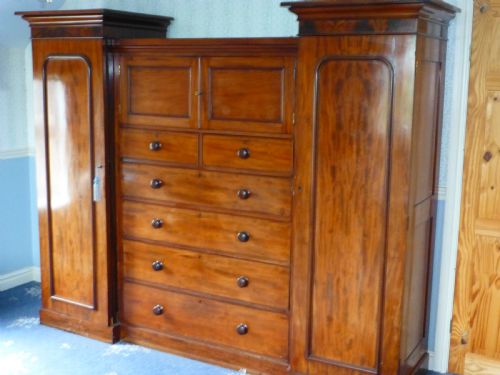
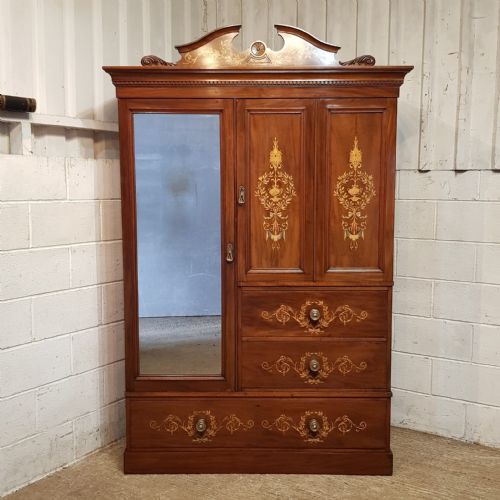
A victorian combination wardrobe provides fitted storage solutions by uniting hanging compartments with drawer stacks and internal shelving within a single architectural frame. These pieces often take the form of compactums or triple wardrobes, making them practical for storing a complete gentleman's or lady's attire.
The examples found here span the nineteenth century, ranging from early mahogany sentry box designs to late victorian walnut and ash iterations. Many incorporate breakfront profiles or knockdown construction methods that allow the large carcasses to be dismantled for transport.
Makers and workshops of the period utilised various formats, including smaller single compactums and expansive bedroom suites featuring matching dressing chests. Pine country versions sit alongside highly figured walnut and inlaid mahogany pieces designed for grander town houses.
Materials and Construction
Cabinet makers built these wardrobes using solid timbers such as mahogany, pine, ash and walnut, frequently applying burr walnut, satinwood, maple or rosewood veneers to primary surfaces. Brass handles, glass mirror panels and interior metal hooks complete the functional hardware of the carcass.
Construction relies on sturdy panel-and-frame joinery, with internal drawer boxes typically joined by dovetails and lined with secondary softwoods. Knockdown variants employ internal bolts and slot-together panels to ensure structural stability while permitting disassembly.
Design styles recorded across the inventory range from early victorian to arts and crafts and late victorian periods.
Judging Quality and Finish
Quality rests upon the selection of timber veneers, where symmetrical burr walnut or figured mahogany displays superior grain matching across large doors and drawer fronts. Subtle string inlay, marquetry details and brass mounts indicate higher workshop standards.
Internal configuration and drawer depth also mark the grade of the piece, with secondary cedar or mahogany linings and original brass hanging fittings denoting finer manufacture. The crispness of carved mouldings and the smoothness of breakfront alignment separate standard utility pieces from high cabinet maker output.
Edwards and Roberts·Holland and Sons·Gillows·Shapland and Petter
The Victorian Combination Wardrobe Glossary
- Compactum
- A multi-functional wardrobe that integrates drawers, hanging space and shelves into a single enclosed unit. These pieces were designed to maximise storage efficiency in bedrooms.
- Inverted breakfront
- A cabinet front where the central section projects forward while the outer wings recede. This architectural layout creates depth and shadow across the facade.
- Sentry box
- A narrow, tall single wardrobe design reminiscent of a sentry post. It offers compact vertical hanging space often found in early pieces.
- Knockdown
- Furniture constructed to be easily dismantled into separate panels and sections for moving. Large wardrobes often utilised this system for delivery up stairs.
Victorian Combination Wardrobe: Frequently Asked Questions
How do I dismantle a heavy wardrobe?
Most large examples utilise internal bolts and interlocking panels that separate once the cornice, doors and backboards are removed.
Marking each corresponding joint with chalk before disassembly ensures the carcass reassembles correctly in a new room.
Are these pieces too large for modern bedrooms?
While triple wardrobes and breakfront compactums require substantial wall space and high ceilings, single and ash variants offer narrower footprints.
Checking overall height and depth dimensions against your room layout prevents fitting issues.
Can painted pine wardrobes be stripped back?
Many pine country pieces were historically waxed or left for custom painting, allowing buyers to strip surface layers down to raw timber.
Testing a hidden area helps determine whether the pine underneath holds a clean finish or previous stain.