

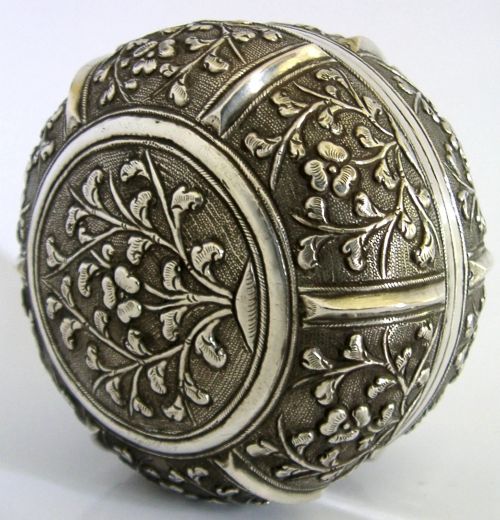


Victorian Colonial Silver
Victorian colonial silver pieces are crafted works from empire outposts that bring regional ornamentation to British forms.
Victorian Colonial Silver
When you search for victorian colonial silver, you encounter items made across nineteenth-century British territories, blending local craftsmanship with European utility. These objects span periods from the eighteen-hundreds through the Edwardian era, reflecting diverse manufacturing centres across India, Hong Kong, and Australia.
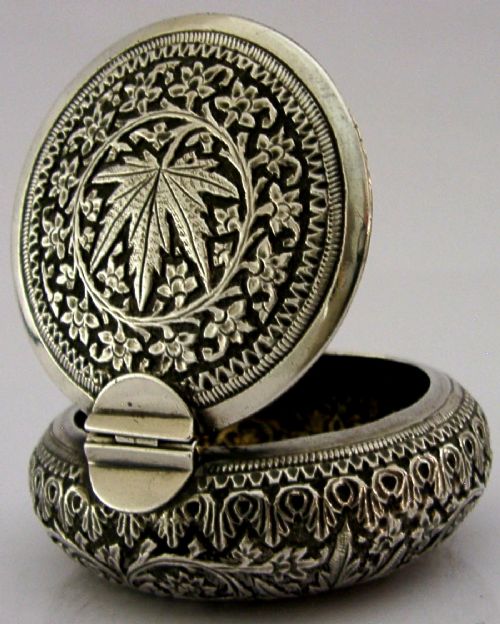
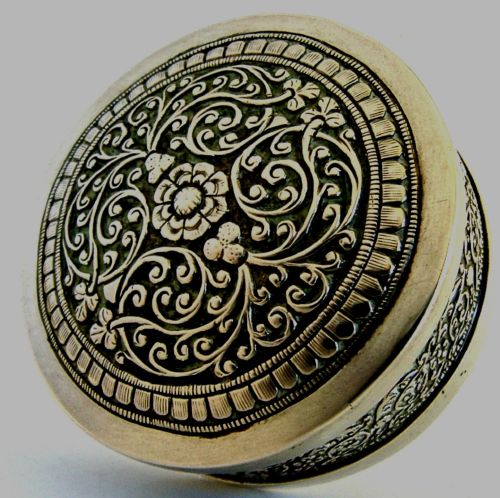
The most common forms on this page include boxes, caskets, beakers, and serving vessels, alongside campaign tables and novelty pencils. Styles draw from Anglo-Indian, Asian export, and Aesthetic movement traditions, pairing traditional Western shapes with intricate eastern ornamentation.
How they were made
Materials comprise sterling silver, solid silver, and silver plate, frequently combined with teak, hardwood, and carved wood elements such as walking sticks. Metalworking techniques rely heavily on repoussé work, creating high-relief surface decoration across bowls, beakers, and vases.
Makers utilised regional aesthetic idioms, incorporating motifs specific to Kutch, Gujarat, Madras, and Burma onto standard British silver forms. Construction methods reflect both local workshops and colonial outposts serving military and civilian patrons.
Victorian Colonial Silver Retail Price Guide 2026
Typical asking prices for victorian colonial silver among the pieces listed under this phrase on Sellingantiques today, from the lower quarter to the upper quarter. They describe what is for sale here now, not the wider market.
Boars and military figures turned up in pockets as novelty pencils and campaign walking sticks.
What varies in quality
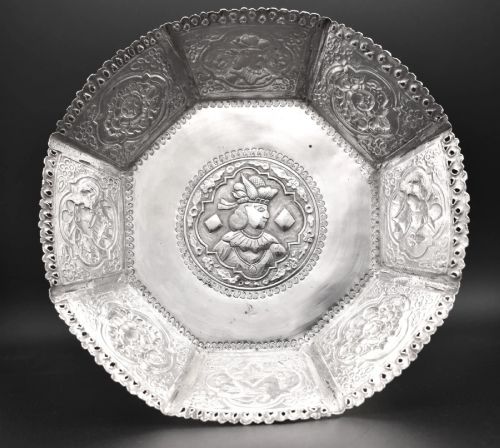
Quality separates through the depth and clarity of the repoussé work, where crisp, deeply chased motifs indicate superior artisan skill. Weight and gauge of the silver plate or solid metal also determine durability and overall substance in pieces like salvers and presentation dishes.
The integration of secondary materials, such as fitted hardwood interiors in boxes or carved wooden handles on campaign furniture, distinguishes finer examples. Maker attribution, visible in firm stamps from regional houses, further elevates a piece.
Hamilton and Co Calcutta·Hodsoll Collection·Henry Borlase Stevens
The Victorian Colonial Silver Glossary
- Repoussé
- A metalworking technique where the artisan hammers the design from the reverse side to form a raised pattern in relief. This method defines the surface texture of many colonial vessels and bowls.
- Sterling silver
- An alloy consisting of ninety-two point five percent silver by mass, with the remainder composed of other metals for strength. This standard appears frequently across nineteenth-century items.
- Salver
- A flat tray, typically made of silver, used for serving food or presenting items. Historical examples often feature engraved decoration and footed bases.
- Tazza
- An ornate footed plate or bowl used for display or serving. These pieces elevate the contents above the table surface.
- Campaign furniture
- Portable furnishings designed for military officers or travellers in the colonies, often featuring folding elements or modular construction.
Victorian Colonial Silver: Frequently Asked Questions
What is colonial silver?
Colonial silver encompasses items produced by silversmiths working within British territories outside the UK during the nineteenth century. These items merge traditional European forms with indigenous decorative techniques.
Makers often adapted local motifs to suit British tastes, creating distinct regional styles that remain identifiable today.
How do I identify Kutch silver?
Kutch silver originates from the Gujarat region and is characterised by dense, detailed repoussé foliage and animal motifs. The background is typically matted to make the raised pattern stand out.
Objects from this region include large vases, trophy cups, and beakers produced during the nineteenth century.
How should I clean silver plate?
Clean silver plate with a soft cloth and a specialised silver polish formulated to avoid abrasive damage. Gentle application preserves the thin layer of precious metal over the base alloy.
Regular, light dusting prevents tarnish accumulation without requiring harsh chemical dipping.
What is an Anglo Indian beaker?
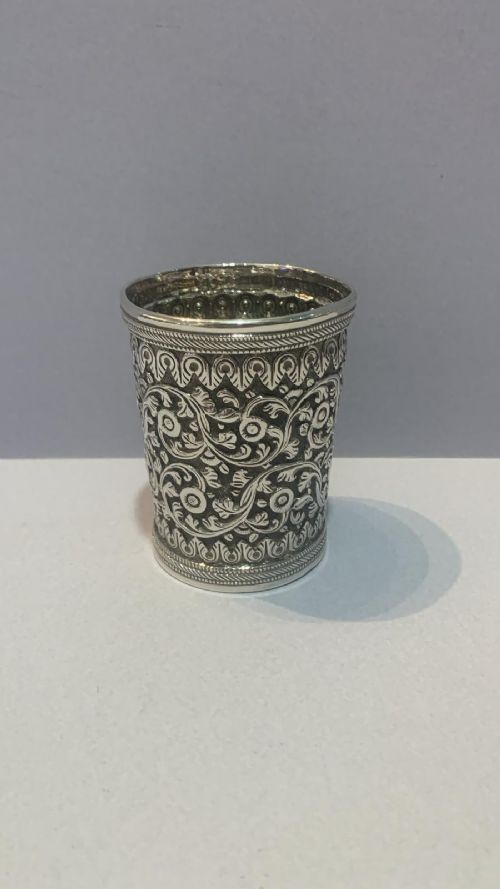
An Anglo Indian beaker is a drinking vessel produced in India under British rule, combining European tumbler shapes with local repoussé ornamentation. These items served both functional and decorative purposes.
They frequently display traditional motifs executed by regional silversmiths working in British style requirements.