





Victorian Coastal Watercolour Art
Victorian coastal watercolour art captures maritime life, busy harbours and open seas through the delicate medium of paper and pigment.
Victorian Coastal Watercolour Art
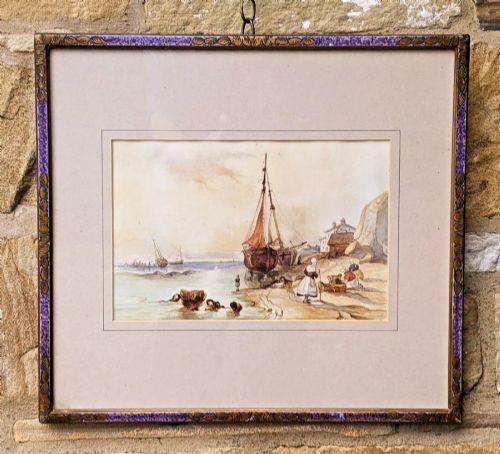
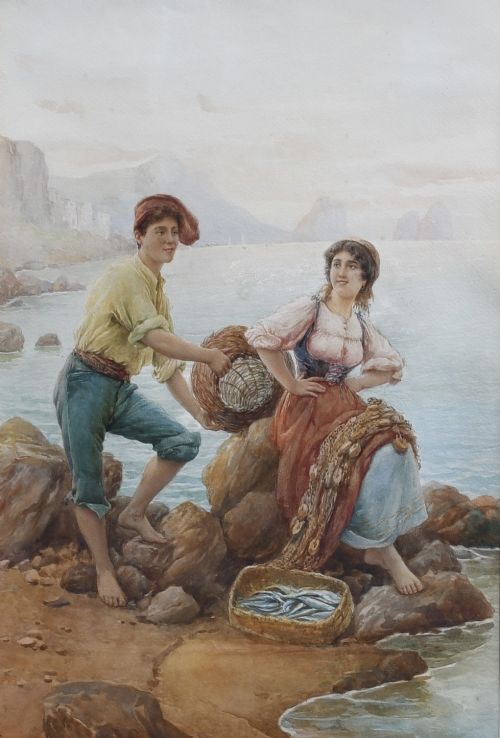
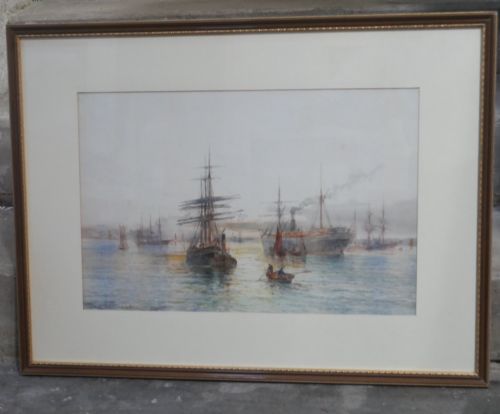
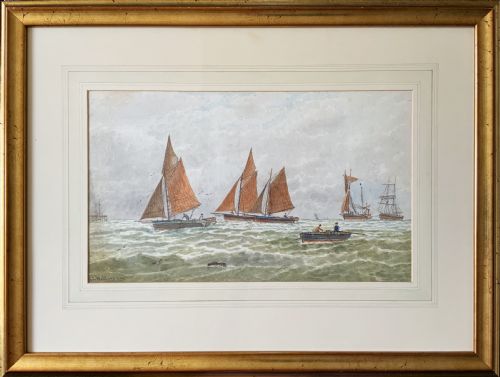
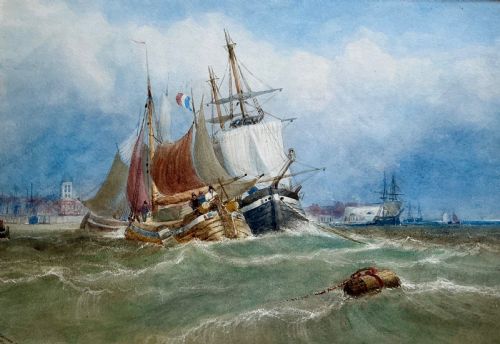
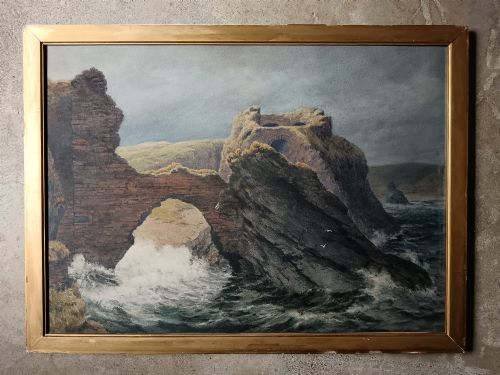
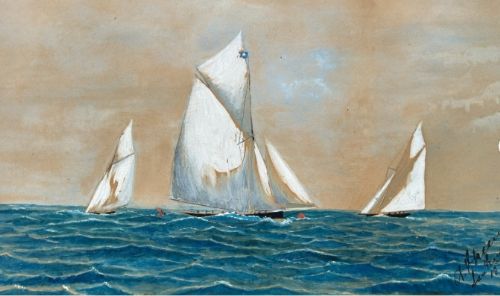
Victorian coastal watercolour art encompasses works on paper depicting maritime scenes, fishing harbours and coastal landscapes produced during the nineteenth and early twentieth centuries.
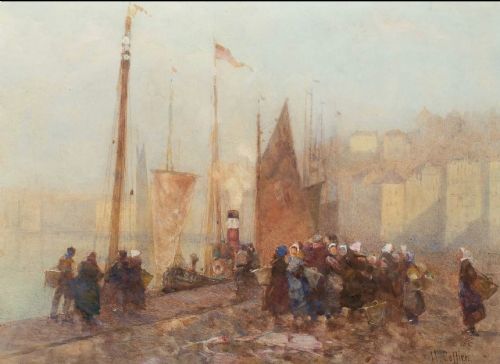
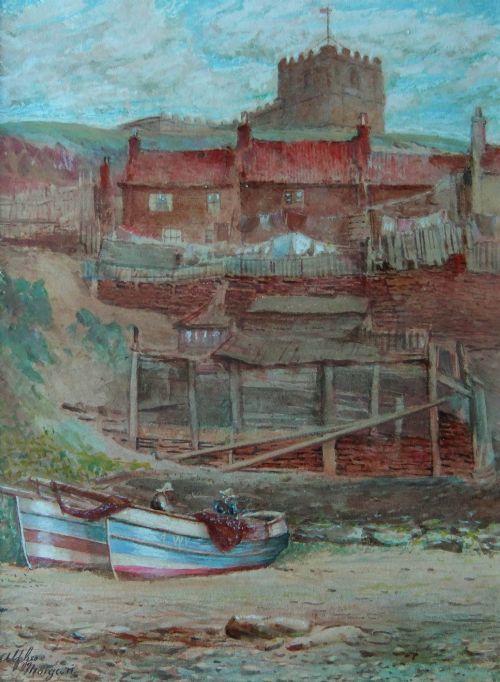
The pieces on this page are predominantly British works featuring locations such as Whitby, Scarborough and St Ives, alongside continental views and American scenes.
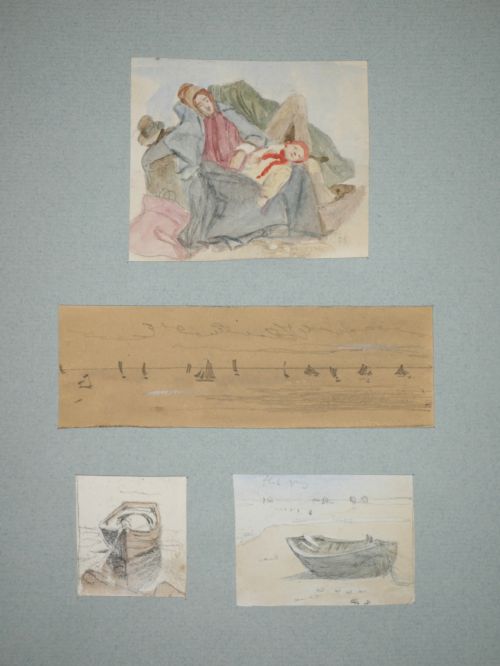
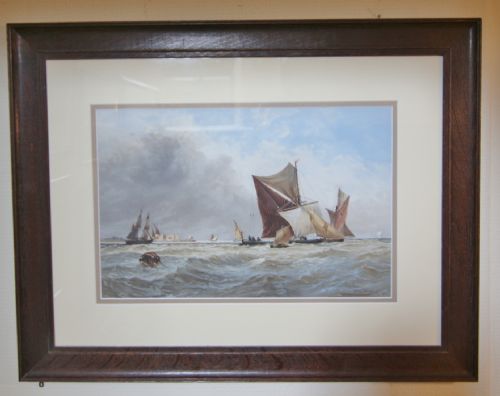
Forms range from intimate marine sketches and architectural drawings to large framed paintings showing shipping vessels, sailing ships and fisherfolk.
How They Were Made
Artists applied watercolour paint and pigment onto paper sheets, often mounted within wood or gilt wood frames behind glass.
Techniques relied on washes for skies and water alongside finer brushwork to define rigging, architecture and figures.
Listings feature works from the 1870s to the 1920s executed on paper in watercolour paint.
What Varies in Quality
Skill in handling light and atmosphere distinguishes accomplished marine compositions from simpler topographical sketches.
The preservation of the paper surface and the retention of pigment vibrancy across the washes influence the visual strength of a piece.
Enclosure within period frames, particularly gilt wood mouldings, affects the overall presentation of the artwork.
James Orrock·James Smetham·William Banks Fortescue·Hector Caffieri·Thomas Bush Hardy·Alfred G Morgan·Carlo Ferranti·George Stanfield Walters·Henry Barlow Carter·John Moxon·William Frederick Settle·John Bedloe Goddard·Charles William Adderton·Sir Thomas Newenham Dean·Ernest Dade·Arthur Tucker·Colin H Greenwood·John McDougal·Robert Buchan Nisbet·Frederick William Hattersley·James Thomas Watts·John Mitchell·Frederick William Booty·Kate E Booth·Stephen John Batchelder
The Victorian Coastal Watercolour Art Glossary
- Watercolour pigment
- The finely ground colour substance mixed with a binder to create paint for works on paper.
- Gilt wood
- Wood frames treated with a thin layer of gold leaf or metallic gilt, frequently seen on nineteenth-century fine art.
- Seascape
- A work of art depicting the sea, coastal views, shipping or marine activities.
- Works on paper
- A classification encompassing drawings, watercolours and sketches executed on a paper support.
Victorian Coastal Watercolour Art: Frequently Asked Questions
What subjects appear in Victorian coastal watercolour art?
These works depict fishing boats, harbour scenes, cliffs, lighthouses and shipping vessels along British and European shores.
Compositions range from calm coastal stretches to dramatic views of stormy seas and working ports.
How should these watercolours be framed?
Most pieces are preserved behind glass within wood or gilt wood frames to protect the delicate paper surface.
Keeping them away from direct sunlight prevents the watercolour pigments from fading over time.
Who painted these coastal scenes?
Paintings were produced by professional artists and members of various nineteenth-century fine art schools.
Many works bear signatures or monograms from artists who specialised in maritime and landscape subjects.
Which periods do these watercolours cover?
The listings span the Victorian era, beginning around the 1870s and extending into the early twentieth century.
Dates often reflect the active period of the artist or the specific year the work was signed.