




Victorian Coastal Beach Scene
These nineteenth-century coastal beach scene paintings capture maritime life, rocky shores and seaside gatherings with oil on canvas and watercolour.
Victorian Coastal Beach Scene
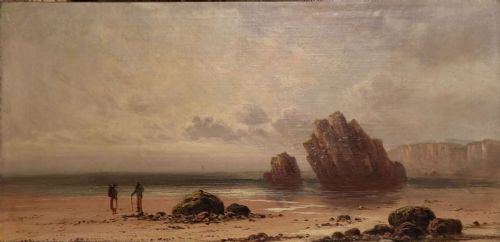
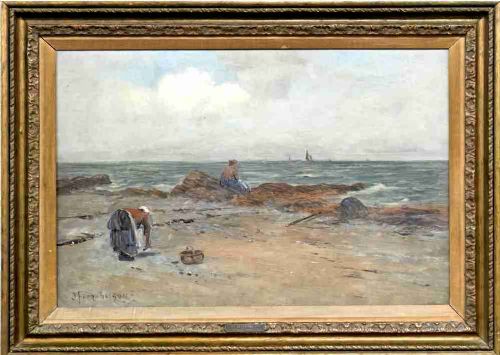
When you search for a victorian coastal beach scene, you encounter nineteenth-century paintings depicting shores, harbours, sea stacks and fishing boats. The works range from traditional English seascapes to French post-impressionist interpretations.
You meet oil paintings on canvas alongside watercolours on paper, framed in wood, gesso and gold leaf. Subjects include figures gathering kelp, spreading nets, and oyster pickers working along rocky beaches.
The pieces span the Victorian period into the early twentieth century, showing British Impressionism, realism and marine landscape styles. Cornwall, Yorkshire, Norfolk and Hastings feature prominently among the locations recorded in the titles.
What varies in quality
Skill in handling light, atmosphere and the movement of water separates standard works from exceptional examples. The ability of the artist to render human figures realistically within the landscape dictates the strength of the composition.
The preservation of the original canvas, paper and frame influences the overall integrity of the piece. Finer works display confident brushwork and harmonious tonal balances that capture the specific character of the coastline.
Listings span periods from the nineteenth century through the 1960s, incorporating oil on canvas, watercolour, gesso and gold leaf.
James Orrock·William Banks Fortescue·Joseph Farquharson·James Webb·Frederick William Hattersley·Kate E Booth·Sir David Murray·William Shayer·Robert Macaulay Stevenson·Madeline Hughes·William Greaves·William Edward Webb·George Smith·GM de L'Aubiniere·Daniel Sherrin·Thomas Bush Hardy
The Victorian Coastal Beach Scene Glossary
- Watercolour
- A painting method where fine pigment is suspended in a water-based solution and applied to paper. This medium allows for translucent washes of colour that capture soft coastal light.
- Oil on Canvas
- Pigment mixed with drying oils applied to a stretched woven fabric surface. This technique permits rich texture and deep tonal layering for marine scenes.
- Gesso
- A plaster-like mixture applied to wood before gilding or painting. It provides a smooth preparation layer for decorative frames.
- Gold Leaf
- Hammered sheets of gold applied to frame mouldings. It creates a luminous border that enhances the colours within the painting.
- Sea Stack
- A geological landform consisting of a steep and often vertical column or columns of rock in the sea. Artists frequently utilised these dramatic formations to anchor marine compositions.
Victorian Coastal Beach Scene: Frequently Asked Questions
What subjects appear in a victorian coastal beach scene?
These works feature fisher folk, fishing boats, gathering kelp, oyster pickers and figures on rocky shores. Locations such as St Ives, Hastings and the Yorkshire coast frequently appear.
Artists also recorded harbours, low tides, sunsets and dramatic sea stacks along British and continental shores during the nineteenth century.
How do oil and watercolour pieces differ?
Oil paintings utilise pigment bound in drying oil on stretched canvas, offering rich textures and deep tones. Watercolours employ pigment on paper, yielding translucent effects.
Both mediums captured the changing light of the coast, though watercolours were frequently housed behind glass within elaborate frames.
How are these paintings framed?
Many works retain their original wooden frames, frequently enhanced with gesso and gold leaf detailing. Some delicate watercolours feature hand enamelled polychrome frames.
The framing style generally reflects the period of the artwork, protecting the edges of the canvas or paper.
Which artistic styles represent these scenes?
The listings encompass Victorian marine art, British Impressionism, nineteenth-century realism and post-impressionism. Different artists approached the coastline through these distinct lenses.
Some works lean towards traditional documentary recording of fishing communities, while others explore the atmospheric play of light on water.