


Victorian Chinoiserie Table Lamps
Victorian chinoiserie table lamps bring decorative lacquerwork, porcelain, and carved wood into domestic lighting.
Victorian Chinoiserie Table Lamps
Victorian chinoiserie table lamps draw upon nineteenth-century fascination with Asian design motifs, often adapting vases, tea canisters, and vessels into illuminated fittings. The selection includes converted oil lanterns, porcelain vases with ormount mounts, and carved root wood lamps dating across the nineteenth century.
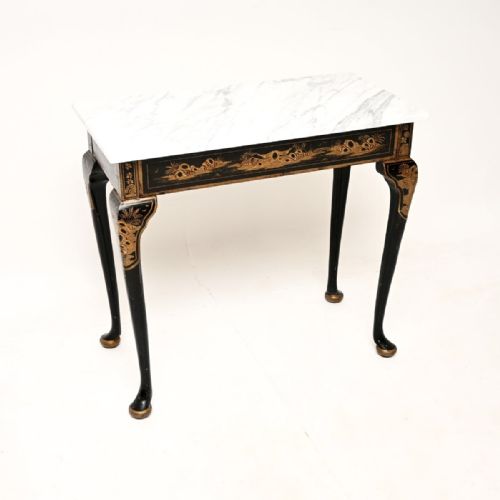
Alongside dedicated lamp bases, the inventory incorporates occasional pieces such as bamboo and lacquered side tables, plant stands, and wine tables that share the same aesthetic vocabulary. These items reflect the broader Victorian interest in exotic decorative arts and export wares from China.
The objects span styles from the Aesthetic Movement to Victorian Chinoiserie and Chinese Qing Dynasty influences. Buyers encounter varied forms ranging from blue and white prunus blossom vases to black lacquered panels and decalcomania work.
Materials and construction
Construction relies heavily on traditional artisan techniques involving lacquered wood, bamboo, and carved root wood paired with brass and ormolu mounts. Lacquer surfaces receive multiple coats to achieve deep black or coloured finishes, frequently highlighted with gold leaf details.
Porcelain elements incorporate Cantonese famille rose, famille verte, and blue and white wares originating from nineteenth-century production. Many ceramic bases and oil lanterns are subsequently fitted with metal mounts and modern electrical wiring during their conversion into table lamps.
A nineteenth-century tea canister gets a second career holding light instead of leaves.
Quality variations
Quality rests in the finesse of the hand-painted lacquer decoration, the crispness of carving in root wood or bamboo components, and the original integration of ormolu or brass mounts with ceramic bodies. Superior examples display intact gilding and well-preserved surface patination without heavy modern restoration.
The integration of the lamp fitting relative to the ceramic or wooden vessel marks another distinction, as professional conversions maintain the structural integrity of the antique base. The complexity of the surface design, such as intricate famille rose detailing or multi-tiered bamboo joinery, further separates standard production from finer decorative pieces.
The Victorian Chinoiserie Table Lamps Glossary
- Chinoiserie
- European interpretation and imitation of Chinese and East Asian artistic traditions, prominent in decorative arts and furniture.
- Famille Rose
- A major palette of Chinese ceramic glazes introduced in the Qing dynasty, distinguished by opaque pink or rose enamels.
- Ormolu
- Gilded bronze mounts applied to furniture, vases, and lamp bases, popular in nineteenth-century decorative schemes for added ornamentation.
- Decalcomania
- A decorative technique involving the transfer of printed designs onto glass, porcelain, or other surfaces, seen on nineteenth-century lamp bases.
- Cloisonné
- An enamelwork technique where metal wire creates compartments on a vessel surface, filled with coloured paste and fired.
Victorian Chinoiserie Table Lamps: Frequently Asked Questions
What periods do these lamps date from?
The pieces span the nineteenth century, with particular concentration in the Victorian era around the 1880s and 1890s.
Craftsmen and importers utilised existing Asian porcelain vessels alongside newly manufactured European frames to create these domestic objects.
Are the lamp bases original conversions?
Many lamps utilise nineteenth-century Chinese vases, tea canisters, or oil lanterns that were adapted for electrical lighting during or after their period of manufacture.
Metal mounts such as ormolu and brass were frequently added to secure the fittings to the ceramic bodies.
What materials are commonly found?
Materials include porcelain, lacquer, bamboo, brass, wood, marble, and gold leaf, reflecting the diverse manufacturing origins of the period.
Secondary furniture pieces associated with the style also incorporate ebonised wood and fabric elements.
How do I care for lacquered surfaces?
Lacquered wood and painted panels require dusting with a soft, dry cloth and protection from direct sunlight and excessive moisture.
Avoiding harsh chemical cleaners preserves the delicate gold leaf and pigmented finishes characteristic of Victorian lacquerwork.
What is Aesthetic Movement influence?
The Aesthetic Movement embraced Asian-inspired design, simplicity of form, and decorative craftsmanship in opposition to industrial mass production.
This style manifests in bamboo side tables and minimalist occasional furniture complementing the decorative lamps.