


Victorian China Tea Service
A victorian china tea service brings the warmth of nineteenth-century tables into modern homes through delicate hand-painted porcelain and rich gilt detailing.
Victorian China Tea Service
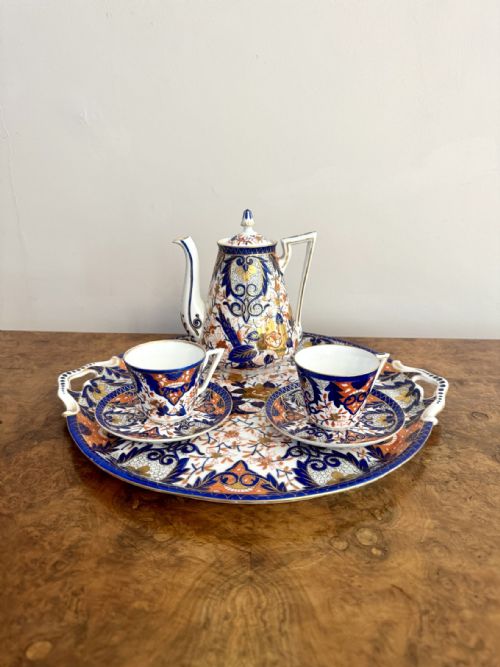
A victorian china tea service comprises matched sets of cups, saucers, teapots, and serving vessels created to serve afternoon or breakfast tea. These assemblages range from full ten-person adult settings down to miniature children's toy services and bachelor sets.
The versions met most frequently on this page date across the nineteenth century, encompassing standard Victorian output alongside revivalist aesthetic movements such as Imari, Kakiemon, and Rococo. Alongside formal tea sets, related ceramic forms like coffee sets, breakfast sets, and dinner service components appear within the selection.
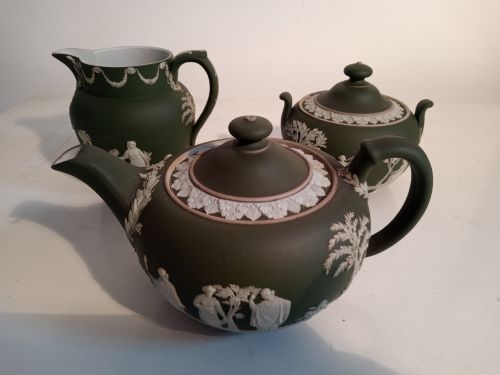
Originating predominantly from English potteries, these pieces reflect the domestic habits and social rituals of the period. Makers utilise durable bone china, porcelain, earthenware, and ironstone to form services intended for actual use rather than mere display.
How they were made
Potters shaped these services from fine bone china, porcelain, and ironstone, employing skilled moulding and throwing techniques to achieve thin walls and precise forms. Earthenware and durable ceramic bodies also provide the foundation for robust child's services and utilitarian vessels.
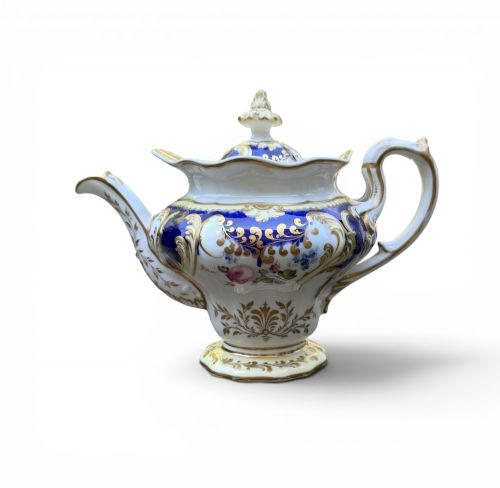
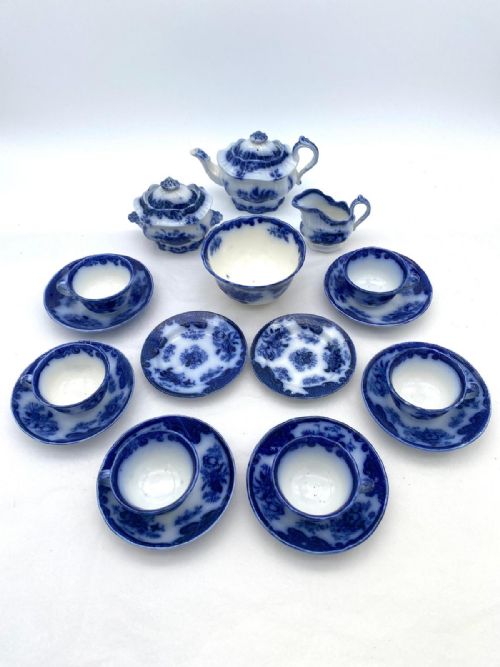
Artisans applied enamel colours by hand, often incorporating generous applications of gold leaf and gilt highlights to accentuate moulded floral and geometric motifs. Specialised decorative methods such as flow blue transfer printing created rich, bleeding cobalt patterns across the glazed surfaces.
The selection includes comprehensive child's nursery tea services alongside full adult tea sets, breakfast services, and miniature solitaire collections.
What varies in quality
The finest examples display meticulous hand-painted detail and crisp transfer printing that remains sharp beneath the clear glaze. Superior sets maintain consistent colour application across every individual cup, saucer, and pot in the grouping.
Artistic execution and the prestige of the manufacturing pottery elevate certain services above standard domestic wares. The preservation of delicate gold leaf work and the completeness of larger multi-piece settings define the upper tiers of quality.
Wedgwood·Copeland·Royal Doulton·Royal Crown Derby·Coalport·Royal Davenport·Minton·Masons·Wileman Foley Shelley
The Victorian China Tea Service Glossary
- Bone china
- A type of soft-paste porcelain incorporating bone ash, yielding a durable body with high whiteness and translucency. It allowed nineteenth-century potteries to produce exceptionally fine-walled tea wares.
- Flow blue
- A cobalt blue transfer-printing technique where the colour intentionally bled slightly into the surrounding white glaze during firing. This created a soft, misty aesthetic popular on mid-century domestic and children's services.
- Ironstone
- A patented earthenware body developed for increased durability while retaining the appearance of porcelain. It provided a robust alternative for heavy-use teapots, jugs, and dinner service components.
- Kakiemon
- A Japanese enamel decorating style featuring asymmetrical floral, bird, and tiger motifs that inspired European revivalist patterns. Victorian potteries adapted these vibrant palettes onto English porcelain tea sets.
- Gilt
- A thin layer of gold applied to the rims, handles, and borders of ceramic vessels. Hand-gilded accents signal finer execution in nineteenth-century table wares.
Victorian China Tea Service: Frequently Asked Questions
Can I use a antique tea service?
Most nineteenth-century sets survive in usable condition, though hand-washed care is necessary to preserve fragile gilt and enamel decoration.
Because older glazes and gold leaf can be sensitive to modern detergents and dishwashers, gentle handling ensures these porcelain pieces remain functional for occasional afternoon tea.
What is a bachelor teaset?
A bachelor teaset is a compact, smaller-scale tea service designed for a single person or intimate use. These sets typically include a teapot, cup, and saucer combined into a space-saving stacking form.
They offer a charming alternative to full twelve-person services while maintaining the same high standard of nineteenth-century porcelain decoration.
How do I date these sets?
Dating relies on maker's marks stamped or painted on the underside, combined with stylistic cues like rococo handles or transfer-printed motifs. Potters often altered their registration marks across the decades.
Comparing the paste type, whether bone china, ironstone, or earthenware, alongside known factory operational dates helps narrow the period of manufacture.