



Victorian Childs Seat
These small seating forms, known as a victorian childs seat, offer compact domestic function shaped by nineteenth-century carpentry and vernacular traditions.
Victorian Childs Seat
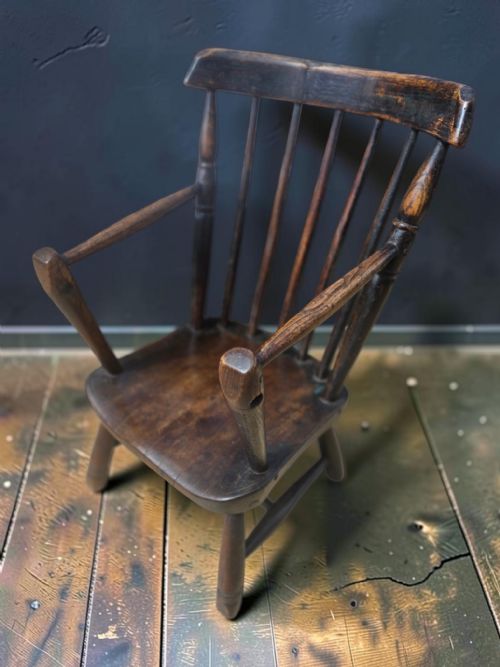
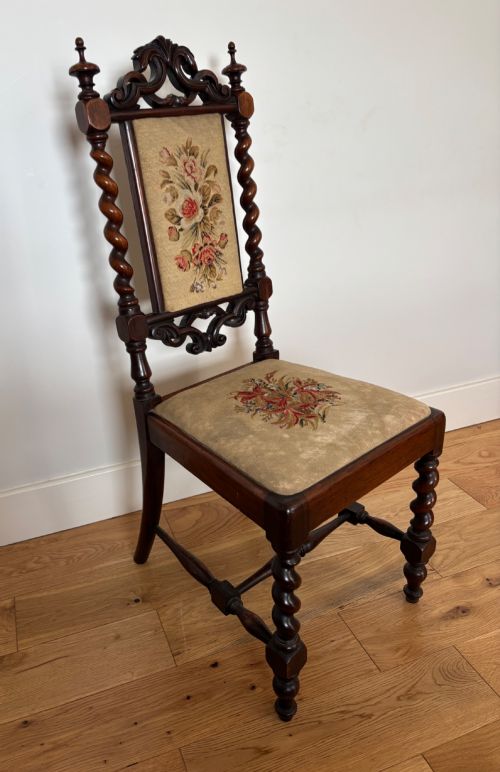
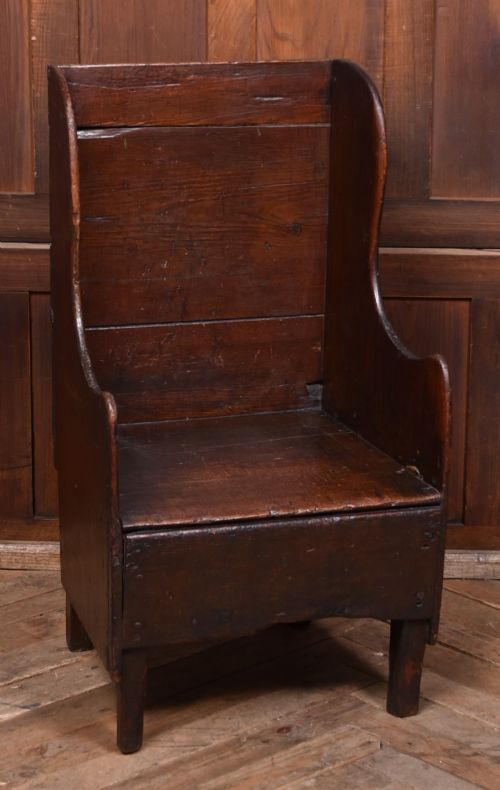
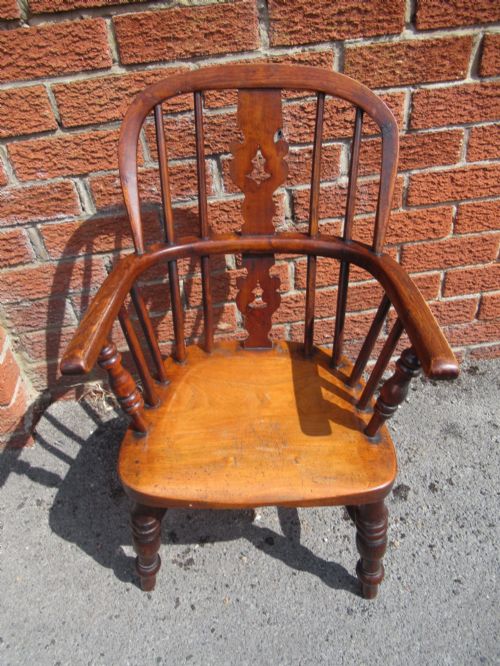
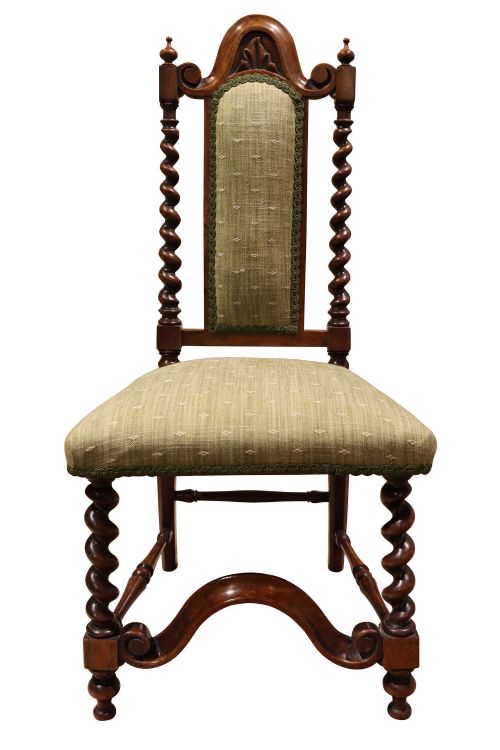
A victorian childs seat encompasses small domestic chairs, armchairs, high chairs, rocking chairs, and swings built during the nineteenth century. Buyers encounter vernacular Windsor forms alongside formal rosewood, mahogany, and walnut seating designed for smaller occupants.
Regional English country pieces appear alongside stylistic variations including Gothic, Aesthetic, and French bamboo designs. The selection ranges from simple elm and ash country chairs to elaborate metamorphic high chairs and bobbin-turned frames.
Makers adapted full-size seating archetypes into miniature proportions, producing side chairs, tub chairs, and rocking chairs using traditional timber methods. These domestic objects reflect the period's domestic routines and artisanal joinery.
Materials and construction methods
Carpenters utilised native timbers such as elm, ash, oak, beech, yew, and mahogany, often combining contrasting woods within a single frame. Windsor chairs employed turned spindles and bentwood hoops, while formal Victorian models featured carved rosewood and walnut.
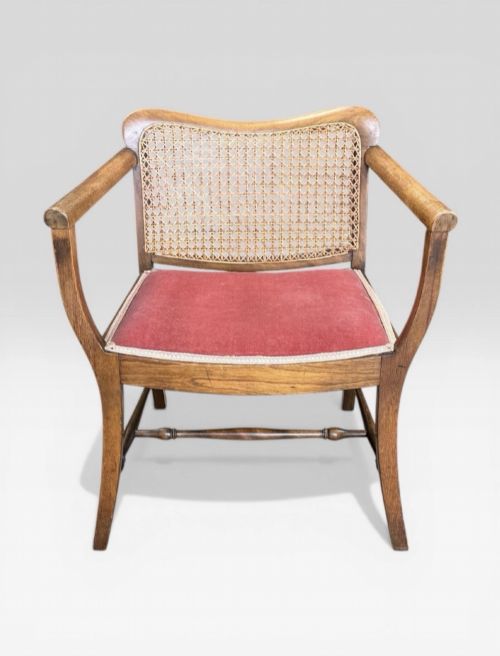
Seating surfaces incorporated woven cane, rush, buttoned leather, and solid timber panels fixed into turned or bobbin-turned frameworks. Metamorphic designs integrated brass hinges and mechanisms to transform high chairs into low seating units.
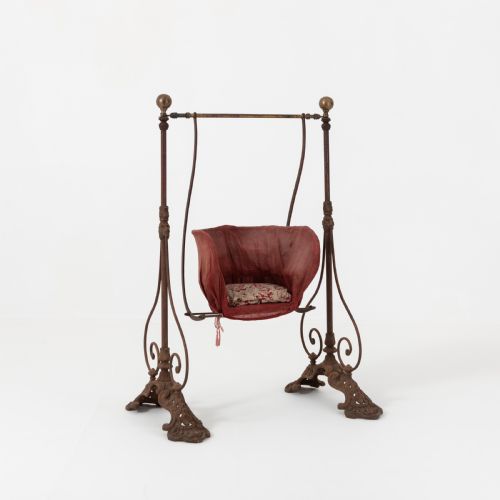
Cast iron swings brought the playground indoors during the eighteen-sixties, hanging small children from domestic doorframes.
Distinctions in construction and design
Quality rests in the fidelity of the miniature scale, the integrity of the timber joints, and the sophistication of the turning or carving. Pieces exhibiting refined grain patterns in rosewood, mahogany, or yew demonstrate greater initial workshop ambition than utilitarian softwood or plain beech equivalents.
The survival of original surface finishes, intact cane or rush work, and working metamorphic mechanisms elevate specific examples. Vernacular pieces derive distinction from robust regional construction and honest patination accumulated over generations of use.
James Shoolbred·Liberty of London·Ford Maddox Brown
The Victorian Childs Seat Glossary
- Windsor
- A traditional chair construction method where legs and spindles are wedged directly into a solid sculpted wooden seat. This vernacular technique provided robust stability for everyday domestic seating.
- Bergere
- A formal upholstered armchair design featuring woven cane panels enclosed within a wooden frame. Originating in France, the style was adopted by nineteenth-century British cabinet makers.
- Metamorphic
- Describing furniture engineered with pivoting or folding components that alter its function. These clever pieces converted from a high chair into a low rocking or side chair.
- Bobbin turned
- A decorative furniture turning technique resembling a string of wooden bobbins or spools. Workshops utilised lathes to shape structural uprights and stretchers in this distinct profile.
Victorian Childs Seat: Frequently Asked Questions
What is a metamorphic child chair?
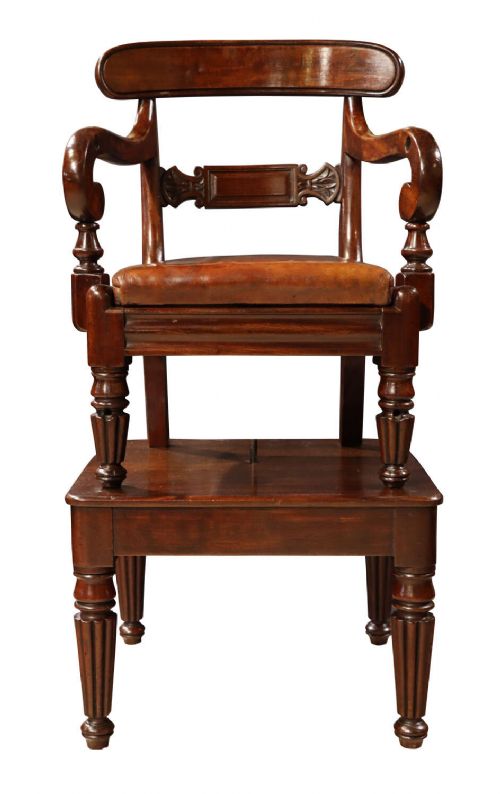
A metamorphic child chair is an ingenious piece of nineteenth-century nursery furniture designed to alter its configuration for different uses. These multifunctional objects typically convert between a tall high chair and a low play chair or rocker.
Craftsmen integrated hinged wooden trays, pivots, and locking catches into mahogany or beech frames. This engineering allowed a single item to serve a growing child through multiple developmental stages.
How do Windsor child chairs differ?
Windsor child chairs rely on an assembly of turned spindle legs and a bowed back fitted into a solid wooden seat. Artisans selected durable timbers like ash, elm, and yew to construct these sturdy vernacular forms.
Unlike upholstered parlour seating, Windsor versions display exposed joinery and practical wooden construction. Regional turners built them for everyday domestic resilience rather than formal display.
What materials appear on these seats?
Nineteenth-century makers utilised a wide variety of native and imported hardwoods for these small chairs. Common structural timbers include mahogany, walnut, oak, beech, ash, elm, yew, and rosewood.
Surfaces often feature woven cane inserts, rush matting, or buttoned leather upholstery. Cast iron also appears in specialised items such as nursery swings.
How were high chairs used?
High chairs elevated infants to table height for family meals during the Victorian period. Their raised platforms kept children secure and contained within the domestic dining environment.
Many incorporated footrests, safety bars, and adjustable trays to assist parents. Metamorphic versions allowed the upper section to detach into a floor-level seat once feeding time ended.