


Victorian Child Toy
These pieces of victorian child toy history range from miniature dinner services to carved wooden rocking horses that defined past playtime.
Victorian Child Toy
When you search for a victorian child toy, you encounter domestic items, decorative pieces, and miniature playthings made for children in the nineteenth and early twentieth centuries. These objects reflect the material culture of youth, capturing how youngsters amused themselves through physical toys and miniature household goods.
The selections available here span from wooden rocking horses and pull-along toys to earthenware tea and dinner services, alongside oil paintings and watercolours depicting children at play. Such variety shows that playthings encompassed both robust wooden items designed for movement and delicate ceramic sets meant for imitation of adult life.
Most items originate from the Victorian period, with specific dates extending from the mid-nineteenth century through to the early decades of the twentieth century. These survivals offer direct insight into historical childhood, preserved either as cherished playthings or as decorative objects made for domestic display.
How They Were Made
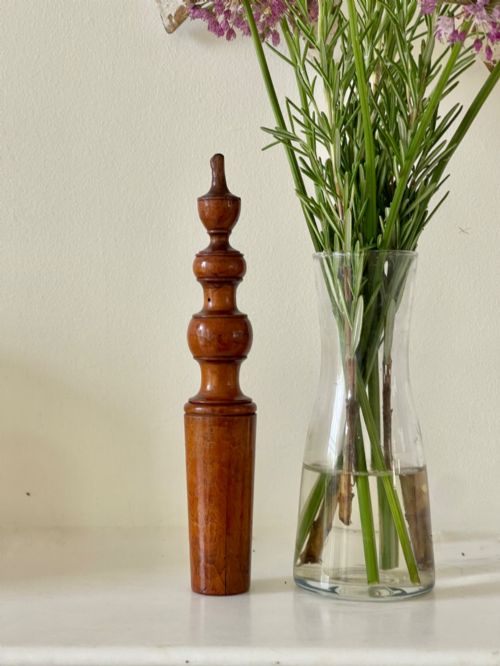
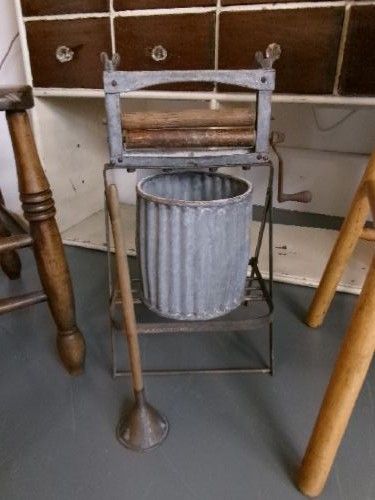
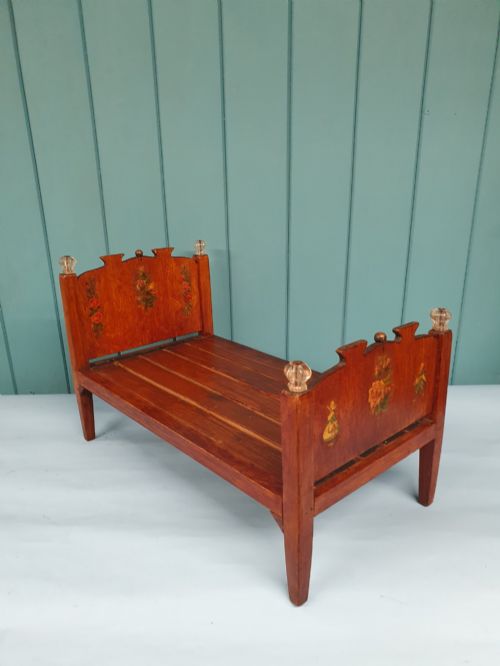
Wood serves as a primary material, utilised for carved rocking horses, pull-along toys, rattles, and miniature doll furniture, often shaped by hand or turned on a lathe. Metal and iron components appear in mechanical elements or stands, providing structural support for items like travellers sample mangles.
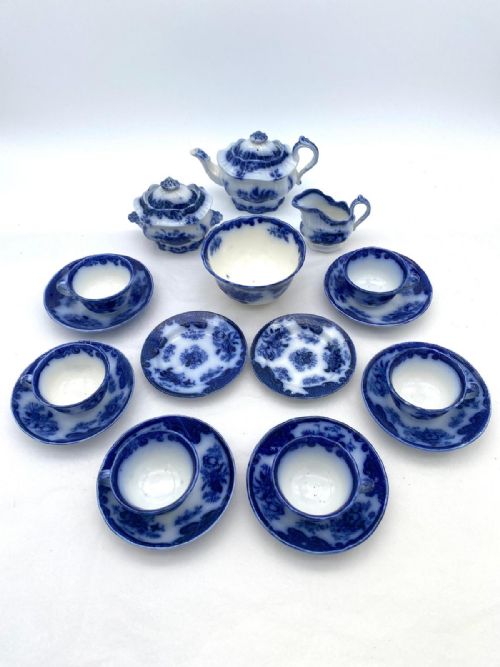
Ceramics feature prominently in the form of earthenware tea and dinner services, decorated with flow blue printing or prattware techniques. Paper, paint, horsehair, and leather complete the material palette, visible in painted surfaces, manes, tack, and framed artwork.
Recorded forms include rocking horses, miniature dinner services, pull-along toys, and framed oil paintings depicting children at play.
What Varies in Quality
Quality in these pieces rests on the degree of original hand-carving and the preservation of surfaces, such as untouched painted details on wooden horses and complete components on miniature furniture. Items retaining their original stands, rockers, or full matching sets stand apart from incomplete examples.
In ceramic services, the clarity of the flow blue transfer printing and the completeness of large dinner or tea sets dictate distinction. Artworks and silhouettes show variation through the skill of the artist and the condition of the canvas or paper support.
Augustin Edouart·Copeland·Robert Gemmell Hutchison·Charles Edward Wilson
The Victorian Child Toy Glossary
- Flow blue
- A cobalt blue transfer printing style on earthenware where the colour blurred slightly into the white glaze during firing. This technique creates a distinctive misty appearance popular on nineteenth-century ceramic services.
- Prattware
- A type of coloured earthenware produced in the nineteenth century, often featuring moulded reliefs and underglaze painting. It frequently depicts historical figures or scenes.
- Treen
- Small handmade wooden objects produced for household or decorative use. The term derives from the old word for tree.
- Travellers sample
- A small-scale version of a full-sized commercial item, such as laundry equipment or a mangle, created by manufacturers for salesmen to demonstrate to potential buyers.
- Pull-along toy
- A plaything mounted on wheels or a chassis designed to be towed by a child using a cord or handle. These often took the form of horses or other animals.
Victorian Child Toy: Frequently Asked Questions
How were these miniature ceramic services used?
These extensive dinner and tea sets were utilised by children to imitate adult social rituals, such as hosting formal meals or tea parties. They served as both educational tools for etiquette and sources of indoor entertainment.
Over time, many of these delicate earthenware sets survived because they were kept on display rather than subjected to rough everyday play. Their completeness today often indicates careful preservation by past owners.
What distinguishes a rocking horse from a pull-along toy?
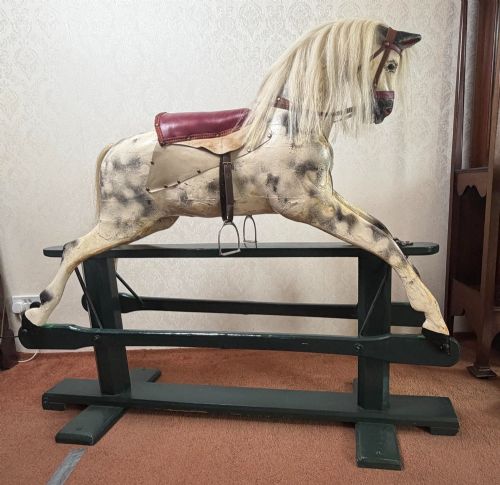
A rocking horse is a larger, stationary or mounted toy designed for a child to sit upon and rock back and forth. These often feature carved wooden bodies, sometimes with horsehair manes and leather tack.
A pull-along toy is smaller and mounted on wheels or a chassis, intended to be towed across the floor by a string. Both forms represent popular nineteenth-century movement-based playthings found in domestic settings.
How can one identify nineteenth-century wooden toys?
Nineteenth-century wooden items typically exhibit hand-carved details, traditional joinery, and aged surface patinas derived from handling and historic paints. Tool marks left by the maker often remain visible on the wood.
Materials such as horsehair stuffing, leather strapping, and iron fixings help confirm the period construction methods. Comparing the form to documented examples from the same decades provides further context.
Were paintings of children with toys created as portraits?
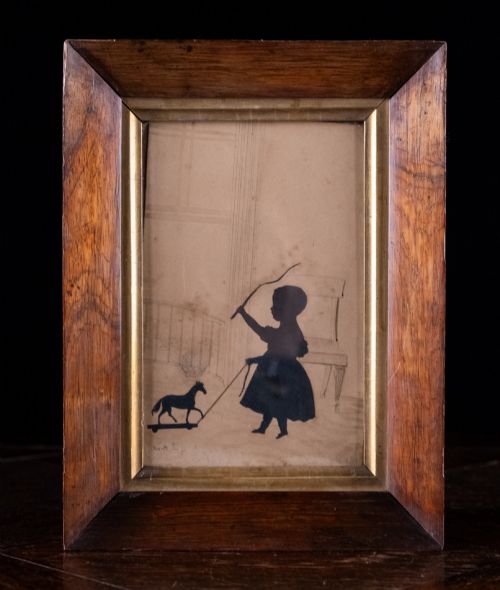
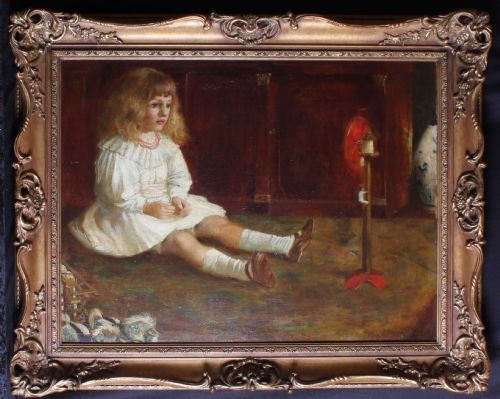
Artworks depicting children with toys, such as oil paintings and watercolours, function as both fine art and social records. They capture contemporary clothing, interior furnishings, and popular playthings of the period.
Artists recorded specific children or generalized domestic scenes, often emphasising the emotional connection between the child and their new toy. These pieces provide visual evidence of how toys appeared in actual nineteenth-century nurseries.