


Victorian Chiffonier with Shelves
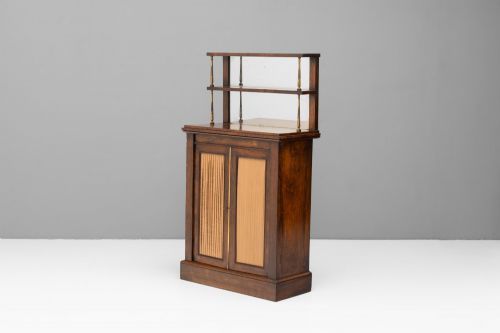
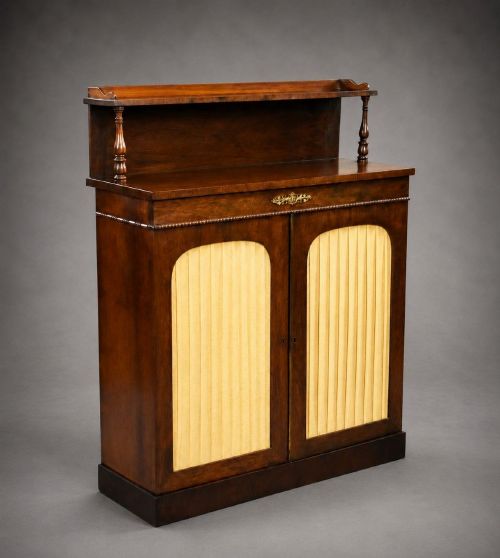
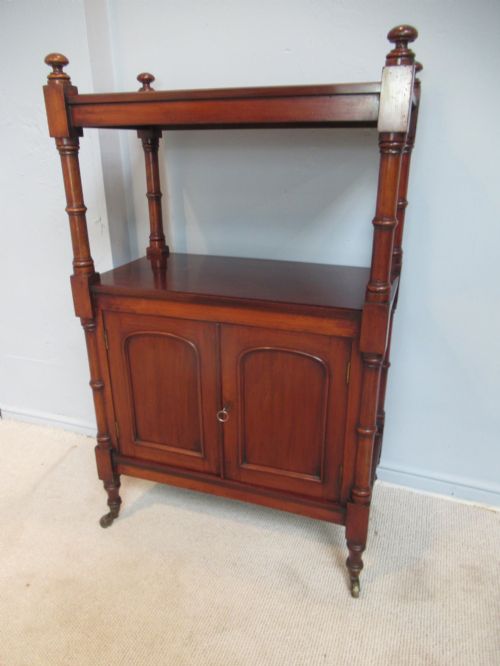
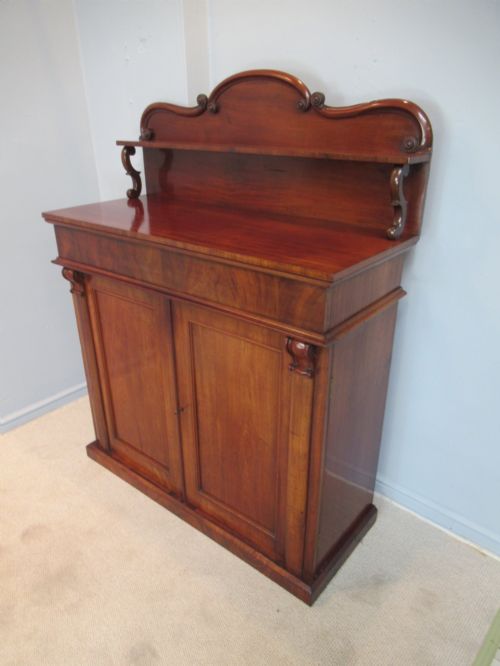
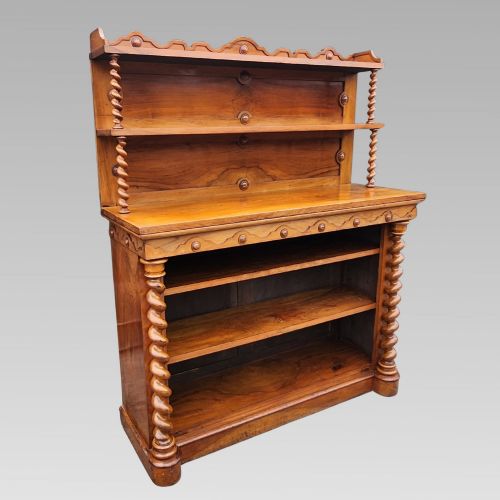
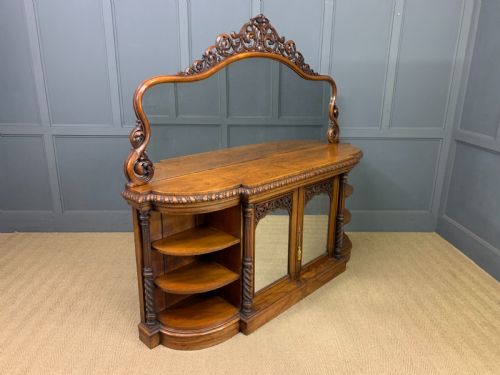
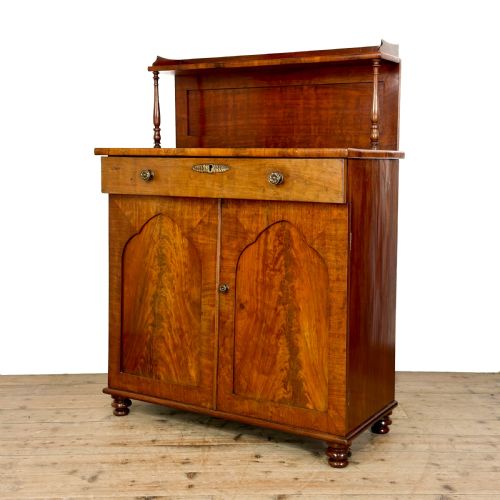
A victorian chiffonier with shelves brings the combination of enclosed storage and display space that nineteenth-century drawing rooms depended upon.
Victorian Chiffonier with Shelves
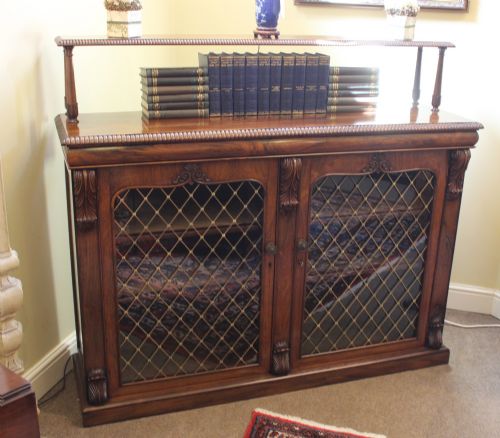
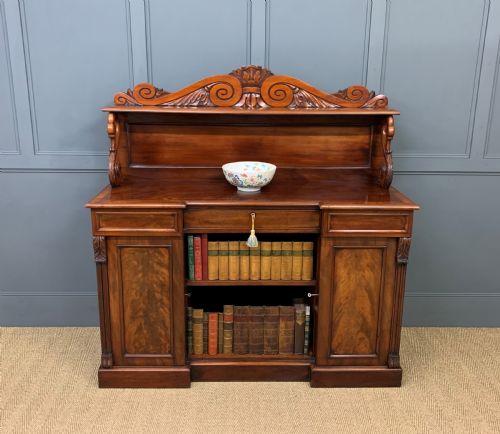
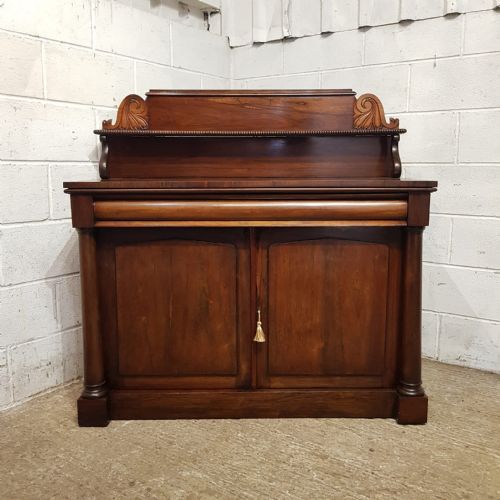
A victorian chiffonier with shelves stands as a principal low cabinet form from the nineteenth century, combining a lower cupboard base with upper tiers for books and display. These pieces appear across the 1850s, 1860s, 1870s, and 1880s periods, evolving from earlier sideboard and credenza traditions.
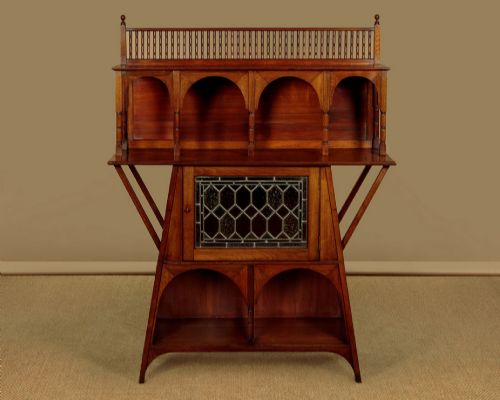
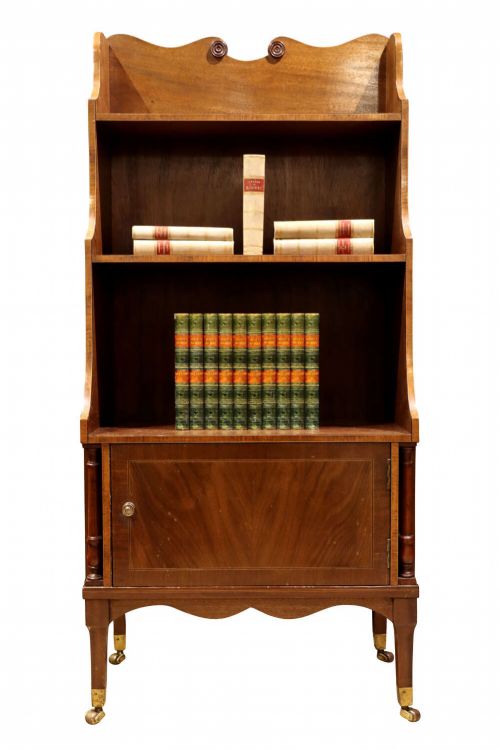
The layout typically pairs panelled doors below with open or glazed shelving above, frequently seen in forms catalogued as side cabinets, sideboards, and waterfall bookcases. Mahogany and rosewood dominate the surviving examples, alongside occasional burr walnut and pollard oak variations.
Buyers encounter these items functioning as compact sideboards or open-backed display units, reflecting the domestic requirements of mid to late Victorian interiors. The upper tiers range from simple single shelves to stepped waterfall designs supported by turned or fretted uprights.
Materials and construction methods
Cabinetmakers built these pieces primarily from solid mahogany and rosewood, often employing flame mahogany veneer and burr walnut across the principal surfaces. Secondary timbers provide structural stability within the carcasses and drawer linings.
Detailing includes brass hardware, castors, and occasional satinwood inlay, alongside glass panels fitted to cabinet doors and fabric-backed upper sections. Construction relies on traditional joinery techniques, with hand-cut dovetails securing the drawers and pegged mortise-and-tenon joints framing the doors and shelving tiers.
Listings demonstrate that nineteenth-century makers favoured mahogany and rosewood above all other timbers for constructing these shelved cabinets.
Distinctions in construction and timber selection
The grade of timber dictates much of the distinction, separating standard utility pieces from examples utilising richly figured flame mahogany, burr walnut, or solid satinwood. Superior cabinet work shows in the precise matching of veneer grains across drawer fronts and cupboard doors.
Structural integrity and the retention of original brass castors, locks, and gallery supports mark the difference between well-preserved survivals and heavily altered pieces. The refinement of the turning on shelf supports and the crispness of any inlaid decoration further separate standard workshops from master cabinetmakers.
Robert Strahan
The Victorian Chiffonier with Shelves Glossary
- Chiffonier
- A low sideboard or cabinet developed in the nineteenth century, typically featuring lower cupboards and upper display shelves. It served as a versatile piece for dining and drawing rooms.
- Flame mahogany veneer
- A sliced sheet of mahogany timber displaying a distinctive branching flame pattern, applied to primary surfaces. Cabinetmakers selected these veneers for decorative impact on drawer fronts and door panels.
- Waterfall bookcase
- An open shelving unit where each successive tier steps back from the one below, resembling a cascading waterfall. This style gained popularity during the nineteenth century for displaying books and decorative objects.
- Castor
- A small wheel attached to the base of a cabinet to allow mobility. Nineteenth-century examples commonly utilise brass housings and wheels.
- Burr walnut
- Timber taken from the wart-like growth on a walnut tree, yielding a highly swirled, organic grain pattern. It appears on high-status Victorian side cabinets and credenzas.
Victorian Chiffonier with Shelves: Frequently Asked Questions
What is the difference between a chiffonier and a sideboard?
A chiffonier generally stands lower than a traditional sideboard and incorporates upper shelving or a superstructure designed for display rather than serving food. The enclosed base provides compact cupboard storage.
In period interiors, chiffoniers occupied smaller drawing rooms and parlours, whereas sideboards remained in larger dining rooms.
How do I date a Victorian chiffonier?
Dating relies on timber choice, hardware styles, and construction hallmarks recorded across the 1850s to 1880s. Rosewood bodies and heavy scroll brackets typify the earlier decades.
Later pieces from the 1870s and 1880s frequently introduce lighter satinwood inlay and more refined, slender uprights supporting the upper shelves.
Can I use a chiffonier for storing books?
The open upper shelves suit small collections, volumes, and decorative objects. Nineteenth-century makers specifically designed these tiers for accessible display in living spaces.
The lower cupboards offer enclosed storage for heavier items or household goods.
What woods were most commonly used?
Mahogany and rosewood form the majority of surviving examples, often enriched with flame mahogany veneer. Walnut and pollard oak appear in specific variations.
Inlay work frequently incorporates lighter timbers such as satinwood to contrast against the dark primary surfaces.