


Victorian Cherub Vase
These Victorian cherub vase examples combine figurative modelling with functional vessels, offering collectors distinct Victorian charm.
Victorian Cherub Vase
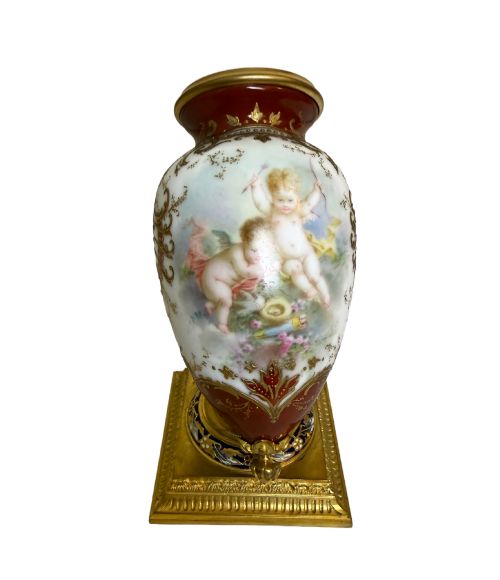
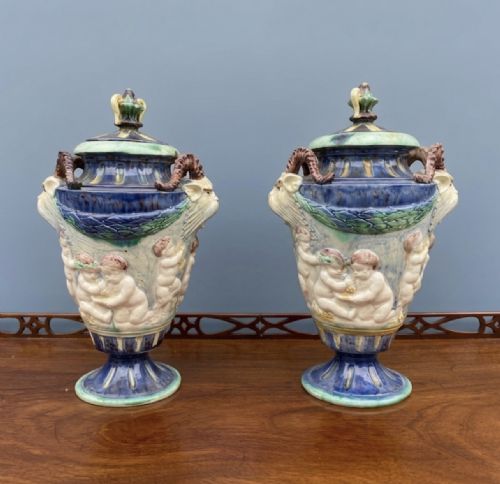
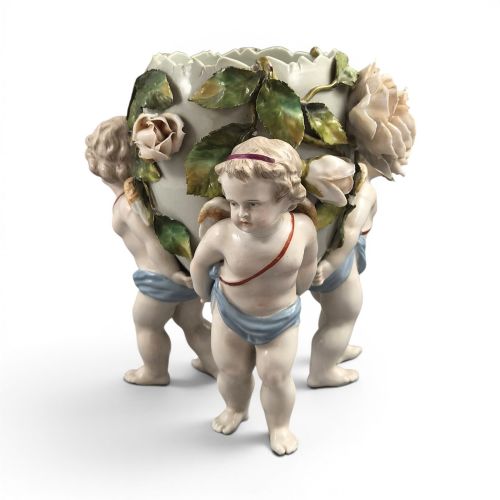
A victorian cherub vase takes the form of decorative urns, lidded vessels, and porcelain figurines featuring winged putti. These pieces emerge primarily from the nineteenth century, spanning periods from the 1870s through to 1910.
Continental factories and English potteries shape these objects in styles that include French Rococo Revival, Renaissance Revival, and Neoclassical influences. Buyers most frequently encounter porcelain and earthenware constructions paired with gilt bronze mounts.
What varies in quality
The refinement of the figurative modelling separates standard production from finer works, particularly in the rendering of facial expressions and feathered wings. Crisp moulding and delicate hand-painting elevate individual pieces above mass-produced counterparts.
The integration of metal mounts with ceramic bodies indicates the maker's skill level. Superior examples feature securely fitted gilt bronze or ormolu mounts that complement the proportions of the vase.
A cheerful cherub occasionally abandons its basket to sit squarely inside a porcelain vase.
Sitzendorf·Bernhard Bloch·Minton·Sevres·Royal Worcester
The Victorian Cherub Vase Glossary
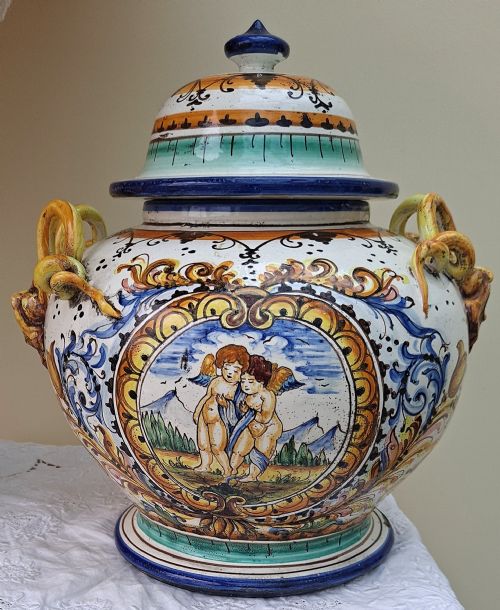
- Maiolica
- Tin-glazed Italian earthenware noted for its colourful painted decoration. This technique appears on several nineteenth-century pieces recorded in the archive.
- Ormolu
- Gilded bronze used widely for decorative mounts and bases during the period. It provides a bright metallic contrast to porcelain and glass bodies.
- Pate-sur-pate
- A ceramic decorating method where successive layers of slip build up a low-relief cameo design. Minton produced notable examples utilising this method.
- Terracotta
- Fired unglazed clay of a brownish-red colour, utilised for sculptural urns and planters. This porous material forms sturdy garden and interior vessels.
- Rococo Revival
- A nineteenth-century design style favouring asymmetrical scrollwork, naturalistic motifs, and exuberant ornamentation. It heavily influences the decorative language of these vessels.
Victorian Cherub Vase: Frequently Asked Questions
What materials are used?
These vessels incorporate porcelain, earthenware, ceramic, and terracotta as primary body materials. Artisans enhance the surfaces with enamel, gold leaf, and gilt bronze mounts.
Glass and bronze also appear among the recorded construction materials. Makers frequently combine these elements to achieve ornate decorative effects.
How were they used?
Owners displayed these decorative vessels on tables, mantelpieces, and pedestals as interior ornaments. Lidded vases and urns functioned primarily as decorative focal points rather than utilitarian containers.
Certain pieces served specialised roles, such as plant holders, table lamps, or centrepieces. Figurative variants combined sculptural representations of cherubs directly with functional vessel cavities.
How do I identify styles?
Stylistic markers include the ornate scrollwork of Rococo Revival and the classical symmetry of Neoclassical designs. Renaissance Revival elements also appear across the recorded manufacturing period.
Examining the modelled figures and painted motifs helps determine the specific design influence. Continental and English makers adapted these historical styles throughout the nineteenth century.
Where were they made?
Production centres span England and continental Europe, including factories in Germany, France, and Italy. Grand Tour items reflect Italian manufacture intended for travelling collectors.
Noted production sites include Sevres and Dresden alongside English works like Minton and Royal Worcester. Each region imparted distinct stylistic and technical characteristics.