


Victorian Cherub Mantel Clock
These nineteenth-century timepieces unite sculptural bronze figures with precision mechanical movements, bringing domestic elegance to a mantelpiece.

Victorian Cherub Mantel Clock
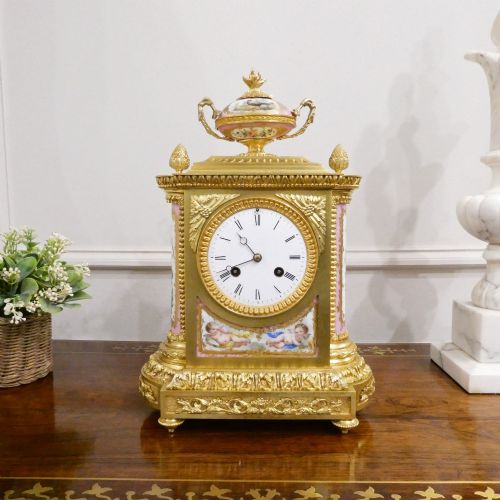
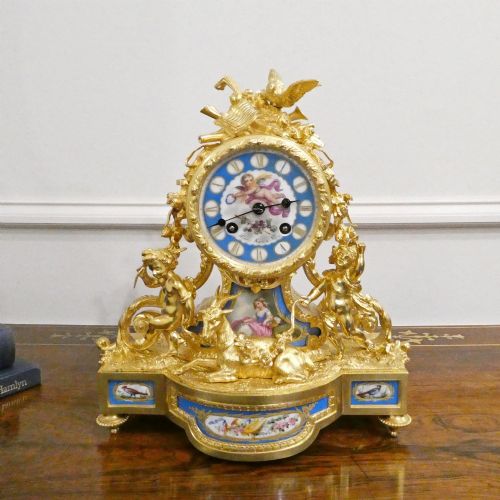
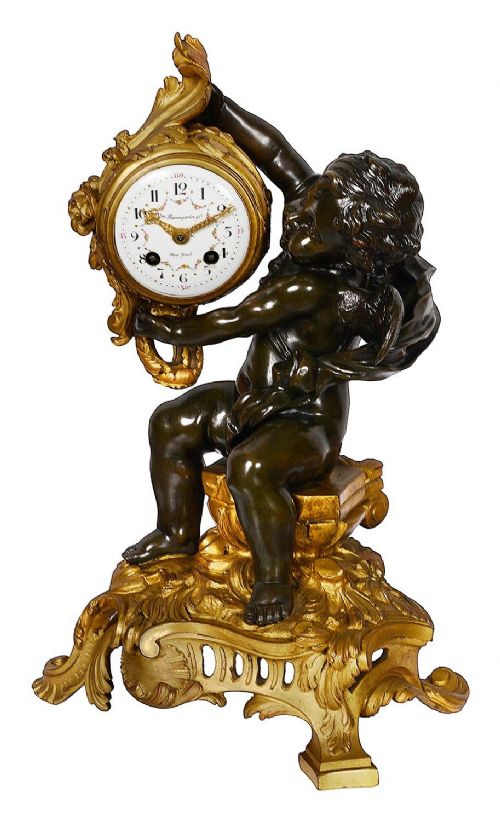
A victorian cherub mantel clock combines timekeeping with figural bronze casting, predominantly originating from French workshops during the nineteenth century. These objects frequently emerge within revival styles such as Rococo and Louis XVI, incorporating winged putti alongside traditional dial faces.
Collectors encounter diverse formats ranging from single table clocks to extensive three-piece garniture sets featuring flanking candelabra or vases. Materials span from polished marble and onyx bases to gilt bronze and hand-painted porcelain panels.
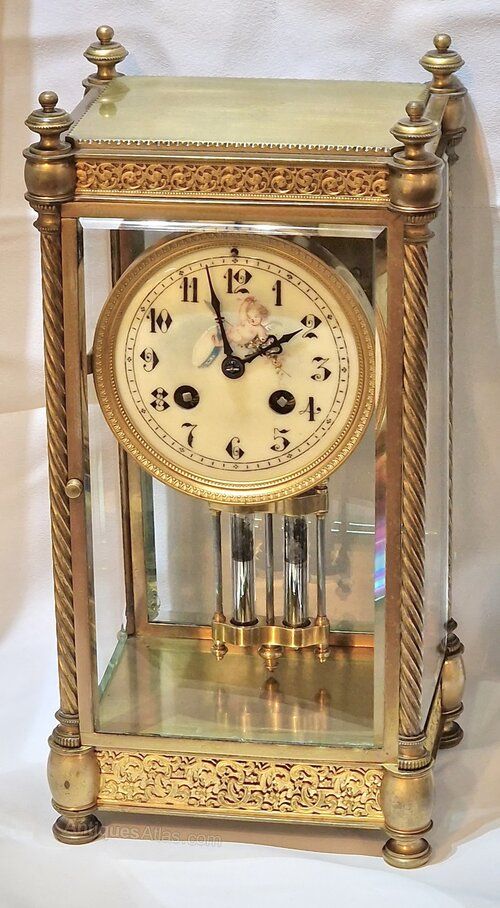
The horological components sit alongside decorative mounts, often depicting allegorical cherubs engaged with animals, floral garlands, or scientific instruments. English retailers also imported these mechanisms, housing them in brass-inlaid rosewood or gilt cases.
Materials and construction
Foundries produced the primary structural elements through brass and bronze casting, subsequently applying mercury gilding or ormolu finishes to achieve a bright golden lustre. Artisans mounted these heavy metal housings onto substantial bases formed from variegated marble, slate, or onyx.
Dials frequently incorporate white enamel with painted Roman numerals, sometimes accompanied by delicate pierced hands and protective glass bezels. Finer examples integrate champlevé enamel work or hand-painted porcelain plaques depicting pastoral scenes into the outer case.
Listings feature nineteen-century pieces incorporating gilt bronze, ormolu, champlevé enamel, marble, onyx, and porcelain across French and English origins.
Judging the work
Quality reveals itself in the crispness of the bronze chasing, where individual feather details on the cherub wings remain sharp and deep rather than softened by worn moulds. The weight and integration of the marble or onyx plinth also signal higher tier production.
Mechanical excellence is apparent in signed movements by noted makers, where the clockwork gear trains and escapements operate smoothly within the cast housing. The presence of matching garniture pieces or original mercury gilding further elevates an example.
Jean-Baptiste Delettrez·Henry Marc·Le Roy and Fils·Phillipe H. Mourey·John Bennett Cheapside London·F Marti·Farcot·Dumont
The Victorian Cherub Mantel Clock Glossary
- Ormolu
- Gilded bronze produced by applying a mercury and gold amalgam to a bronze base and heating it until the mercury vaporised. This technique creates a durable golden surface characteristic of nineteenth-century French metalwork.
- Garniture
- A set of matching decorative objects, typically comprising a central mantel clock flanked by matching candelabra, urns, or vases. These balanced sets dominated Victorian and Second Empire interior displays.
- Champlevé
- An enamelling technique where troughs or cells are hollowed out of the metal surface and filled with coloured glass paste before firing. The piece is then polished flat to create a smooth, patterned finish.
- Putto
- A chubby male infant figure frequently depicted as a cherub or winged angel in classical and revival art. These figures appear widely across nineteenth-century clock dials and bronze mounts.
- Movement
- The internal mechanical assembly of gears, springs, and escapements that drive the clock hands and strike the hours. Nineteenth-century examples relied on pendulum regulation and spring-driven or weight-driven power.
Victorian Cherub Mantel Clock: Frequently Asked Questions
How do I wind a Victorian clock?
Most nineteenth-century movements utilise a key inserted into winding holes on the enamel dial to tension the mainsprings. Care must be taken not to over-wind the mechanism.
Striking trains often operate independently via a second winding arbor, requiring separate attention to keep the hours and half-hours synchronised.
Where should I place my mantel clock?
These heavy bronze and marble timepieces require a sturdy, level surface such as a fireplace mantel or a dedicated console table. Placing them away from direct sunlight and damp walls preserves the gilding and enamel.
Because many examples incorporate delicate cast bronze cherubs and glass bezels, high-traffic hallways where people might brush past should be avoided.
How do I date a French clock?
Makers often stamped their movement backplates with exhibition medals, serial numbers, or foundry marks that correspond to active working periods. Stylistic indicators like Rococo revival curves or champlevé enamel also point towards specific decades within the nineteenth century.
Retailer signatures inscribed on the dial or movement can further narrow down the decade of sale.
What is a clock garniture?
A garniture is a decorative matched set consisting of a central mantel clock accompanied by two side pieces, such as candelabra or decorative urns. These suites were designed to create a symmetrical arrangement across a fireplace mantel.
Materials used in the side pieces typically mirror the central clock, combining gilt bronze, marble, and porcelain.