

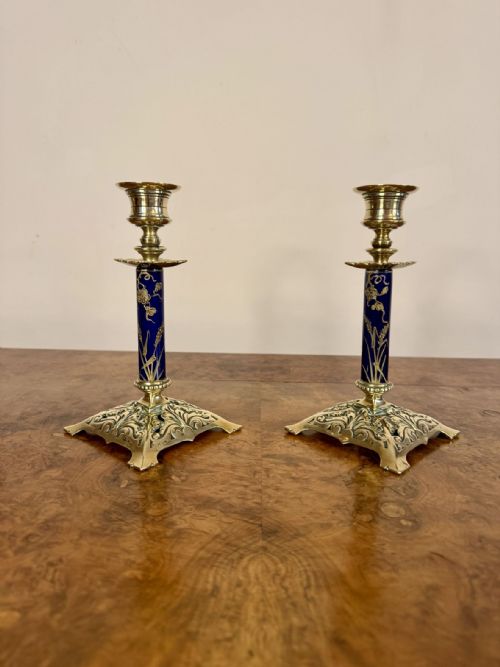
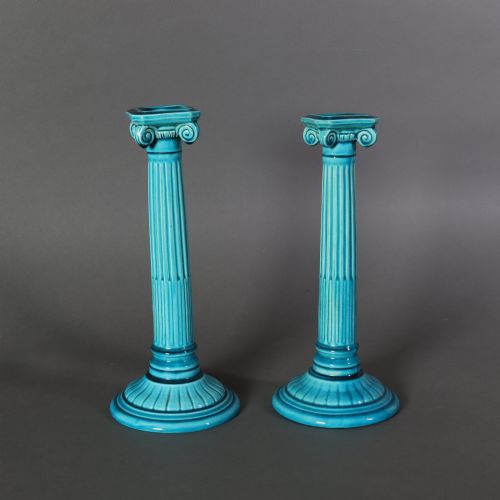

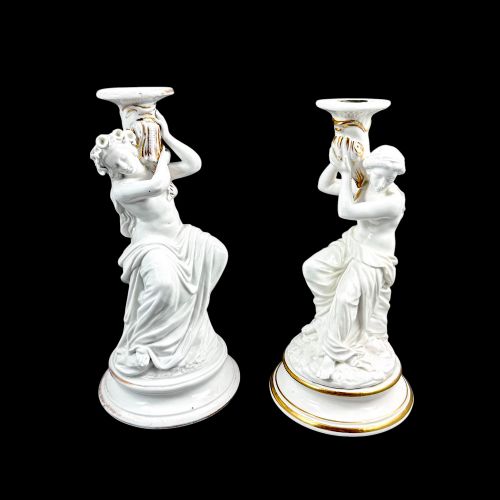


Victorian Ceramic Candlesticks
Victorian ceramic candlesticks bring sculptural form and brilliant colour to a mantelpiece, offering both utility and ornate display.
Victorian Ceramic Candlesticks
Victorian ceramic candlesticks encompass a range of figural, allegorical, and decorative lighting pieces produced throughout the nineteenth century. These items frequently feature porcelain, hard-paste porcelain, and ironstone construction combined with intricate moulding.
Buyers often encounter pairs of figural examples, alongside multi-arm candelabra formats and patterned designs influenced by diverse stylistic movements. The forms span from Staffordshire productions to continental European porcelain works.
Stylistic influences on this page stretch from Rococo Revival and Victorian Neoclassical to the Aesthetic Movement and Hispano-Moresque traditions. Such variety ensures that these candlesticks function equally well as structural lighting and as cabinet porcelain.
How they were made
Makers utilised high-fired ceramic and porcelain bodies, shaping them through detailed moulds to achieve complex figural and floral reliefs. Many pieces integrate applied enamel paint and hand-brushing directly onto the glazed surface.
Gilding and gold leaf often highlight raised elements, scrollwork, and candle nozzles, occasionally paired with cast brass mounts. Hard-paste porcelain bodies provide the durable, bright white foundation necessary for intricate overglaze decoration.
Victorian Ceramic Candlesticks Retail Price Guide 2026
Typical asking prices for victorian ceramic candlesticks among the pieces listed under this phrase on Sellingantiques today, from the lower quarter to the upper quarter. They describe what is for sale here now, not the wider market.
Listings demonstrate a strong presence of nineteenth-century German and English porcelain, incorporating porcelain, brass, and enamel.
What varies in quality
Integrity of the glazed surface and the harmony between ceramic components and brass additions define the success of the piece. Superior examples maintain intact enamels and clean joins where metal meets clay.
Royal Worcester Hadley·Sitzendorf Porcelain·Doulton Lambeth·Helena Wolfsohn·Mason's Ironstone China
The Victorian Ceramic Candlesticks Glossary
- Hard-paste porcelain
- A dense, vitrified ceramic material fired at high temperatures, offering durability and a smooth white body. It serves as the primary canvas for detailed nineteenth-century enamel painting.
- Enamel
- A glass-like substance fused to the surface of porcelain through firing to provide permanent colour. Overglaze enamels allow for vibrant reds, blues, and greens on Victorian pieces.
- Gilding
- The application of gold leaf or powdered gold mixture to highlight raised decorative elements and borders. This technique adds reflective warmth to the ceramic body.
- Allegorical figure
- A symbolic human or mythical representation personifying an abstract concept, such as the seasons. These figures frequently form the central column of Victorian candlesticks.
Victorian Ceramic Candlesticks: Frequently Asked Questions
How were ceramic candlesticks used in the period?
These pieces provided portable illumination in drawing rooms and parlours before the widespread adoption of gas and electric lighting. They sat upon mantelpieces, side tables, and dining surfaces.
Beyond utilitarian lighting, matched pairs functioned primarily as decorative garnitures to balance interior architectural symmetry. Their figural and colourful designs made them objects of visual display even when unlit.
Are these candlesticks suitable for daily use?
While structurally sound, antique ceramic candlesticks require careful handling to preserve delicate hand-painted enamels and gold leaf. Regular burning of candles can introduce soot or wax residue that risks staining porous surfaces.
Most collectors prefer to use them for display or with fitted modern drip protectors. Gentle cleaning with a dry cloth keeps the glaze and gilding secure over time.
What is the difference between candlesticks and candelabra?
Candlesticks are single-socket lighting devices supported by a central stem and a stable base. They are designed to hold one taper or candle at a time.
Candelabra feature multiple branches or arms stemming from a single base, allowing them to support several candles simultaneously. This multi-arm format usually yields a more monumental decorative presence.