

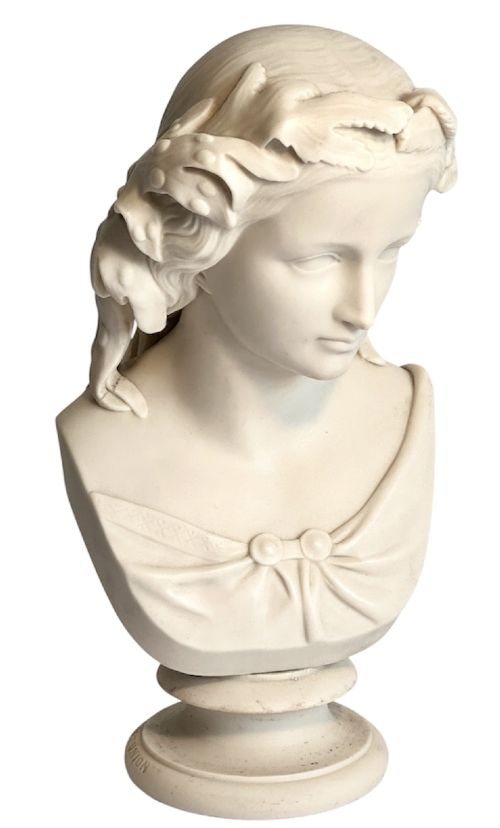


Victorian Ceramic Bust
These nineteenth century pieces capture likenesses in clay, offering a serious touch of Victorian character for a mantelpiece.
Victorian Ceramic Bust
A victorian ceramic bust presents a sculpted likeness of a historical figure, literary character, or allegorical subject from the nineteenth century. These sculptures take various forms, ranging from miniature studies to larger scale works designed for interior display.
The pieces on this page draw from distinct aesthetic traditions, appearing in Victorian, neoclassical, and art nouveau styles. Makers rendered subjects such as Princess Alexandra, William Ewart Gladstone, and Admiral Lord Nelson in durable ceramic forms.
Originating across the nineteenth century, particularly from the 1880s through to 1900, these sculptures reflect the era's taste for portraiture and classical mythology. Figures like Ariadne, Miranda, and Clorinda sit alongside notable political and historical personages.
Materials and Manufacture
Terracotta provided a warm, earthy medium for larger scale works, often finished with detailed modelling that captured the texture of hair and costume. Glazed ceramic also appears, adding reflective surfaces and deeper colour to character studies.
Several works record the influence of renowned sculptors, translating original marbles and bronzes into accessible ceramic editions. Factories employed skilled modlers to replicate complex subjects such as Pietro Calvi's banjo player or Johann Heinrich Dannecker's Ariadne.
Victorian Ceramic Bust Retail Price Guide 2026
Typical asking prices for victorian ceramic bust among the pieces listed under this phrase on Sellingantiques today, from the lower quarter to the upper quarter. They describe what is for sale here now, not the wider market.
A solitary glazed blackamore holding a basket joins a gallery of classical heroines and political statesmen in nineteenth century clay.
Quality and Execution
Scale and ambition separate standard decorative wares from exceptional exhibition pieces. Life size or larger scale terracotta and parian studies demonstrate superior technical mastery in managing shrinkage and distortion during the firing process.
Copeland·Goldscheider
The Victorian Ceramic Bust Glossary
- Parian Porcelain
- A fine white bisque porcelain developed in the nineteenth century to imitate carved marble. It contains a high proportion of feldspar, which melts during firing to give the material a semi-translucent quality.
- Terracotta
- A porous, fired clay body ranging in colour from pale buff to deep reddish brown. Artists prized it for its ability to capture immediate hand modelling before firing.
- Bisque Porcelain
- Porcelain that has been fired once without glaze, leaving a matte, porous surface resembling marble. It is frequently used for portrait figures and decorative busts.
- Neoclassical
- An artistic movement drawing inspiration from the classical art and culture of ancient Greece and Rome. This style prioritises symmetry, restraint, and mythological subjects.
Victorian Ceramic Bust: Frequently Asked Questions
What materials are these busts made from?
These nineteenth century sculptures utilise parian porcelain, terracotta, and bisque ceramic. Each material offers a distinct surface texture, from the matte marble imitation of parian ware to the warm, earthy tones of terracotta.
Makers chose these mediums to suit the scale and intended display of the portrait, balancing durability with fine detail capture.
Who do these portrait sculptures depict?
The subjects range from historical figures and political leaders like William Ewart Gladstone and Admiral Lord Nelson to royalty such as Princess Alexandra. Other pieces portray literary and mythological heroines including Miranda, Clorinda, and Ariadne.
Character studies of musicians and genre figures also appear alongside these named portraits.
How should I display a ceramic bust?
These sculptures require a stable, level surface such as a mantelpiece, sideboard, or sturdy bracket shelf. Because many pieces possess significant weight, particularly larger terracotta and parian works, placement should ensure they remain safe from accidental knocks.
Keep them away from direct heat sources and areas of heavy traffic to protect the matte ceramic surfaces.
How do I care for nineteenth century ceramics?
Dust unglazed parian and bisque surfaces gently with a soft, dry brush to prevent dirt settling into the porous material. Avoid using water or chemical cleaners on unglazed pieces, as moisture can stain the clay body.
Glazed ceramics tolerate a lightly dampened cloth for cleaning, provided you dry the surface thoroughly afterwards.