



Victorian Ceramic Bedside Lamps
These Victorian ceramic bedside lamps bring nineteenth-century porcelain, stoneware, and earthenware into the bedroom with genuine period character.
Victorian Ceramic Bedside Lamps
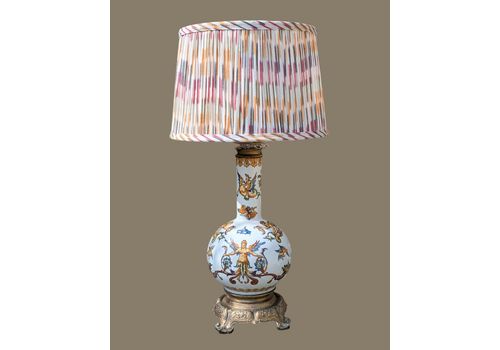
Victorian ceramic bedside lamps comprise nineteenth-century vessels, jars, and vases transformed into lighting, often utilising porcelain, stoneware, and china bodies. These pieces frequently incorporate French and Chinese decorative traditions, spanning styles from Rococo Revival and Neoclassical to Chinoiserie and Napoleon III.
Buyers encounter forms derived from apothecary jars, tobacco jars, and cabinet vases produced across the nineteenth century and into the early twentieth century. Many examples pair ceramic bodies with metal mounts in gilt bronze, ormolu, brass, or gilt metal to elevate the domestic lighting.
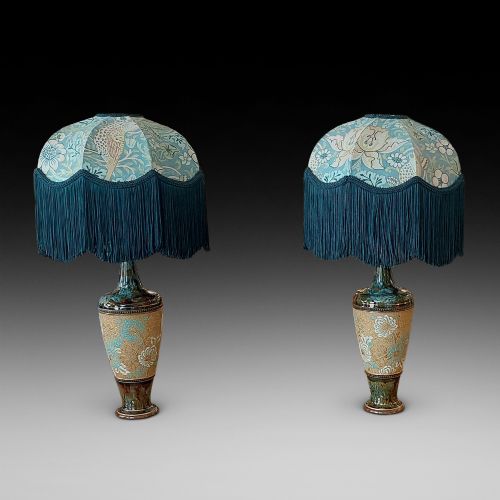
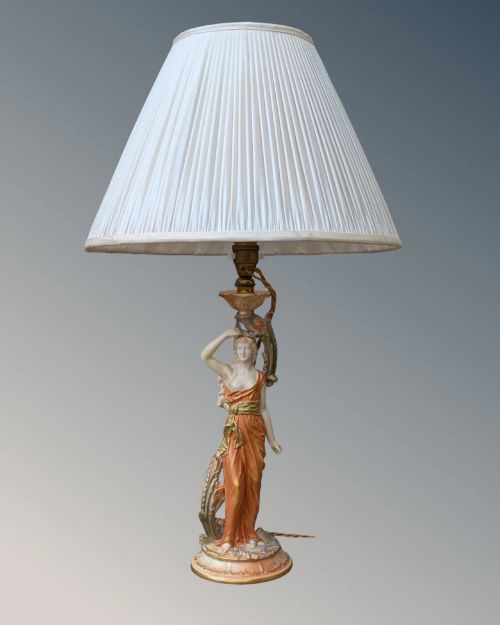
The selection leans toward table lamps of varied scales, including petite floral designs and larger paired matching lamps. These items reflect the nineteenth-century taste for repurposing decorative ceramics into functional interior illumination.
How they were made
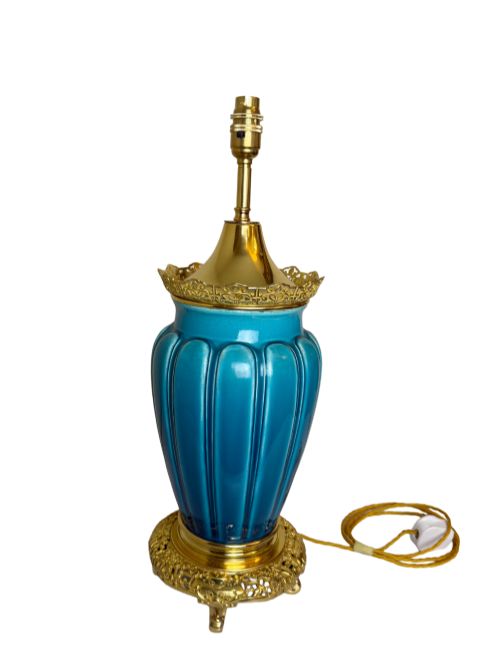
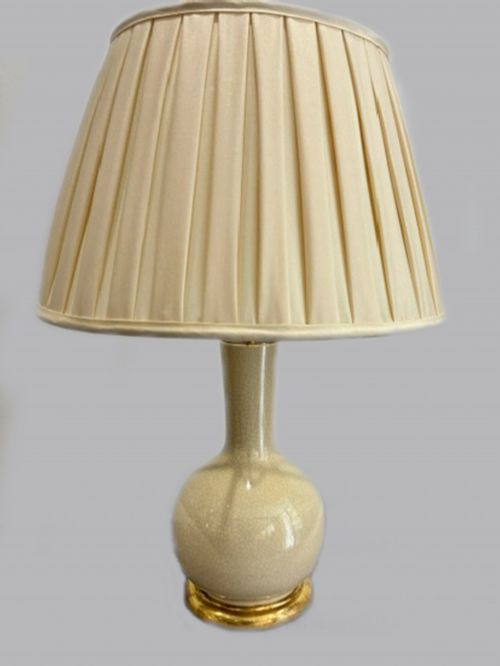
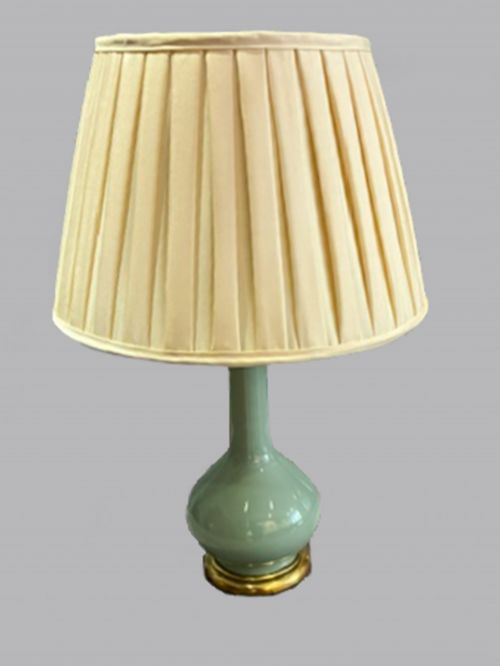
Makers shaped these lamps from porcelain, stoneware, and china, applying hand-painted glazes such as turquoise blue, celadon, and blue and white prunus blossom patterns. Crackle ware finishes and Famille Noare style surface work display the technical execution of nineteenth-century kilns.
Metal components in brass, gilt bronze, and ormolu were cast and chased to frame the ceramic bases securely. Fabric elements like silk and structured cloth shades complete the conversion from decorative vessel to functional lamp.
Victorian Ceramic Bedside Lamps Retail Price Guide 2026
Typical asking prices for victorian ceramic bedside lamps among the pieces listed under this phrase on Sellingantiques today, from the lower quarter to the upper quarter. They describe what is for sale here now, not the wider market.
Some bedside lamps began life as Victorian tobacco jars, quietly retiring from storing leaf to holding up reading lights.
What varies in quality
The distinction between standard production and top-tier pieces rests on the fineness of the ceramic body and the crispness of the metal mounts. Superior examples demonstrate expert hand-painting on porcelain alongside meticulously chased gilt bronze or ormolu trim rather than simpler brass hardware.
Provenance and maker attribution elevate certain works, such as pieces bearing identifiable porcelain factory marks from Royal Worcester, Sitzendorf, or Royal Doulton. Matched pairs also command greater interest than solitary table lamps due to the difficulty of assembling symmetrical bedside lighting.
Royal Worcester·Sitzendorf·Royal Doulton
The Victorian Ceramic Bedside Lamps Glossary
- Porcelain
- A hard, fine-grained ceramic material fired at high temperatures, valued for its smooth white body and translucency. It forms the foundation of many nineteenth-century decorative lamps.
- Ormolu
- Finely ground high-carat gold mercury-gilded onto a bronze base, creating a rich golden surface finish. This technique appears on the decorative mounts of finer period lamps.
- Celadon
- A pale green jade-like glaze originating in Chinese ceramics and later emulated by European potteries. It provides a subdued, uniform colour across nineteenth-century vases converted to lighting.
- Chinoiserie
- European artistic interpretation of Chinese and East Asian decorative motifs, popular throughout the nineteenth century. This style shapes the surface patterns of many vase-form lamps.
Victorian Ceramic Bedside Lamps: Frequently Asked Questions
Are these lamps newly wired?
Conversion and electrical work vary across antique pieces, as many retain older fittings while others have received modern rewiring for safe domestic use. Buyers should inspect the wiring details or consult a qualified electrician before installation.
Checking the cord, plug, and lampholder ensures the piece meets current safety standards while preserving the antique ceramic body and metal mounts.
How do I clean antique porcelain?
Maintenance requires gentle dusting with a soft, dry cloth to protect the painted glazes and delicate ceramic surfaces. Moisture should be kept away from unglazed areas and older metal mounts.
Harsh chemical cleaners will damage nineteenth-century gilding and painted enamel work, so mild care preserves the finish.
Can I find matching pairs?
The inventory occasionally includes matched pairs of lamps, particularly those converted from apothecary jars or factory-produced porcelain bodies. Symmetrical pairs suit bedside placement where balance is desirable.
Single lamps appear just as frequently, offering distinct decorative accents for smaller side tables.
What styles are common?
Nineteenth-century pieces draw heavily from French Rococo Revival, Neoclassical, and Napoleon III aesthetics, alongside Chinoiserie vase designs. These styles reflect the period preference for ornate, eclectic interior decoration.
Each style dictates the choice of metal mounts, from gilt bronze trim to simpler brass hardware.