




Ceramic Jar Lamps
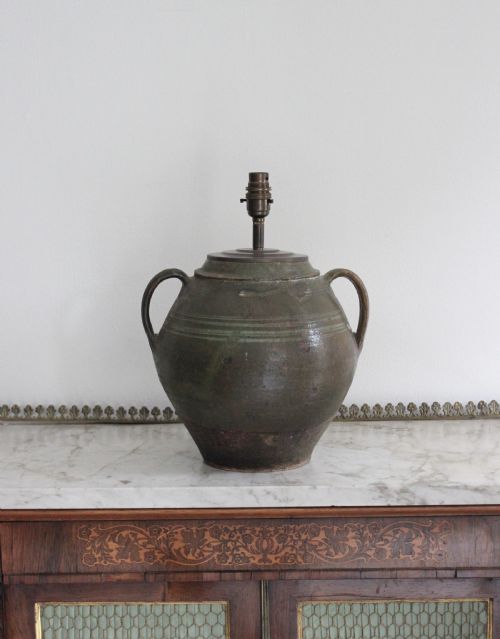
These ceramic jar lamps transform historic vessels and ginger jars into practical lighting, bringing patterned porcelain and rich glazes into a room.
Ceramic Jar Lamps
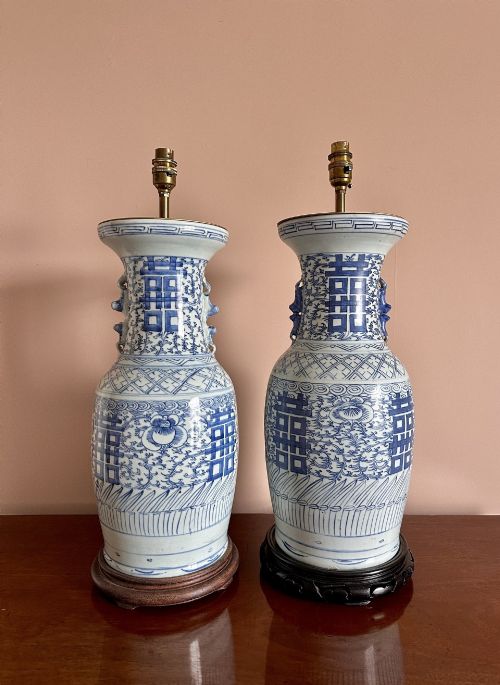
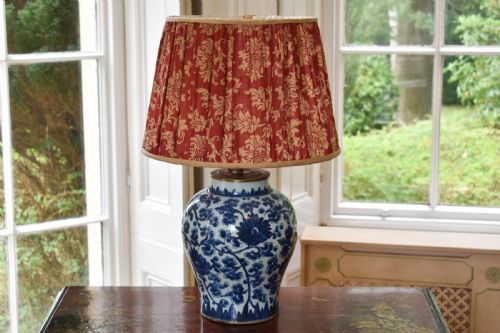
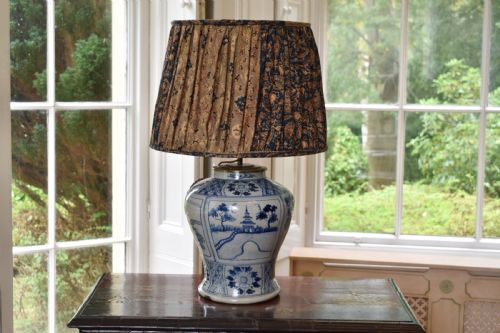
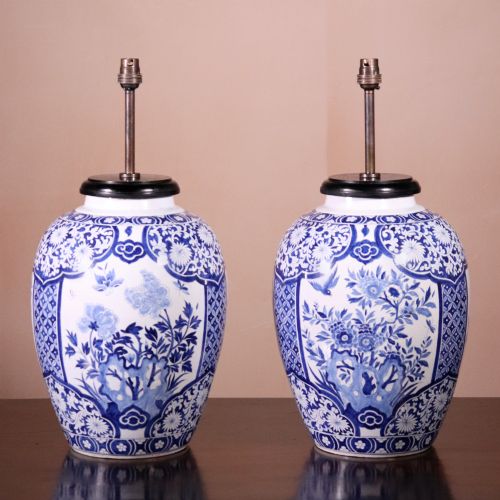
When you search for ceramic jar lamps, you are looking at repurposed vessels that range from eighteenth-century Delft and Japanese Arita to nineteenth-century Chinese ginger jars and European porcelain. The most frequent examples on this page are nineteenth-century Chinese blue and white and Famille Rose pieces, often mounted as table lamps.
The body of each lamp originates as a vase, ginger jar, tobacco jar, or apothecary jar, later adapted for electrical wiring. Styles extend from Chinoiserie and Qing Dynasty export wares to Victorian and Georgian designs, alongside Japanese Meiji period ceramics.
Many items appear in matched pairs, while others stand alone as singular decorative objects. Their forms draw on centuries of pottery traditions, repurposed to sit on side tables and desks.
What varies in quality
Quality rests primarily on the provenance and fidelity of the ceramic body, with hand-painted porcelain showing greater depth of pigment and precision than later derivative styles. Eighteenth-century and early nineteenth-century pieces display finer potting and more complex glaze effects.
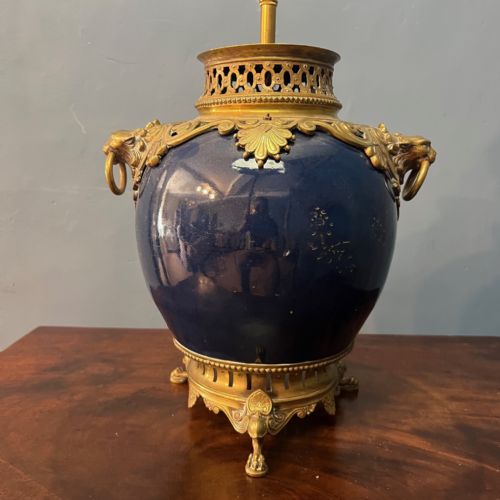
The integration of metal mounts, such as cast ormolu or heavy brass, influences the overall presence of the piece. Craftsmanship in the adaptation - how cleanly the jar is drilled and fitted for electrical components - distinguishes standard conversions from finer examples.
Ceramic Jar Lamps Retail Price Guide 2026
Typical asking prices for ceramic jar lamps among the pieces listed under this phrase on Sellingantiques today, from the lower quarter to the upper quarter. They describe what is for sale here now, not the wider market.
Listings feature ceramic jar lamps spanning the eighteenth, nineteenth, and early twentieth centuries, incorporating materials like porcelain, brass, and ormolu.
Royal Doulton·Samson Porcelain
The Ceramic Jar Lamps Glossary
- Famille Rose
- A palette of opaque overglaze enamels dominated by pink, introduced in Chinese ceramics during the Qing dynasty. It allows for nuanced, painterly floral and figural scenes.
- Ginger jar
- A wide-shouldered, bulbous ceramic vessel originally used to store and transport spices and salt. They provide balanced proportions well-suited for conversion into table lamps.
- Ormolu
- Gilt bronze mounted onto decorative objects, adding a bright metallic trim to ceramic bases. It appears frequently on nineteenth-century French and English luxury pieces.
- Cracklegaze
- A ceramic glaze featuring a network of fine deliberate cracks across the surface. This effect occurs due to the different contraction rates of the body and glaze during firing.
Ceramic Jar Lamps: Frequently Asked Questions
What is a ceramic jar lamp?
A ceramic jar lamp is a decorative vessel, such as a ginger jar or vase, that has been converted into a table lamp. These pieces combine historic ceramic manufacturing with modern electrical fittings.
They serve as functional lighting while retaining the hand-painted glazes and patterns of their original period.
Are these lamps originally wired?
No, the ceramic vessels began as utilitarian jars, decorative vases, or apothecary containers. They were adapted into lamps at a later date, often during the nineteenth or twentieth century.
The conversion process involves fitting the ceramic body with electrical wiring, sockets, and sometimes brass or ormolu mounts.
How do I identify Chinese export styles?
Chinese export styles often feature blue and white cobalt decoration, Famille Rose enamels, or crackleware finishes designed for Western markets. Motifs commonly include prunus blossoms, landscapes, and traditional figures.
Comparing the glaze depth and painting technique helps distinguish nineteenth-century examples from later reinterpretations.
How do I style a jar lamp?
These lamps function well on side tables, sideboards, or desks where their patterned ceramic bodies can act as a focal point. Paired sets suit symmetrical placements on mantelpieces or matching bedside tables.
The scale and height of the jar require a sturdy surface and a complementary fabric shade to balance the composition.