


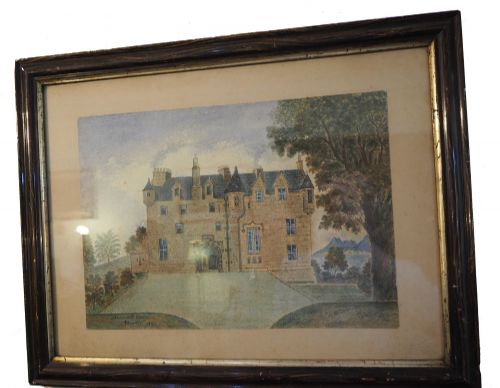
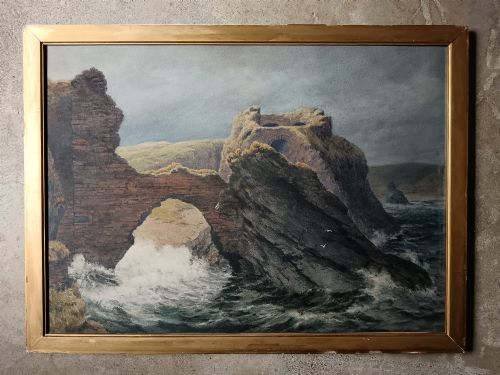


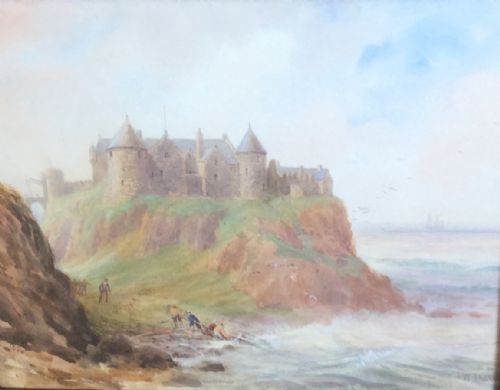


Victorian Castle Landscape Watercolour
These Victorian castle landscape watercolour paintings capture historic fortresses and romantic riversides on paper using traditional pigments.
Victorian Castle Landscape Watercolour
A victorian castle landscape watercolour presents historical fortifications and dramatic ruins set within nineteenth century British and European scenery. These works frequently depict notable strongholds such as Windsor, Warkworth, Rochester, and Dunluce alongside Scottish and coastal views.
The compositions emerge from the Victorian period and the Edwardian era, spanning the late nineteenth century up to nineteen ten. Common formats include framed fine art wall pieces executed by recognised British school artists.
Buyers encounter topographical watercolours and romantic landscape art ranging from modest studies to large gallery pieces. The typical composition balances architectural precision with atmospheric weather and river or coastal settings.
Materials and technique
Artists painted these scenes using watercolour pigment applied to paper supports, often building up translucent washes and fine details. Many examples retain their original framing materials comprising wood and gilt or giltwood moulding behind protective glass.
The technique relies on the natural luminosity of the paper showing through transparent layers of pigment to create light and atmosphere. Draftsmanship forms the structural foundation, mapping out stone masonry and riverbanks before colour application.
Victorian Castle Landscape Watercolour Retail Price Guide 2026
Typical asking prices for victorian castle landscape watercolour among the pieces listed under this phrase on Sellingantiques today, from the lower quarter to the upper quarter. They describe what is for sale here now, not the wider market.
The works span Victorian romanticism, impressionism, and topographical landscape traditions.
Assessing quality
Quality rests upon the skill of the brushwork and the precision with which the artist handles atmospheric effects like mist, water reflection, and ancient stone texture. Master practitioners command superior control over pigment dilution and paper preservation.
Provenance and documentation also separate works, with signed pieces by recorded Victorian and Edwardian artists holding greater documentary interest. The harmony of the original giltwood frame and the stability of the paper support further influence the standing of a piece.
Alfred Young Nutt·John Moxon·Thomas Cooper Moore·James Orrock·David Cox Jnr·R P Noble·William Wyld·Frederick Tully Lott·Frank Wasley·Peter Toft·Carleton Grant·Joseph William Carey·A E Story
The Victorian Castle Landscape Watercolour Glossary
- Watercolour
- A painting method in which the paints are made of pigments suspended in a water-soluble vehicle. It provides translucent colour washes across a paper ground.
- Topographical landscape
- A genre of art focused on the accurate depiction of specific real-world locations and buildings. These works served to record historic castles and identifiable regional scenery.
- Giltwood
- Wood that has been treated with gold leaf or a gold-coloured metallic finish. It appears frequently on the antique frames enclosing these nineteenth-century paintings.
- British School
- A loose grouping of artists working in Britain across various periods sharing stylistic influences. Many nineteenth-century landscape watercolours originate from this artistic tradition.
Victorian Castle Landscape Watercolour: Frequently Asked Questions
How old are these watercolours?
Most pieces date from the Victorian era and the Edwardian period, spanning the nineteenth century through to nineteen ten.
Dates are established through artist signatures, historical subject matter, and framing styles.
Where should I hang a watercolour?
Watercolours require placement away from direct sunlight to prevent the pigments and paper from fading over time.
Interior walls with stable humidity levels help preserve the paper and the original giltwood frame.
What is Victorian romanticism in art?
This nineteenth-century movement emphasised emotion, awe in the presence of nature, and a fascination with medieval history.
Castle watercolours embody this by placing decaying stone fortifications into dramatic coastal or river landscapes.