







Original Victorian Sea Painting
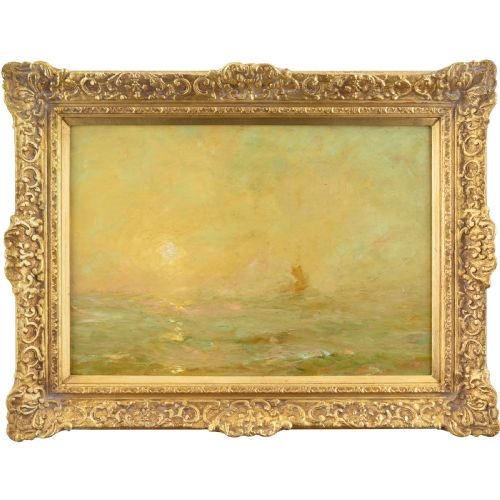
Original victorian sea painting captures coastal and maritime life across the nineteenth century through oils, watercolours, and mixed media.
Original Victorian Sea Painting
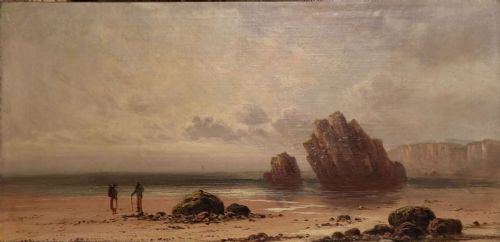
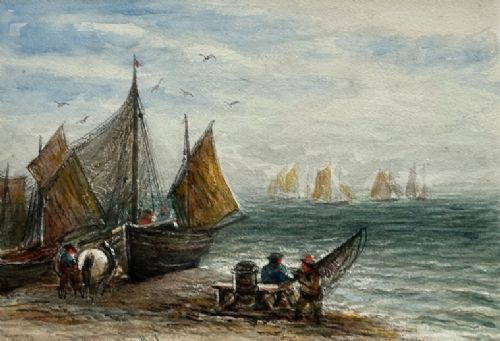
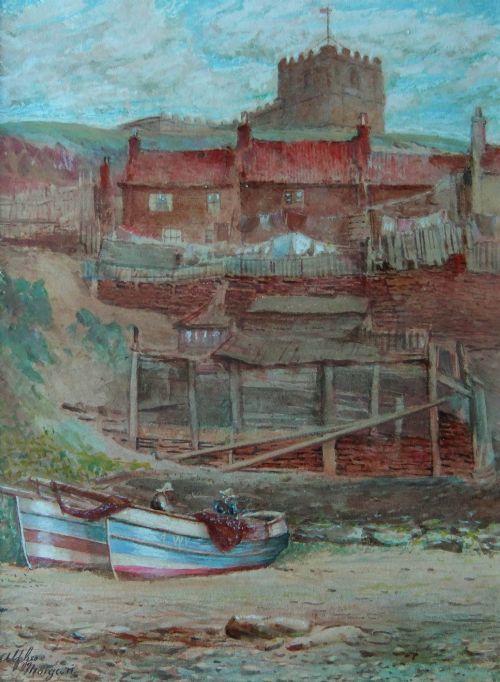
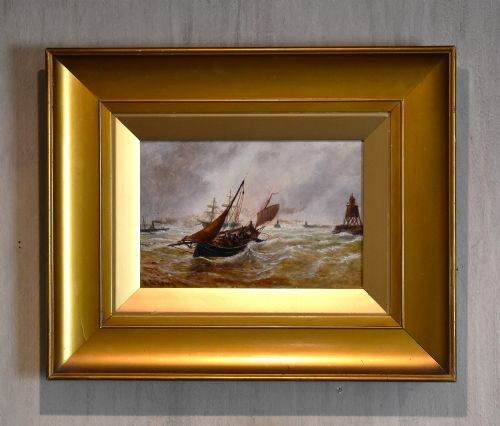
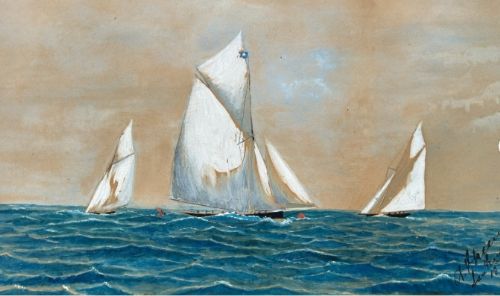
An original victorian sea painting brings together nineteenth-century maritime subjects, coastal harbours, and offshore vessel scenes executed in traditional formats. Buyers searching this phrase encounter framed oils on canvas, oils on card, and detailed watercolours on paper depicting fishing boats, racing yachts, and stormy coastal waters.
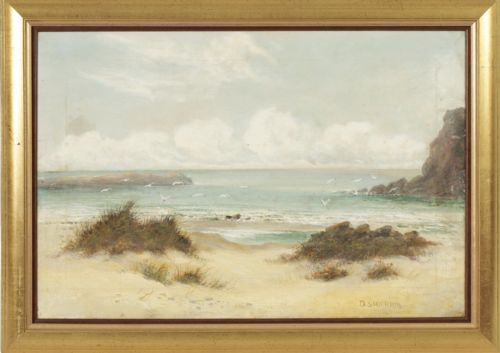
The most common examples on this page are nineteenth-century British school watercolours and oils showing recognisable locations like Scarborough, Brighton beach, St Ives, and the Isle of Man. Artists of the period recorded daily maritime occupations, local craft, and changing weather conditions along British and European shores.
While the majority of pieces date from the Victorian era and the surrounding decades up to the early twentieth century, the selection also includes occasional domestic furniture items alongside the predominant wall art and fine art paintings.
Materials and techniques
Artists utilised oil paint applied to canvas, card, or wooden board, often building up rich textures to render rough seas, clouds, and coastal rocks. Alternatively, watercolours combined pigment on paper with pencil underdrawing to capture light effects and transparent marine atmospheres.
Support materials include traditional woven canvas stretched over wooden frames, heavy watercolour paper, and stout card. Protective framing frequently incorporates wood mouldings and gold leaf slip accents to frame the visual composition.
Original Victorian Sea Painting Retail Price Guide 2026
Typical asking prices for original victorian sea painting among the pieces listed under this phrase on Sellingantiques today, from the lower quarter to the upper quarter. They describe what is for sale here now, not the wider market.
Listings feature works spanning the nineteenth century through the 1930s, executed in oil and watercolour on paper, canvas, card, and board.
Markers of execution and distinction
Quality rests upon the artist's ability to render water movement, atmospheric light, and vessel rigging with conviction and precision. Stronger examples display confident brushwork and accurate perspective in rendering waves, cliffs, and shoreline architecture.
Condition of the medium and the paper or canvas support influences the visual integrity of the work. Well-preserved works retain original pigment vibrancy and clear signatures, while framing integrity contributes to overall presentation.
James Orrock·William Banks Fortescue·Alfred G Morgan·Bernard Benedict Hemy·Henry Barlow Carter·William Frederick Settle·John McDougal·Thomas Rose Miles·Peter Ghent·Daniel Sherrin·J De Breanski·Edward Aubrey Hunt·W H Grey·James Webb RA·William James S Crampton·J Moffat
The Original Victorian Sea Painting Glossary
- Watercolour
- A painting method where fine pigment is suspended in a water-soluble binder applied to paper. This medium allows for transparent washes that imitate coastal light and sea spray.
- Oil on Canvas
- A technique utilising pigments bound in drying oil spread across a woven fabric support. It allows artists to achieve deep tonal contrasts in stormy marine scenes.
- Seascape
- A work of art depicting the sea, coastal views, or ships in open water. Such compositions form the core of maritime painting traditions.
Original Victorian Sea Painting: Frequently Asked Questions
What subjects appear in these paintings?
These works depict coastal harbours, fishing vessels, sailing ships, and dramatic shorelines with sea stacks. Scenes frequently feature specific locations such as Brighton beach, St Ives, and the Isle of Man.
Artists also recorded racing yachts, choppy waters, and calm seas with misty boats. Human figures engaged in beach activities or working near boats appear regularly alongside pure maritime views.
How do I identify the period of a work?
Dating relies on stylistic markers, artist signatures, and framing materials typical of the nineteenth and early twentieth centuries. Many pieces carry direct inscriptions, dates, or signatures associated with known Victorian painters.
Examine the back of the canvas or paper support for old gallery labels, framing stamps, or handwritten notes. Period framing methods and materials also provide reliable chronological context for the artwork.
What is the difference between oil and watercolour sea paintings?
Oils utilise heavy pigment suspended in drying oil on canvas, card, or board to create textured surfaces and deep tones. This medium suits dramatic storm scenes and heavy seas.
Watercolours apply transparent washes of pigment onto paper, often capturing bright coastal light and atmospheric skies. They require protective glass framing to prevent moisture and light damage.
How should I care for a Victorian painting?
Keep works away from direct sunlight, high humidity, and rapid temperature fluctuations to protect the canvas, paper, and pigments. Watercolours particularly benefit from UV-filtering glass and stable indoor environments.
Avoid using liquid cleaners on the painted surface or paper support. Dust frames gently with a dry, soft cloth, and consult a professional conservator for any structural repairs.