





Victorian Cast Iron Planters
Victorian cast iron planters are heavy, durable garden vessels that bring classical form and enduring structure to outdoor planting.

Victorian Cast Iron Planters
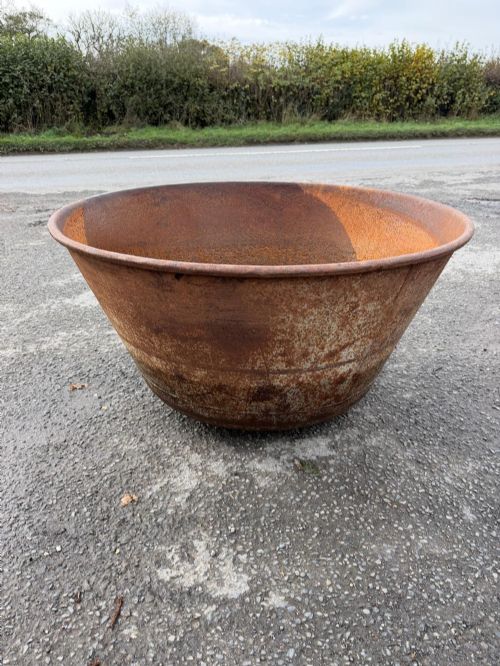
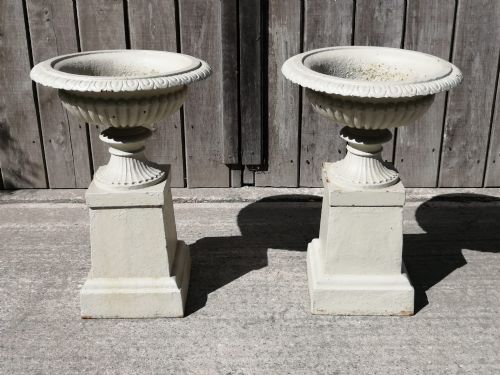
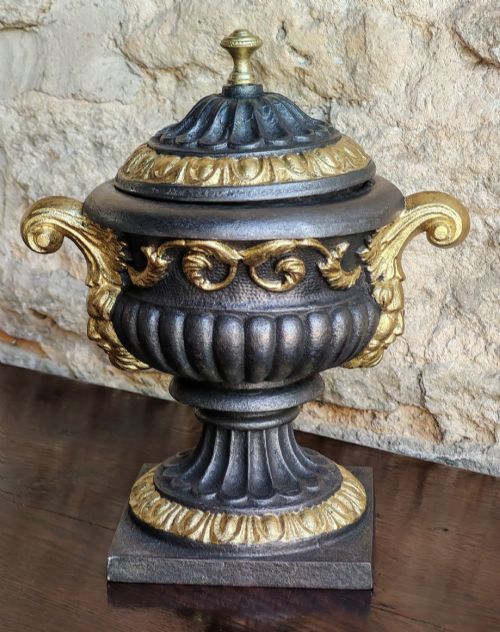
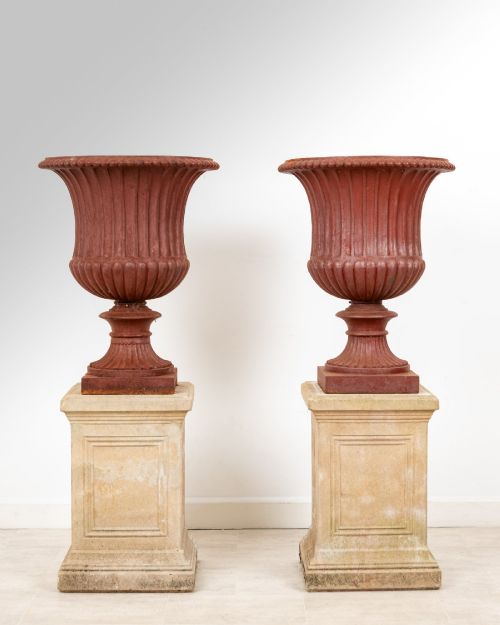
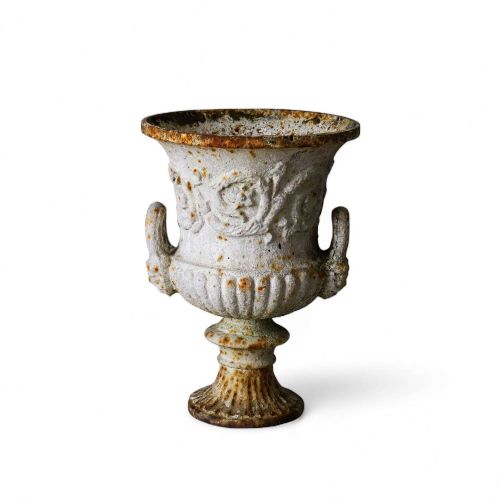
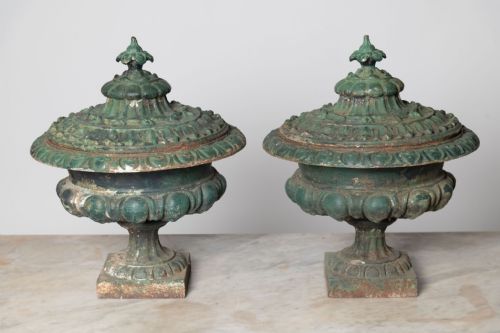
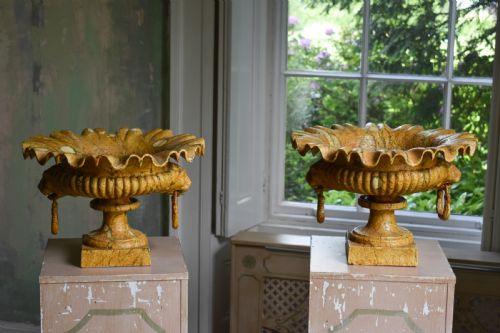
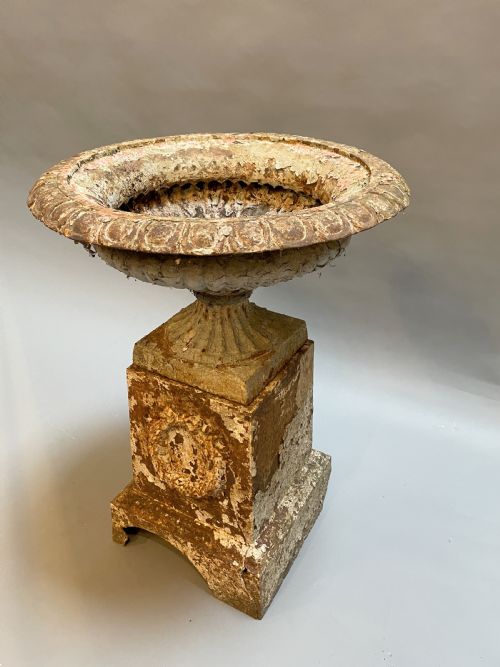
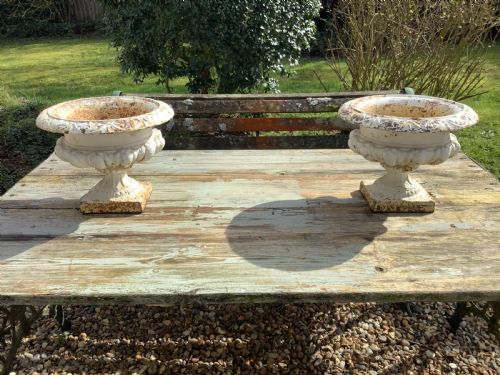
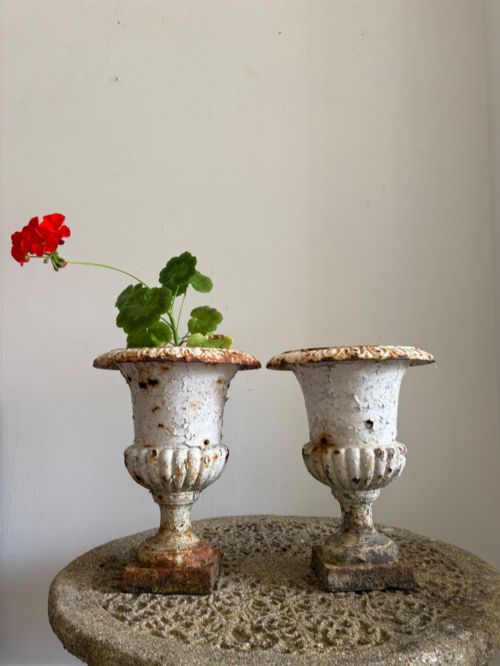
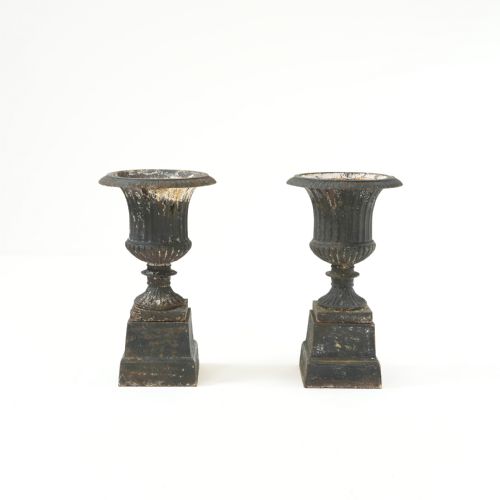
Victorian cast iron planters encompass a range of heavy garden vessels designed for structural outdoor displays. The selection on this page relies heavily on classical forms, notably campana urns, tazzas and column planters.
Most examples date across the nineteenth century, reflecting the industrial capacity of the period. Buyers frequently encounter pairs designed for symmetrical placement at entrances or along garden pathways.
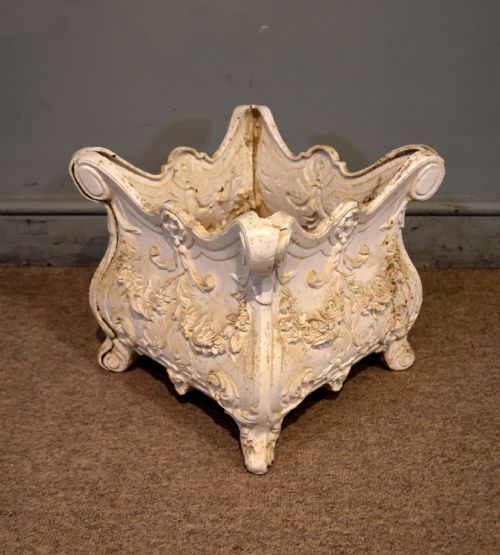
Forms extend beyond standard urns to tiered plant stands, rectangular jardinieres and novelty shapes. These pieces served both functional and decorative roles in nineteenth-century landscape design.
How They Were Made
Makers poured molten metal into sand moulds to achieve crisp surface relief and substantial wall thickness. This foundry technique allowed for the repetition of complex classical motifs such as acanthus leaves and fluting.
Surfaces were frequently finished with protective coats of paint or left to weather outdoors over decades. Iron components were often paired with stone pedestals or plinths to elevate the vessels.
Victorian Cast Iron Planters Retail Price Guide 2026
Typical asking prices for victorian cast iron planters among the pieces listed under this phrase on Sellingantiques today, from the lower quarter to the upper quarter. They describe what is for sale here now, not the wider market.
Some nineteenth-century makers cast iron planters in the literal likeness of giant boiled shrimp.
What Varies in Quality
The crispness of the casting defines the visual strength of the piece, separating finely detailed ornamentation from softened forms. Foundry work from major makers typically displays sharper definition in foliage and classical details.
Proportion and structural mass dictate the presence of the vessel within a garden setting. Pieces retaining original paint layers or matched stone bases hold distinct visual integrity compared to heavily altered examples.
Coalbrookdale Urns·Andrew Handyside·Val D Osne Foundry
The Victorian Cast Iron Planters Glossary
- Campana urn
- A bell-shaped garden vessel with an everted rim, widely produced in cast iron during the Victorian period for formal display. These urns often sit on square plinths or stone pedestals.
- Jardiniere
- A decorative receptacle designed to hold growing plants or pots, appearing in iron, wirework and ceramic during the nineteenth century. They function as both indoor and outdoor containers.
- Tazza
- A shallow cup-like vessel mounted on a stem and foot, used in garden settings as a decorative planter. The form derives from classical glassware and metalwork.
- Plinth
- A heavy base supporting an urn or column, providing physical stability and visual elevation. These bases are frequently cast iron or carved stone.
Victorian Cast Iron Planters: Frequently Asked Questions
How heavy are these planters?
These vessels are cast from heavy iron and often require multiple people or equipment to move safely.
The substantial weight provides stability against strong winds when placed in open gardens.
Can they stay outside in winter?
Cast iron withstands outdoor weathering well, though trapped wet soil can freeze and crack older metal over time.
Elevating the base ensures proper drainage and protects the integrity of the material during colder months.
Are original paint surfaces common?
Many examples display layers of historic paint or weathered patination accumulated through decades of outdoor exposure.
Original surface treatments help indicate the age and history of the piece.
How do I identify a foundry mark?
Foundry stamps or raised lettering occasionally appear along the base or rim of the casting.
These marks point to specific manufacturing firms active during the nineteenth century.