
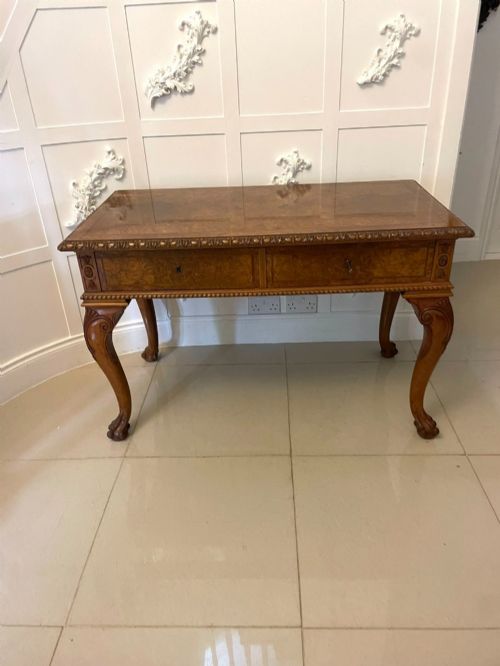
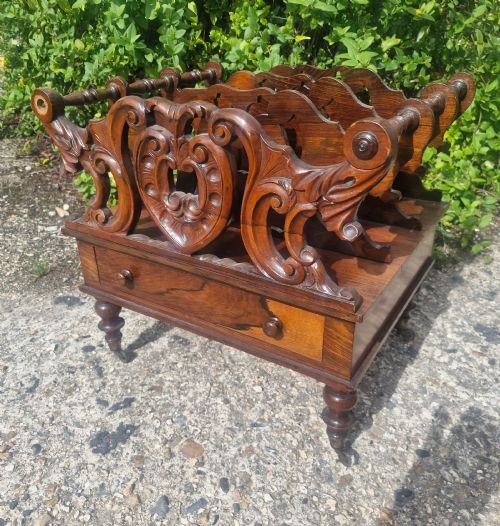

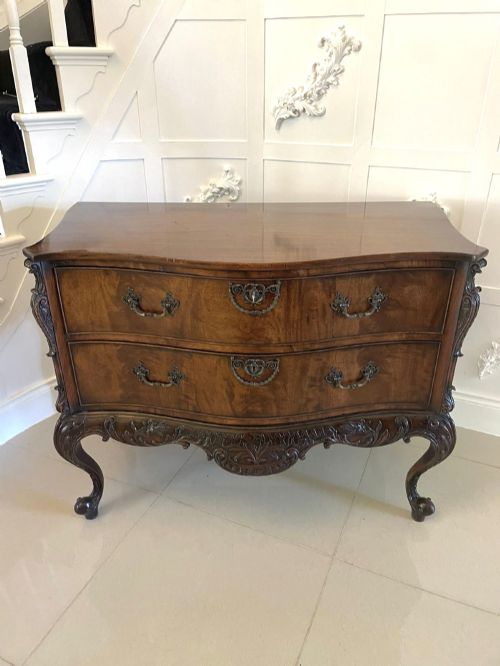
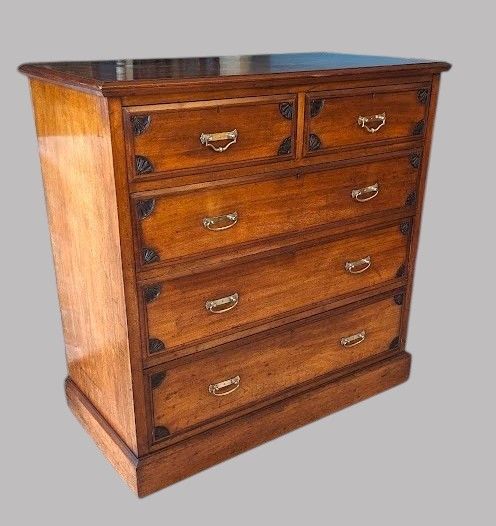
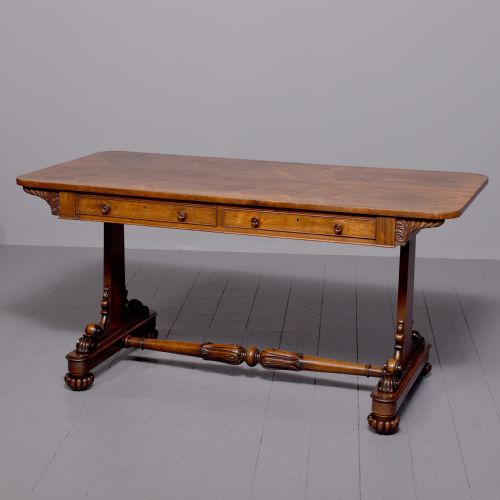
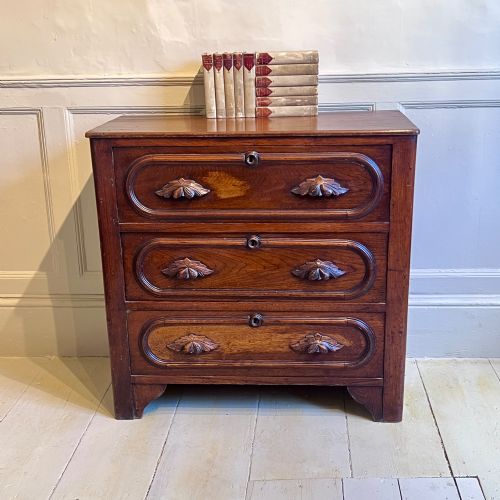
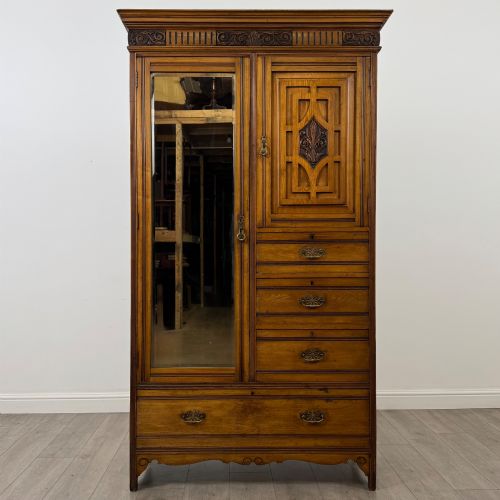
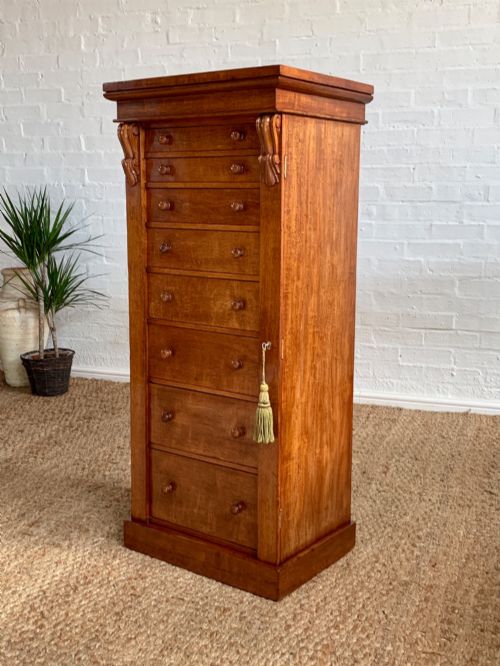
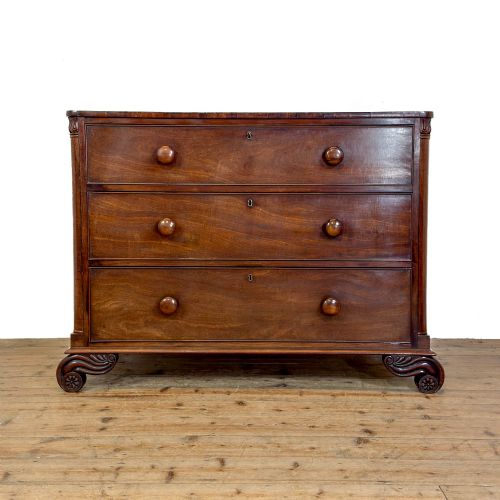
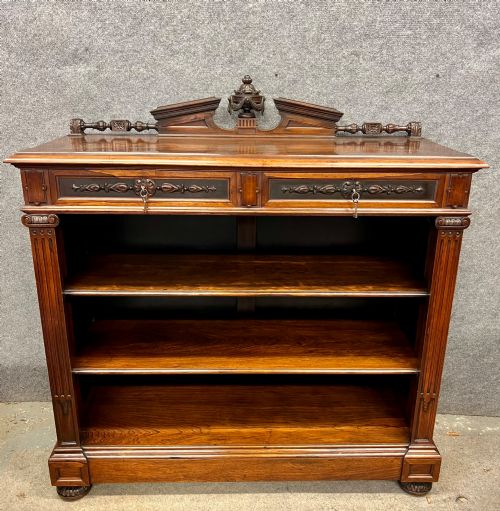
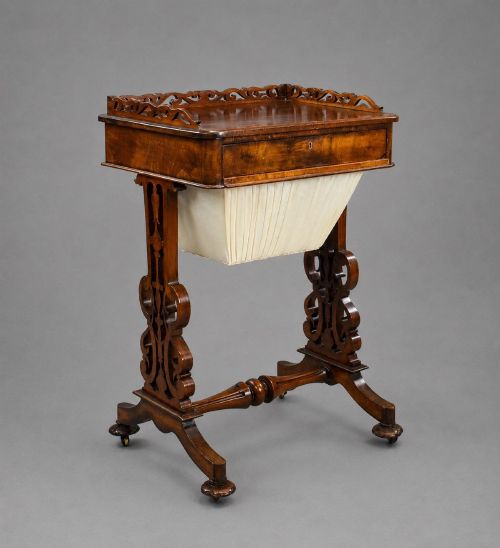
Victorian Carved Wood Drawers
Victorian carved wood drawers bring together dense timbers and cabinet-maker skill, offering practical storage with deep grain patterns.
Victorian Carved Wood Drawers
When you search for victorian carved wood drawers, you encounter a selection of case furniture centred largely on chests of drawers, alongside writing desks, compactum wardrobes, and music cabinets. The pieces span the nineteenth century, with specific examples originating from the Victorian period, alongside earlier Georgian, William IV, and Louis Philippe eras.
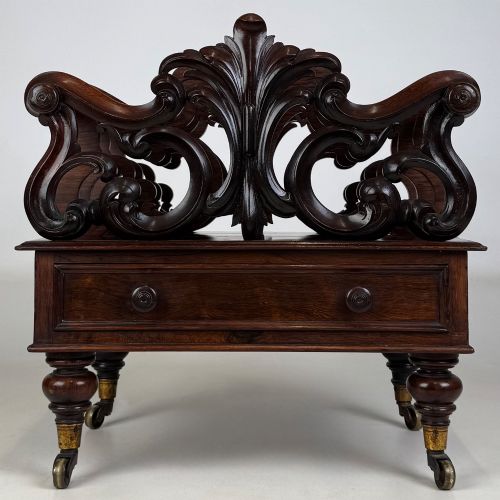
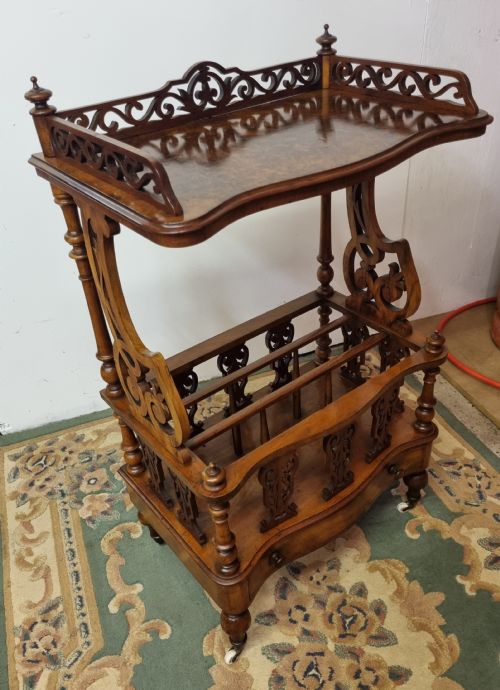
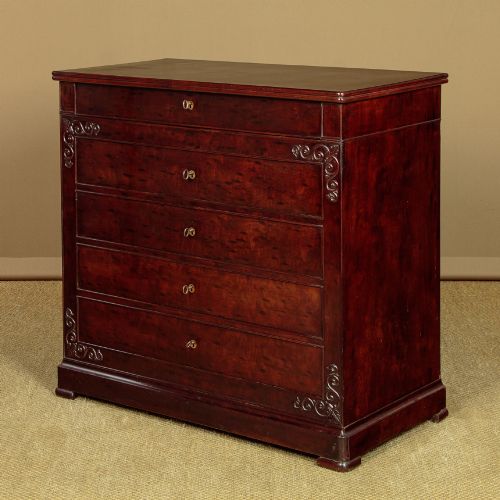
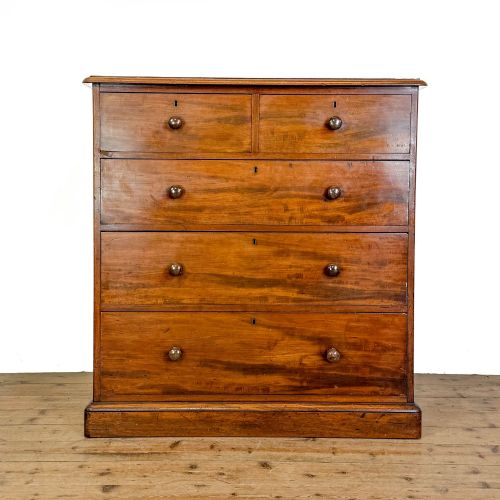
The chests of drawers themselves appear in various forms, including figured mahogany serpentine shapes, Wellington chests, and Scotch chests with multiple tiers. Alongside these standard storage forms, the listings contain smaller specialised items such as writing tables, canterburys, and display cabinets that incorporate functional drawer compartments.
Makers and workshops of the period utilised solid woods and decorative veneers, producing pieces intended for bedrooms, libraries, and parlours. Most items you meet here date from the mid to late nineteenth century, reflecting the prevailing domestic tastes for figured grain and structural utility.
Materials and construction methods
Cabinet-makers relied heavily on dense hardwoods such as mahogany, walnut, burr walnut, rosewood, and oak for the primary carcases and drawer fronts. These timbers were selected for their natural grain patterns, which makers enhanced through polishing and veneer placement on serpentine and straight fronts alike.
Metal hardware such as brass handles and turned wooden knobs complemented the timber construction, while secondary woods formed the interior drawer linings and back panels. Structural joins relied on traditional carpentry techniques appropriate for heavy case furniture and smaller tables with integrated drawers.
A sweet little tramp art box waits alongside grand wardrobes and library tables.
Distinguishing quality grades
The upper tier of pieces displays superior timber selection, particularly in figured mahogany and burr walnut veneers that present symmetrical grain across drawer fronts. Superior execution shows in the precision of the drawer fit and the crispness of any carved elements or applied mouldings.
Simpler pieces or those utilising pine and standard oak show more straightforward construction without elaborate veneer work or specialised hardware. The presence of branded maker signatures or established workshop attributions further separates standard production items from exceptional cabinet work.
Mein of Kelso·Edwards & Roberts·James Winter & Sons
The Victorian Carved Wood Drawers Glossary
- Wellington chest
- A tall, narrow chest of drawers typically secured by a hinged locking stile on one side that fastens all drawers simultaneously.
- Serpentine
- A front profile characterised by a gentle convex curve flanked by two concave curves, requiring advanced woodworking skill.
- Canterbury
- A low stand featuring partitions for holding sheet music, newspapers, or magazines, frequently equipped with a base drawer.
- Burr walnut
- Timber taken from the abnormal growth of a walnut tree, yielding complex, swirling grain patterns prized for decorative veneer.
- Compactum
- A large wardrobe combining hanging space with multiple internal drawers and compartments for comprehensive clothing storage.
Victorian Carved Wood Drawers: Frequently Asked Questions
What woods were used for victorian carved wood drawers?
Makers utilised a range of timbers including mahogany, walnut, burr walnut, rosewood, oak, ash, and pine.
These materials were chosen for their durability and grain appearance, often featuring as solid planks or decorative veneers.
How do I identify a Wellington chest?
A Wellington chest stands as a tall, narrow set of drawers secured by a locking side flap.
This distinct design keeps all internal drawers safely locked with a single key mechanism.
What is a canterbury used for?
Canterburys served as dedicated stands for organising sheet music, newspapers, and magazines in sitting rooms.
Many examples include a small drawer at the base for storing smaller accessories.
Where were these pieces placed in homes?
Chest of drawers and wardrobes found their primary placement in bedrooms for clothing storage.
Smaller desks, writing tables, and cabinets occupied libraries, drawing rooms, and studies.
How do serpentine fronts differ from standard chests?
Serpentine fronts feature a curved profile with a central convex sweep between concave ends.
Standard chests maintain a flat rectangular facade without the undulating contour.