
Victorian Carved Walnut Armchairs
Victorian carved walnut armchairs bring robust timbers and exuberant nineteenth-century framing into sitting rooms.
Victorian Carved Walnut Armchairs
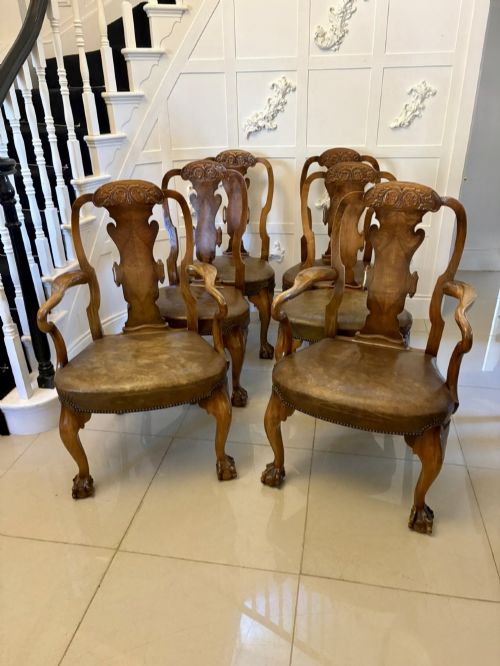
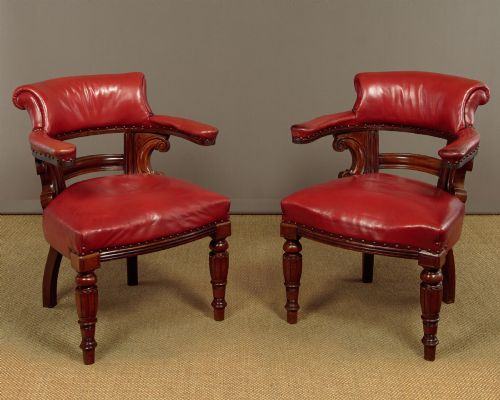
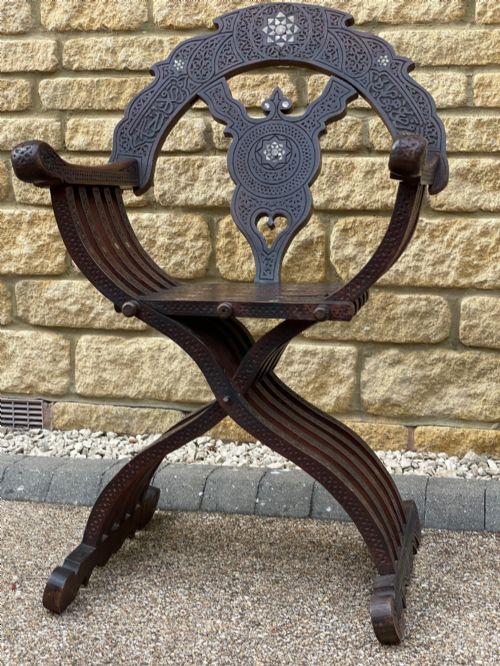
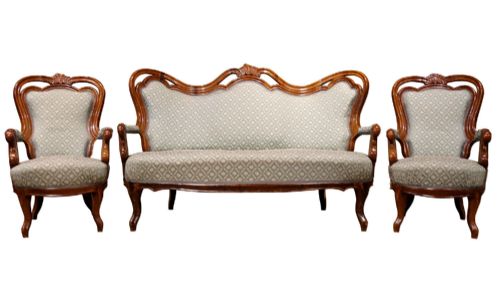
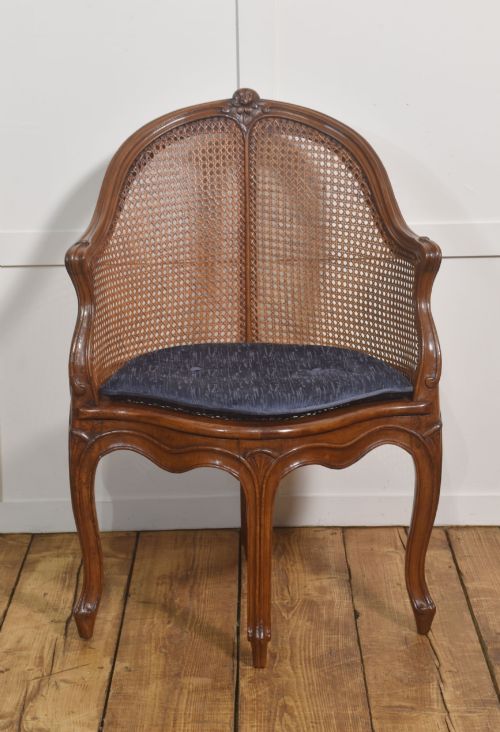
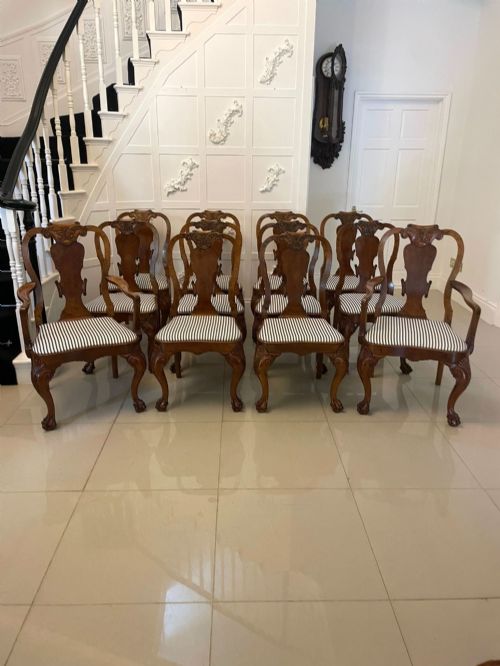
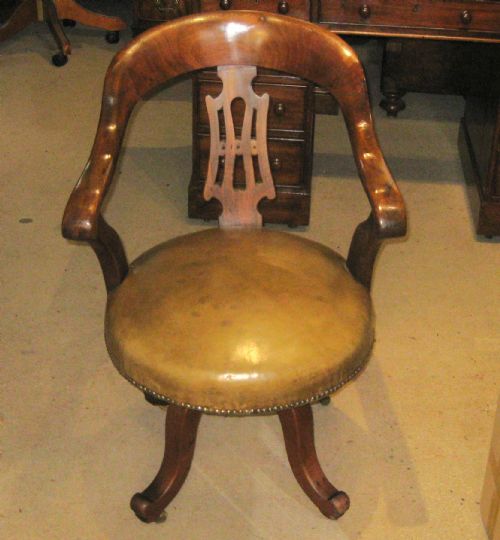
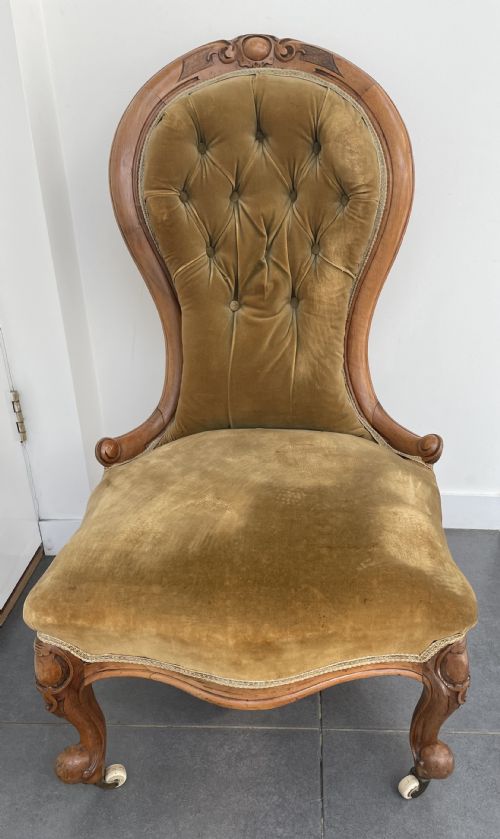
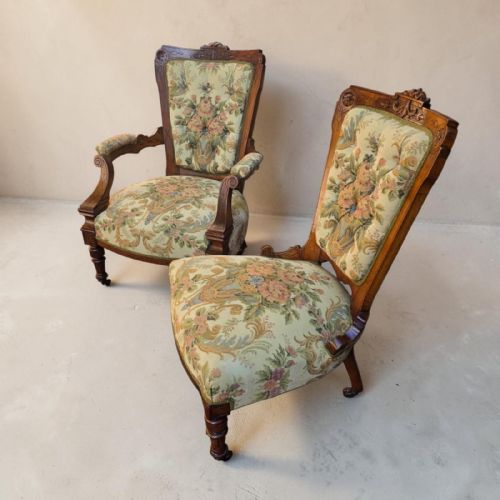
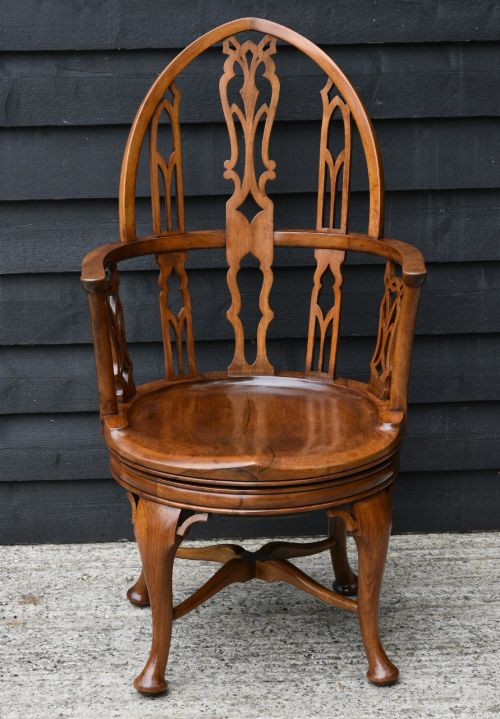
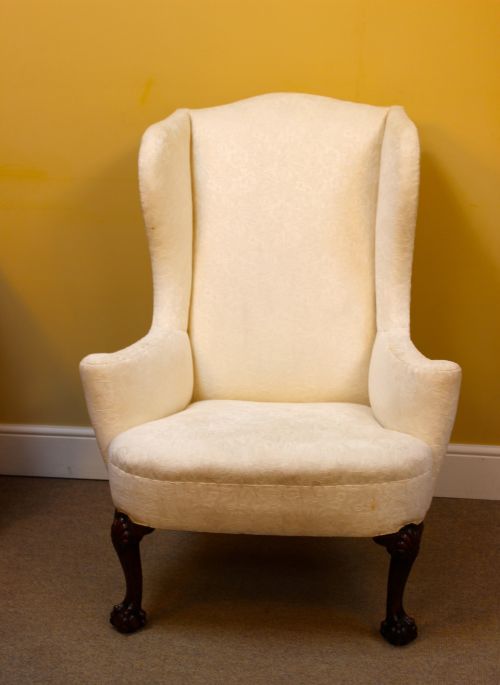
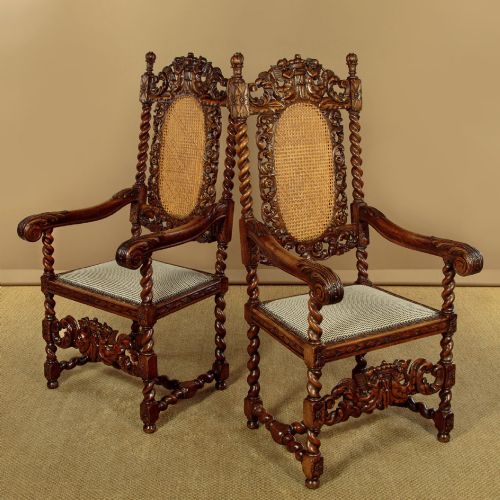
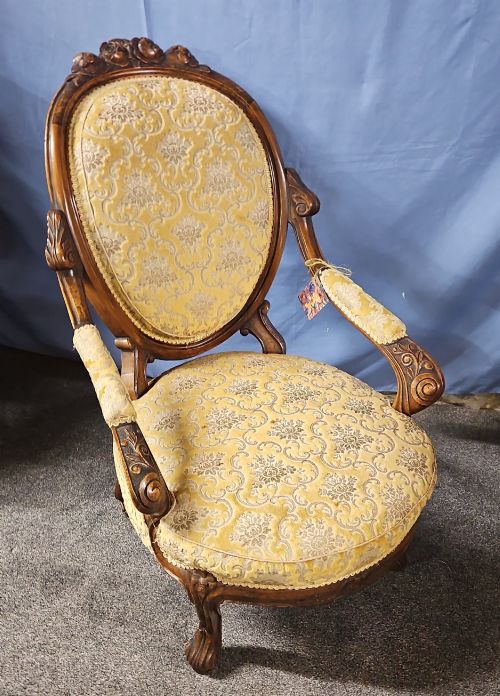
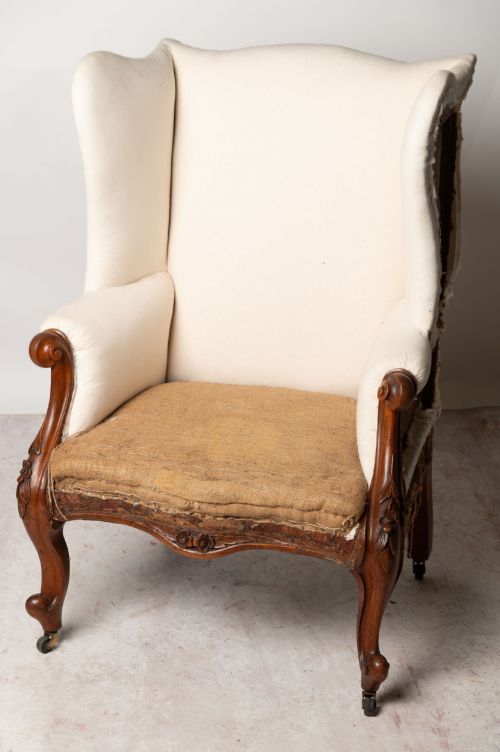
Victorian carved walnut armchairs encompass a wide variety of seating forms from the nineteenth century, including open armchairs, wing chairs, nursing chairs, and revolving desk chairs. The selection frequently includes pairs and suites produced during the middle and late decades of that period.
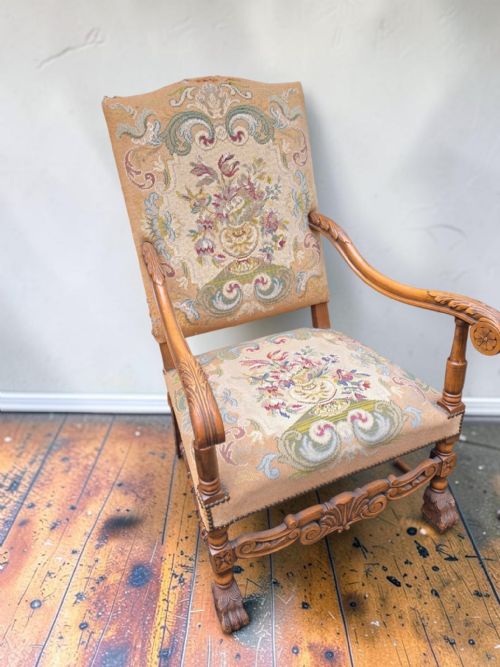
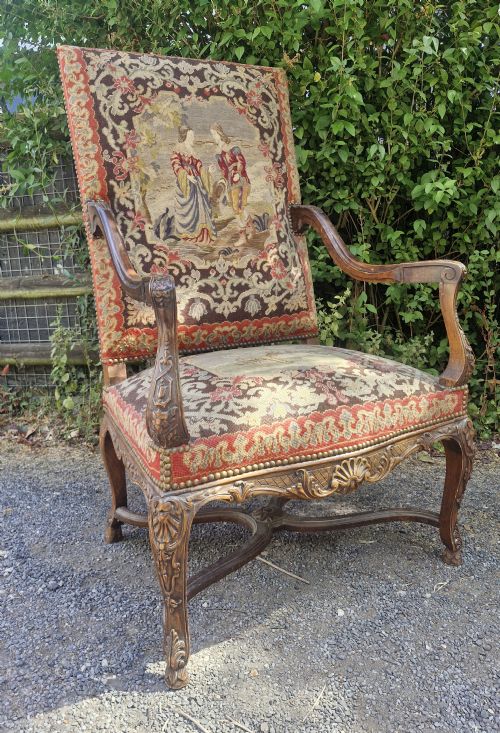
Makers and workshops of the era worked across multiple revival styles, incorporating Victorian Rococo, Queen Anne, Renaissance, and Carolean influences alongside French Louis XV interpretations. These seating options served formal drawing rooms, libraries, and parlours, combining structural timber frames with upholstered comfort.
How they were made
Cabinet makers utilised dense walnut timber for its rich grain and suitability for deep relief carving on show frames. Frames were shaped to support curvilinear spoonbacks, cabriole legs, and scrolling arms.
Upholstery techniques involved durable textiles such as leather, velvet, tapestry, and needlework, secured over supportive padding. Additional materials like brass fittings and cane panels appear on specific desk and occasional seating variants.
Some Victorian desks chairs swivelled just enough to let nineteenth-century correspondents spin away from boring letters.
What varies in quality
Quality depends upon the crispness of the hand carving on the walnut frame and the integrity of the underlying joinery. Substantial timber framing and well-proportioned silhouettes distinguish superior library and salon seating from simpler production.
The choice and execution of original or period-appropriate upholstery materials, from supple leather to worked tapestry, influence the overall character of each piece. Surviving suites and matched pairs maintain a higher cohesion than assembled groups.
Hindley And Sons·Howard And Sons
The Victorian Carved Walnut Armchairs Glossary
- Walnut
- A heavy, durable hardwood favoured for nineteenth-century furniture framing due to its dark tone and receptiveness to intricate carving.
- Spoonback
- An upholstered chair back shaped in a concave oval resembling the bowl of a spoon, designed to fit the human spine.
- Wing armchair
- A high-backed seat featuring protective fabric side panels originally intended to shield the occupant from draughts.
- Carolean revival
- A decorative style echoing late seventeenth-century English design, noted for scrolling woodwork and rich textiles.
- Salon suite
- A matched group of seating furniture designed for formal reception rooms during the Victorian era.
Victorian Carved Walnut Armchairs: Frequently Asked Questions
How do I identify a Victorian walnut armchair?
Look for dense walnut timber construction paired with nineteenth-century revival styling such as spoonbacks or carved cabriole legs. Construction details and period upholstery materials help confirm the nineteenth-century origin.
Examine the framing beneath the seat and the depth of the wood carving to separate genuine nineteenth-century examples from later reproductions.
Were these chairs used in offices?
Certain walnut forms, specifically revolving desk chairs and swivelling office variants, were engineered for professional or library use. These combined the heavy timber frames of the period with mechanical height or turning functions.
Standard armchairs and salon chairs remained intended for domestic drawing rooms and parlours rather than workspaces.
What is a his and hers salon chair set?
A his and hers set comprises a matched pair of Victorian salon chairs featuring complementary proportions, where one seat was traditionally built slightly larger than the other. These were designed for formal entertaining in nineteenth-century drawing rooms.
The matching carved walnut frames and identical upholstery styles ensure they function as a unified pair.
How should I care for antique walnut frames?
Maintain the walnut timber by dusting gently with a dry cloth and avoiding direct sunlight or excessive moisture. Feed the wood occasionally with appropriate furniture wax to preserve the grain finish.
Protect the upholstery fabrics according to their specific textile type, whether leather, velvet, or needlework tapestry.