





Victorian Carved Pilasters
These Victorian carved pilasters bring architectural depth to an interior, salvaged from bookcases, cabinets, and mirrors to frame a wall with nineteenth-century character.
Victorian Carved Pilasters
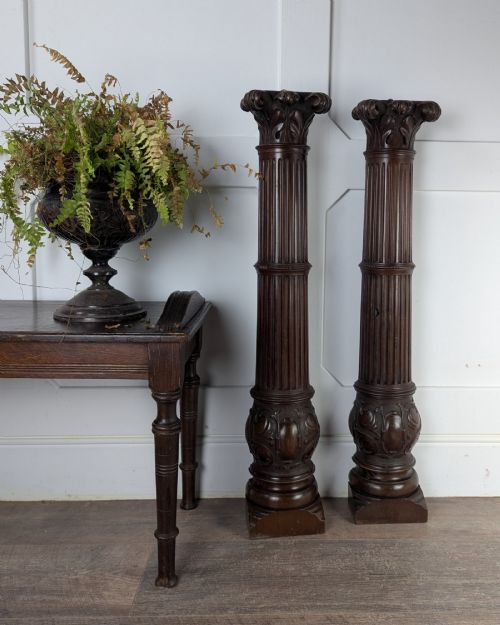
Victorian carved pilasters represent architectural salvage drawn from larger furnishings such as bookcases, overmantel mirrors, side cabinets, and chests of drawers. Most examples emerge from nineteenth-century pieces, spanning walnut, oak, mahogany, and giltwood.
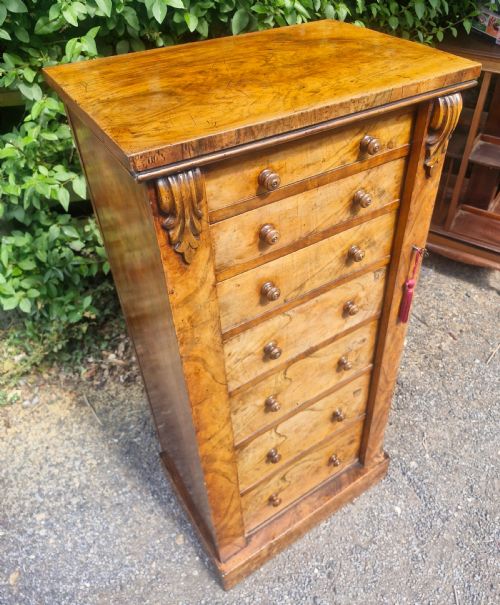
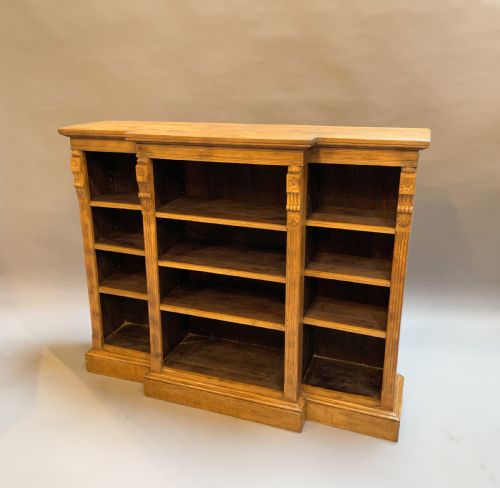
The selection on this page demonstrates how these architectural elements were integrated into functional furniture, appearing as half columns or applied vertical supports. Buyers find them functioning as decorative framing on breakfront bookcases and Wellington chests.
Origins trace across the Victorian era, utilising revived classical orders alongside Jacobean and Regency influences. Pieces reflect the craftsmanship of workshops that decorated libraries and formal reception rooms with rich timbers.
Materials and Construction
Makers utilised dense hardwoods including walnut, oak, mahogany, and rosewood, carved directly to achieve crisp fluting, reeding, and classical Corinthian capitals. Giltwood examples display layered preparation before applying gold leaf over carved wooden surfaces.
Timber selection dictated the visual weight of the pilaster, with burr walnut and satinwood veneers occasionally paired with solid structural framing. Joinery and surface finishing relied on hand-planing and oil or polish treatments appropriate to nineteenth-century cabinetmaking.
Some pilasters still bear the ghostly shadow of ancient library dust in their deep-carved acanthus leaves.
Assessing Quality and Execution
Depth of carving separates standard production from finer work, particularly in the crispness of acanthus leaves and the proportions of capitals. Superior examples retain sharp architectural details without softening from subsequent stripping or refinishing.
The integrity of the timber grain and the survival of original patination define the finish. Finely executed pieces show deliberate attention to proportion and symmetry, especially in matched pairs designed to flank a central opening.
Gillow and Co
The Victorian Carved Pilasters Glossary
- Pilaster
- A rectangular architectural element that projects only slightly from the wall or furniture surface, resembling a classical column with a base and capital. It serves a decorative framing function rather than supporting structural weight.
- Corinthian
- A classical order of architecture recognised by elaborate capitals decorated with stylized acanthus leaves. This style appears frequently on nineteenth-century bookcase and cabinet pilasters.
- Reeding
- A decorative moulding consisting of parallel convex rounded strips resembling bundled reeds. It provides vertical texture on many nineteenth-century columnar supports.
- Giltwood
- Timber that has been coated with gold leaf or gold paint to simulate solid gold. It is common on nineteenth-century mirror frames and architectural ornaments.
- Wellington Chest
- A tall, slender chest of drawers secured by a hinged locking stile on one edge. Pilasters often frame the vertical sides of these distinctive chests.
Victorian Carved Pilasters: Frequently Asked Questions
What furniture did pilasters come from?
These architectural elements originated as decorative framing on nineteenth-century bookcases, overmantel mirrors, side cabinets, and Wellington chests. They were built into the casework by cabinetmakers to provide classical structure and visual rhythm.
Today, they are salvaged from larger damaged or dismantled furniture to be repurposed as interior wall decoration or architectural accents.
How do I mount a pilaster on a wall?
Mounting typically involves securing flat-backed architectural salvage directly to wall studs using concealed fixings or discreet brackets. Because these pieces were originally integrated into cabinet carcases, the reverse side is usually flat.
Careful positioning allows them to frame doorways, fireplaces, or artwork, mimicking their original architectural context in a domestic interior.
How do I distinguish walnut from mahogany?
Walnut displays a rich brown tone with darker figuring and occasional burr patterns, whereas mahogany tends to exhibit a reddish-brown hue with straighter, interlocking grain patterns. Nineteenth-century workshops selected these timbers based on the desired formality of the room.
Close inspection of the grain under good light reveals the distinct cellular structure of each hardwood used in the carving.
Are these pilasters sold as pairs?
Listings include both individual pilasters and matched pairs salvaged from symmetrical furniture designs like double bookcases or mirror surrounds. Pairs allow for balanced placement on either side of an architectural feature.
Checking individual item descriptions confirms whether a piece forms part of an original matching set.