


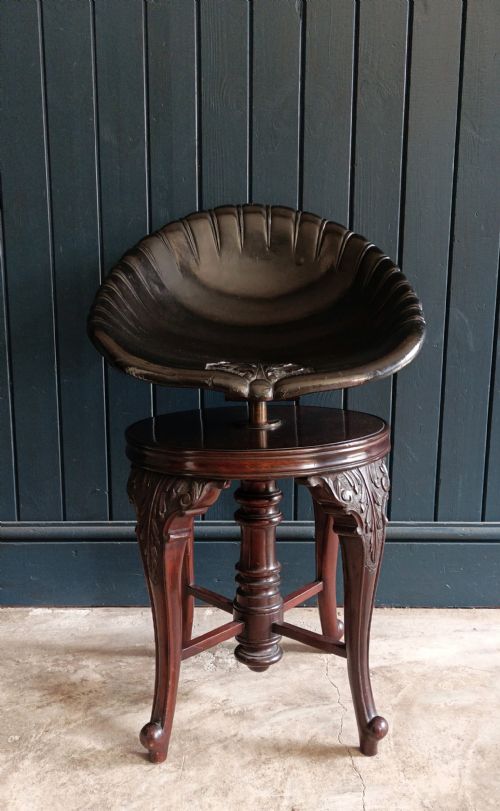
Victorian Carved Piano Chair
A victorian carved piano chair provides the steady swivel and adjustable height required for keyboard performance, combining practical utility with ornate period woodwork.
Victorian Carved Piano Chair
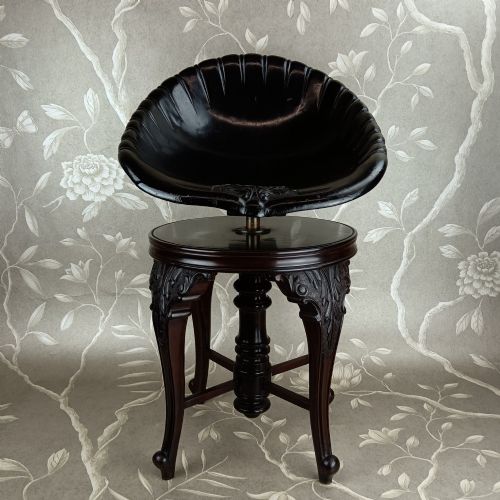
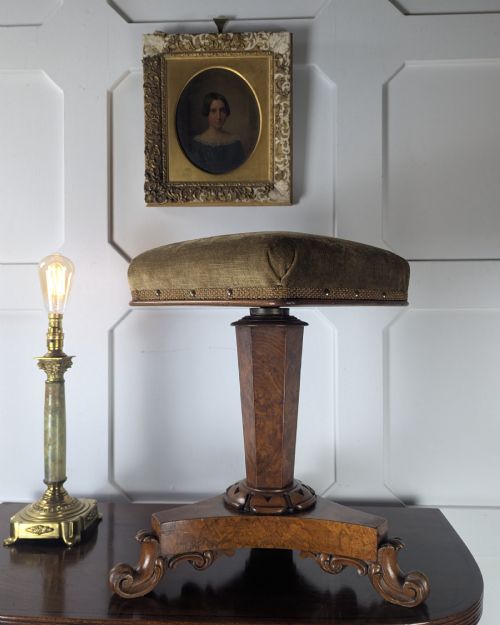
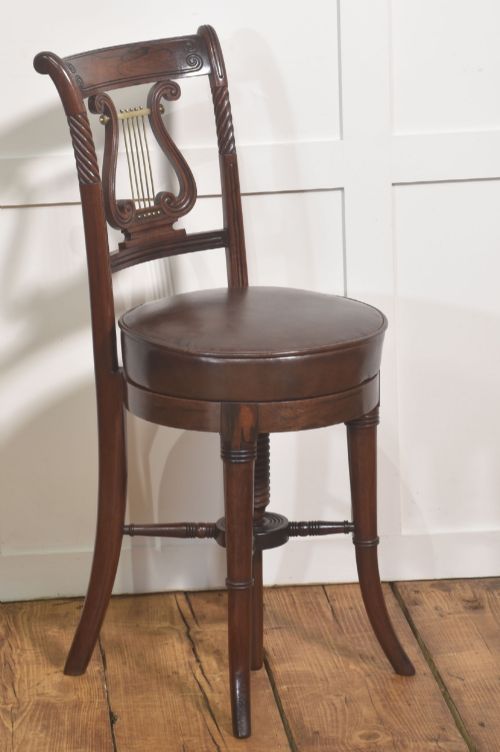
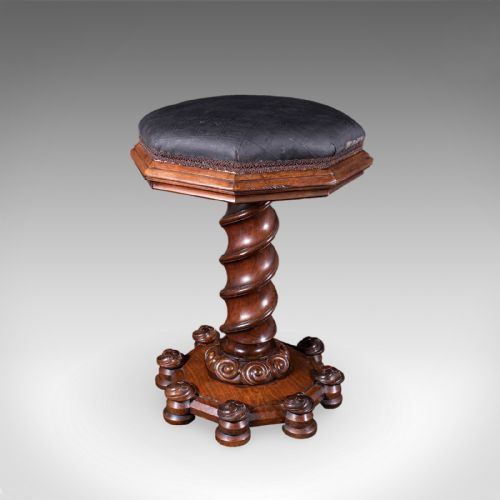
When you search for a victorian carved piano chair, you encounter a specialised seat designed primarily for the parlour or music room. These pieces appear under various descriptions including music stools, revolving chairs and harpist seats, originating mostly from the nineteenth century alongside related William IV and Edwardian examples.
The most common formats on this page feature a revolving mechanism or a rise-and-fall screw action mounted on timber legs. Walnut and rosewood predominate, frequently shaped with cabriole supports, tripod bases or pedestal columns designed to complement period pianos and dressing tables.
Materials and construction
Cabinet makers utilised dense hardwoods such as walnut, mahogany and rosewood to withstand the torque of revolving seats and threaded height-adjustment spindles. Brass components frequently form the internal screw mechanisms and castor fittings that allow smooth movement.
Upholstery materials range from velvet and fabric to leather, secured over padded tops or fitted into papier-mâché and mahogany frames. Carved details on the woodwork are executed directly into the solid timber or applied through turned supports and cabriole legs.
Assessing quality and craftsmanship
Superior examples distinguish themselves through the precision of the wooden screw mechanism and the stability of the revolving swivel action. Finer pieces display deeply carved woodwork on the legs and pillar, indicating greater labour invested by the maker.
The choice of timber and secondary materials also defines the tier of the piece, with figured walnut and solid rosewood commanding attention over simpler hardwoods. Original upholstery foundations and well-preserved brass hardware further elevate the standing of an individual stool.
Jennens and Bettridge
The Victorian Carved Piano Chair Glossary
- Revolving piano stool
- A seat featuring a central wooden or metal screw that allows the top to spin and adjust in height.
- Rise and fall mechanism
- An internal threaded post operated by turning the seat top to alter the vertical position for the player.
- Cabriole leg
- A furniture support curving outward at the knee and inward at the ankle, ending in a pad or scroll foot.
- Papier-mâché
- A composite material made from paper pulp mixed with glue and resin, pressed into moulds and lacquered for decorative music furniture.
- Pedestal base
- A central column support resting upon a tripod or circular foot rather than four individual legs.
Victorian Carved Piano Chair: Frequently Asked Questions
How do I adjust the height?
Most of these seats operate via a central wooden or metal screw column hidden beneath the upholstery. Turning the seat clockwise or anticlockwise raises and lowers the top.
Heavier models require holding the base steady while rotating the upper portion to engage the internal thread smoothly.
Were these only used for pianos?
While designed for keyboard players and harpists, many variants served double duty in the home. They function equally well as dressing table chairs or occasional seating.
The swivelling action made them practical for reaching different areas of a room or vanity space without moving the entire base.
How can I tell the period?
Dating relies on timber selection, turning styles and structural hardware. Earlier nineteenth-century examples often display William IV rosewood framing or heavy mahogany pedestals.
Later Victorian and Edwardian pieces tend toward lighter walnut frames, tripod bases and simpler carved motifs on the legs.
Are the swivel mechanisms robust?
The internal wooden or brass screws are built to endure decades of daily rotation and weight bearing. Maintenance typically involves checking the alignment of the central spindle and applying light lubrication.
Care should be taken not to unscrew the seat completely past its threading limit during height adjustments.