



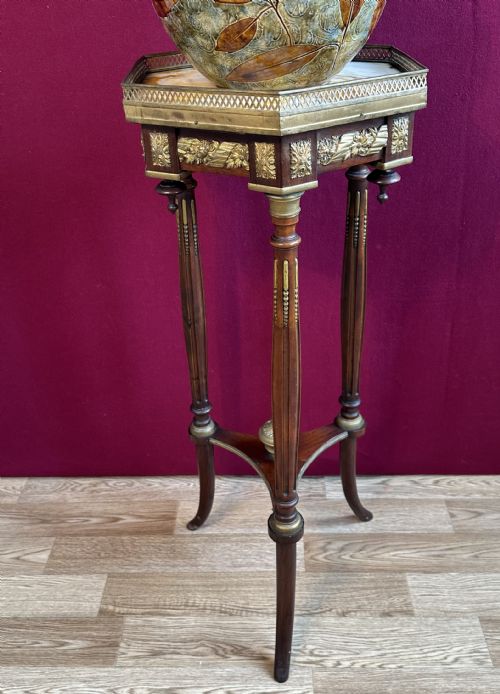


Victorian Carved Mahogany Torchere
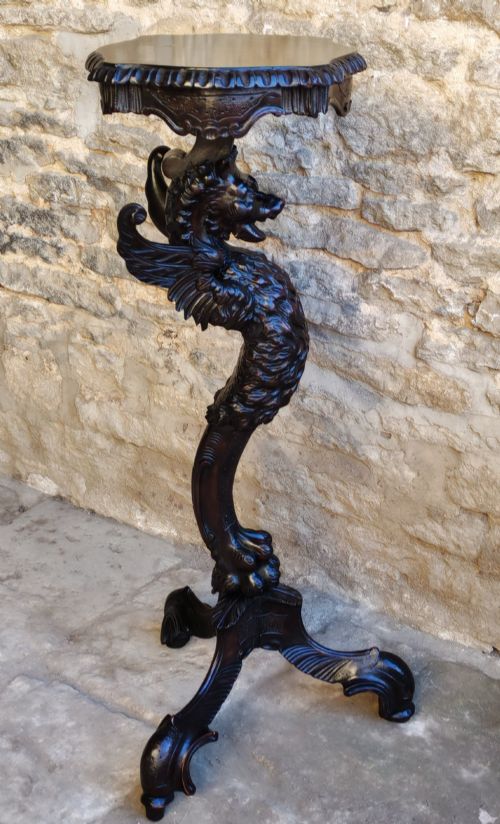
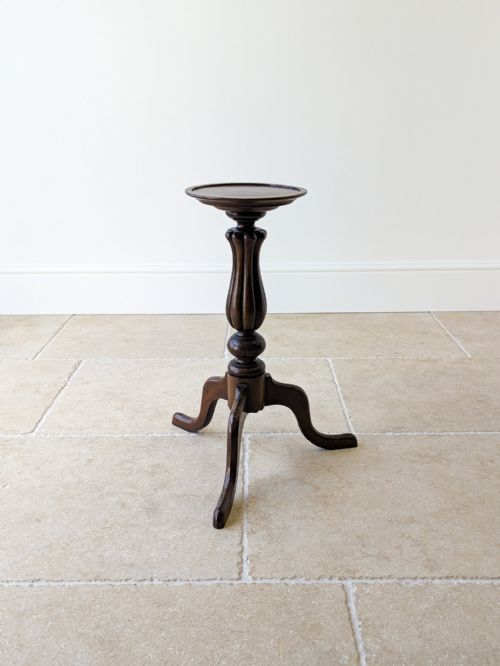
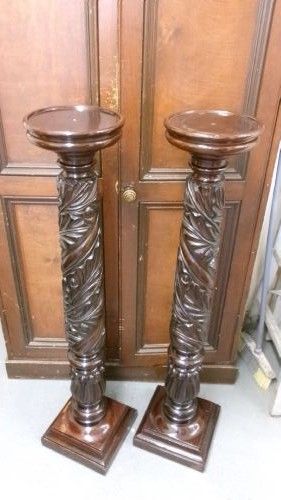
A victorian carved mahogany torchere brings height and architectural grace to a room, serving as a display pedestal for plants, busts, and urns.
Victorian Carved Mahogany Torchere
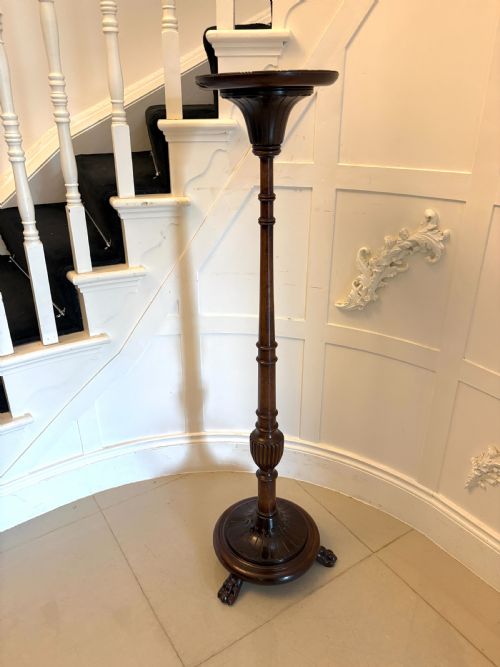
A victorian carved mahogany torchere is a tall, slender stand designed primarily to elevate ornamental objects rather than hold candles. These pieces function as plant stands, jardiniere holders, and display columns in domestic interiors.
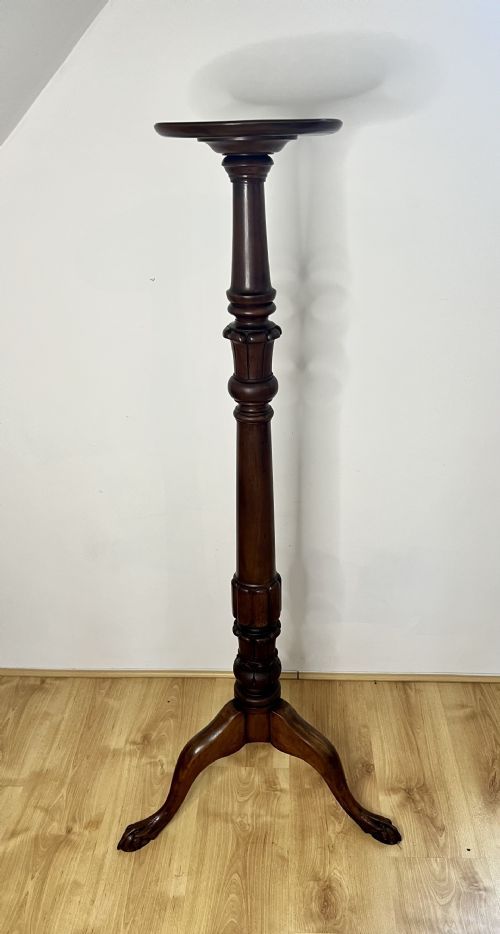
The version most commonly encountered on this page originates from the nineteenth century, built from dense hardwood with carved tripod or pedestal bases. Many examples display revival influences, ranging from Chippendale and Adam styles to Gothic and Louis XVI interpretations.
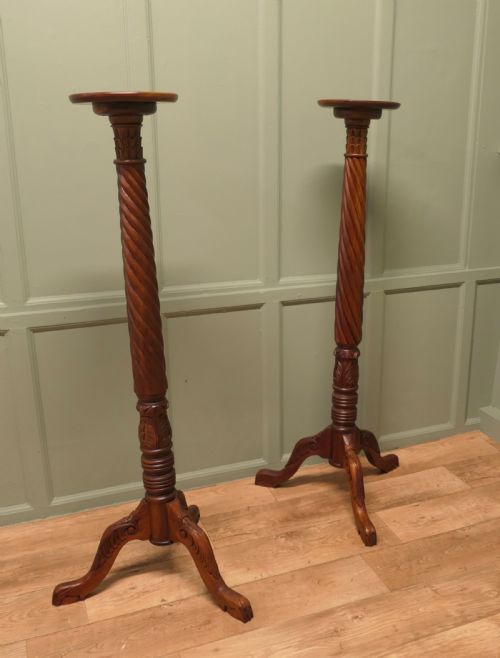
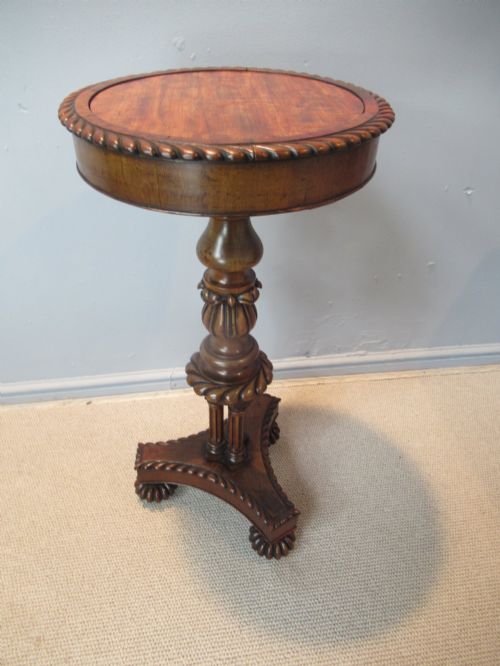
Makers adapted these stands for various household duties, occasionally combining them with brass mounts, marble tops, or rope twist columns. Buyers select them to create vertical focus in an empty corner or to display decorative sculptures at eye level.
What varies in quality
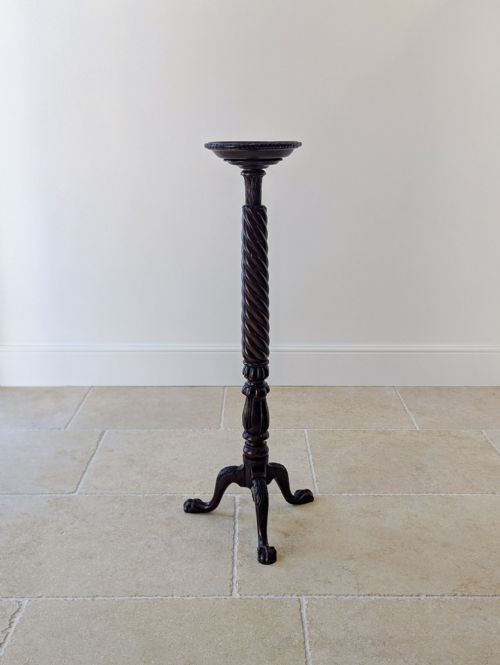
The distinction between ordinary and exceptional stands rests on the depth and precision of the hand carving on the column and legs. Crisp relief work on foliate designs indicates superior workshop output compared to softer, machine-rounded mouldings.
Proportion and timber selection dictate overall merit, with dense, figured mahogany commanding greater respect than plain secondary hardwoods. Stability engineered into the tripod base without excess weighting marks the better class of nineteenth-century production.
Victorian Carved Mahogany Torchere Retail Price Guide 2026
Typical asking prices for victorian carved mahogany torchere among the pieces listed under this phrase on Sellingantiques today, from the lower quarter to the upper quarter. They describe what is for sale here now, not the wider market.
Listings feature pieces spanning the Victorian, Edwardian, and early twentieth-century periods, constructed from mahogany, oak, and hardwood.
The Victorian Carved Mahogany Torchere Glossary
- Torchere
- A tall ornamental stand originally intended to carry a light source but later adapted as a plant or bust pedestal. These vertical supports anchor empty corners in traditional rooms.
- Jardiniere
- A decorative pot or stand designed to hold growing plants and floral arrangements. They frequently share the tall columnar form of nineteenth-century pedestals.
- Ormolu
- Gilded bronze applied as decorative mounts and accents on furniture and stands. This material signals French taste, particularly within revival pieces.
- Tripod base
- A three-legged support system providing stability for tall vertical columns. This configuration prevents top-heavy stands from tipping under the weight of heavy urns.
- Rope twist
- A carved spiral decorative motif resembling intertwined cord, wrapping around vertical wooden shafts. This technique adds texture and visual movement to the central column.
Victorian Carved Mahogany Torchere: Frequently Asked Questions
What is a torchere used for?
A torchere functions primarily as an elevated display stand for ornamental plants, bronze busts, and decorative ceramics. Victorian households utilised them to introduce vertical interest into empty corners and hallways.
Today, they serve the same practical function in domestic interiors. They lift treasured objects to eye level while taking up minimal floor space.
How do I date a mahogany torchere?
Dating relies on examining timber characteristics, construction methods, and stylistic revival cues. Pieces from the nineteenth century often exhibit hand-turned shafts and specific period design traits such as Chippendale or Adam revival motifs.
Secondary materials and joinery details help narrow the manufacturing window. Comparing the piece against documented examples from the Victorian era confirms its age.
Are these stands stable enough for plants?
Most nineteenth-century stands feature weighted tripod bases or sturdy platforms engineered to maintain balance. The dense hardwood construction provides sufficient gravity to anchor heavy ceramic pots safely.
Owners should still assess the foot spread and centre of gravity before placing fragile items on top. Positioning them out of high-traffic pathways prevents accidental collisions.
What is the difference between a torchere and a plant stand?
The terms frequently overlap in nineteenth-century inventory records and marketplace listings. A torchere traditionally implies a taller, more slender column derived from lighting supports, while plant stands can take broader box or table forms.
Both types share the fundamental purpose of elevation. Collectors often use the descriptions interchangeably when discussing nineteenth-century decorative furniture.