


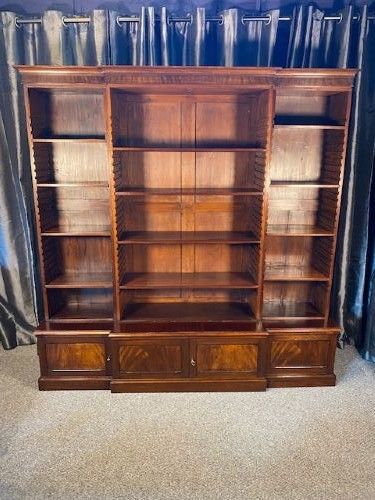
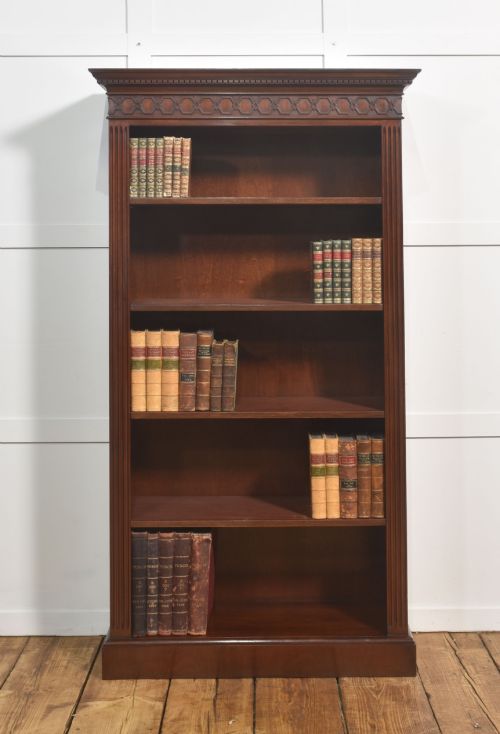
Victorian Carved Display Shelves
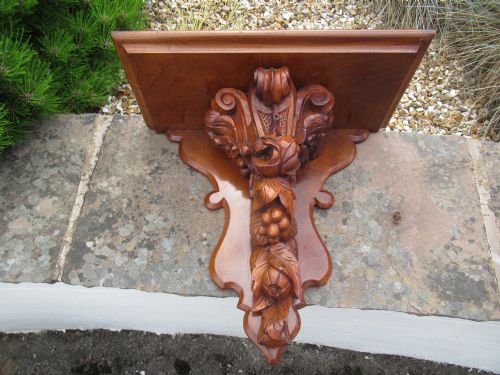
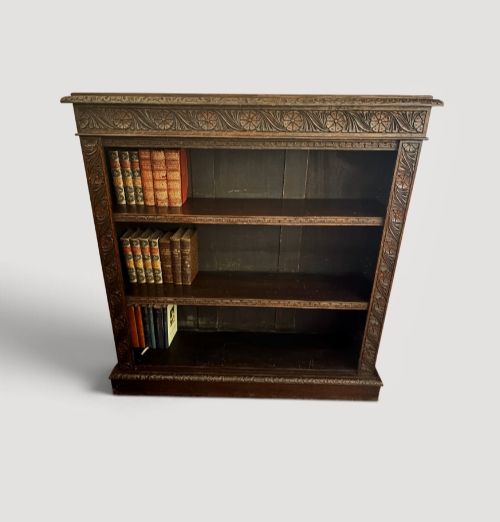
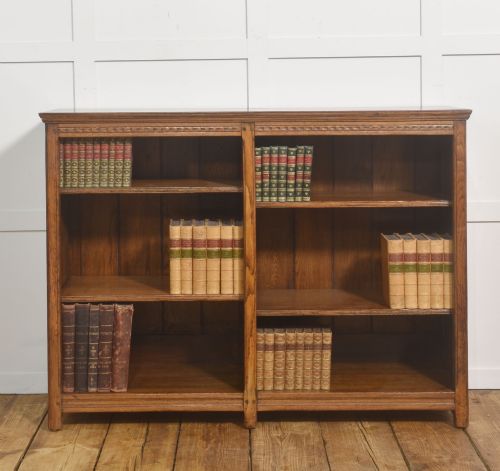
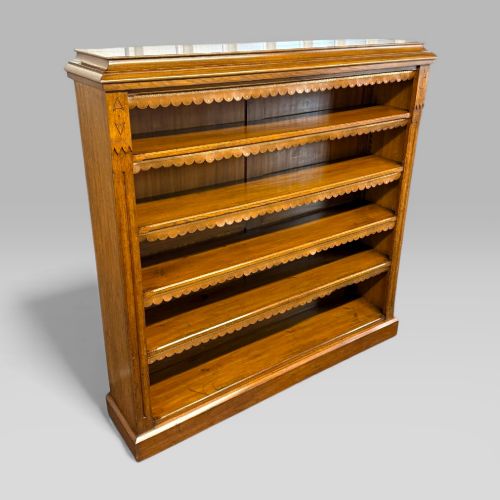
Victorian carved display shelves bring architectural warmth to a room, offering tiered surfaces for books and ornaments.
Victorian Carved Display Shelves
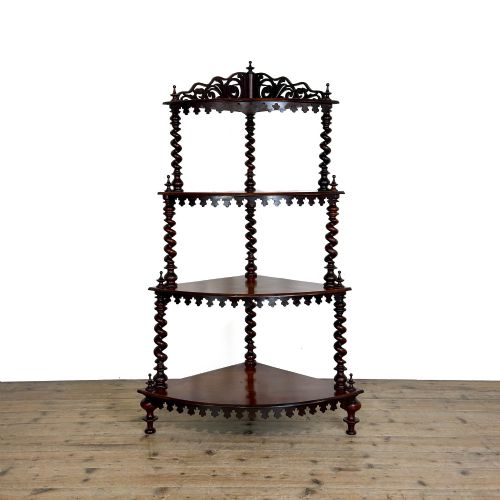
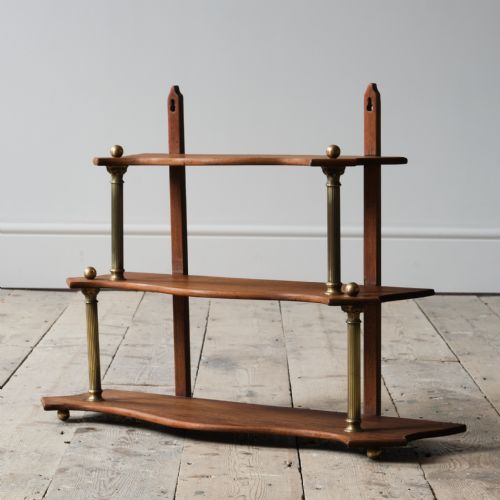
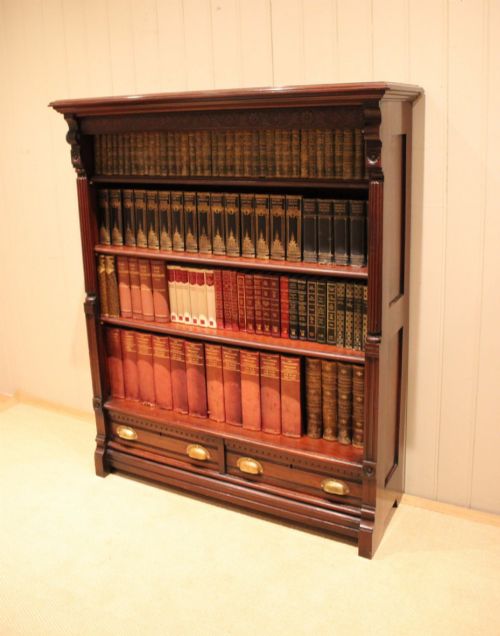
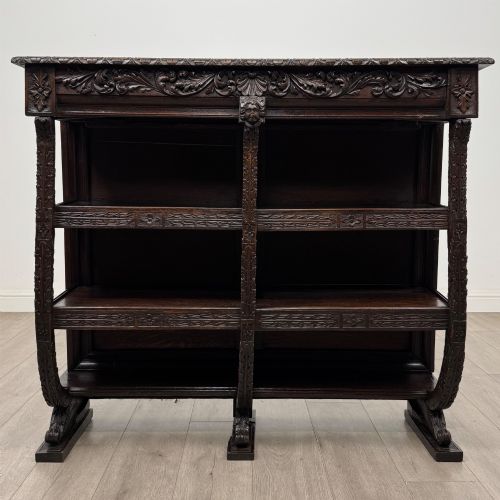
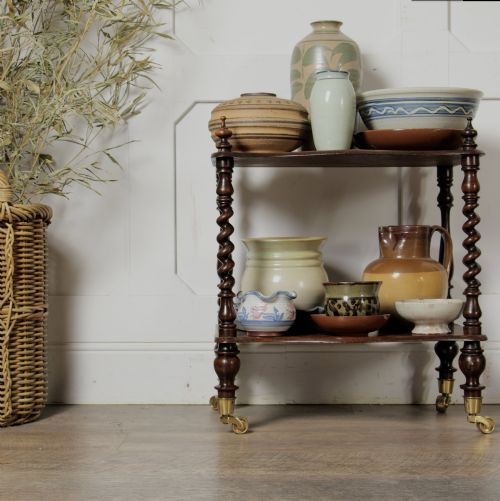
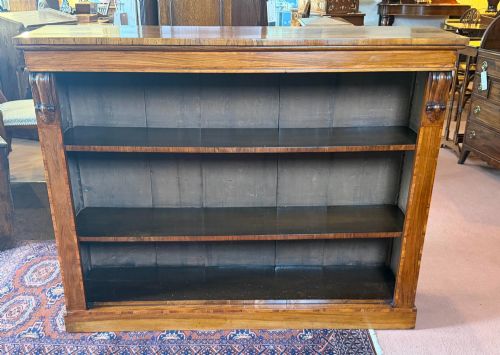
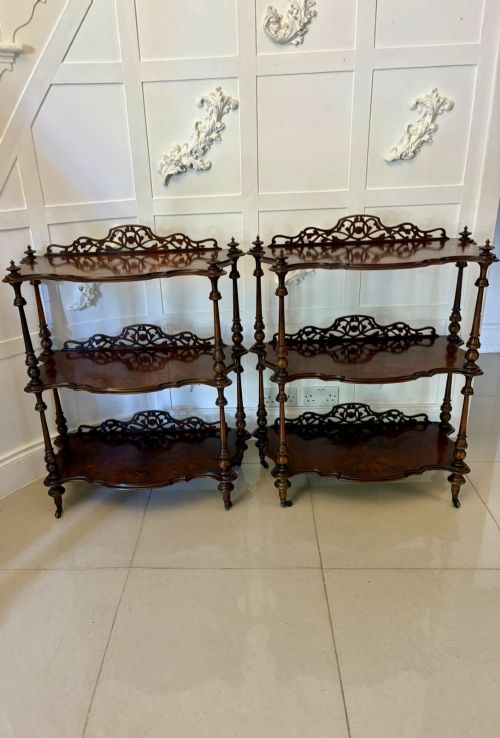
Victorian carved display shelves encompass an array of tiered stands, whatnots, wall brackets and open bookcases designed to hold books and decorative items.
The versions most commonly met on this page span walnut and mahogany constructions from the nineteenth century, including corner units and wall-hanging shelves.
Makers and workshops produced these forms across diverse styles such as Aesthetic Movement, Anglo-Indian and Japonisme, reflecting varied interior tastes of the period.
Materials and Construction Techniques
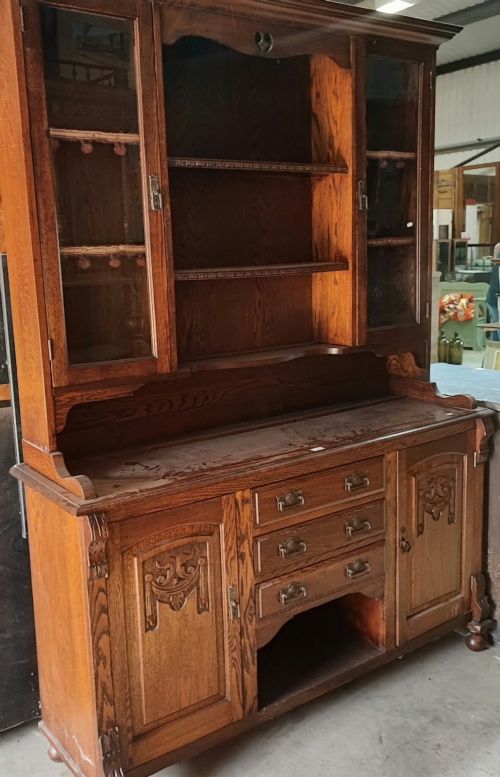
Cabinet makers utilised dense hardwoods including walnut, burr walnut, mahogany and oak, often selecting burr veneers for decorative grain patterns on display surfaces.
Structural elements incorporated carved details such as barley twist supports and applied mouldings, joined with traditional framing methods suited to load-bearing shelving.
Quality Variations
The standard of carving and the selection of timber figure prominently in distinguishing finer pieces from standard production work.
Integrity of the joints, stability of tiered platforms and originality of brass fittings separate exceptional examples from later or heavily restored furniture.
Gabriel Viardot·Edwards & Roberts
The Victorian Carved Display Shelves Glossary
- Whatnot
- A movable set of open shelves for displaying ornaments, typically standing on legs and featuring multiple tiers.
- Étagère
- A piece of furniture consisting of a set of open shelves for holding bric-a-brac, similar in function to a whatnot.
- Burr Walnut
- Timber taken from a walnut tree growth that produces intricate, swirling grain patterns highly prized for veneer work.
- Barley Twist
- A turned wooden column carved in a spiral shape resembling a twisted rope, common in nineteenth-century furniture supports.
- Open Bookcase
- A bookcase lacking glazed or wooden doors, designed for immediate access to shelved volumes.
Victorian Carved Display Shelves: Frequently Asked Questions
Where should I place a corner whatnot?
A corner whatnot fits effectively into unused room angles, utilising vertical space without protruding into main walkways.
These pieces suit reception rooms or studies for displaying small collections and books.
How do I care for burr walnut shelves?
Maintain burr walnut surfaces by dusting with a soft, dry cloth and avoiding direct exposure to strong sunlight or heat sources.
Applying a traditional beeswax polish occasionally helps nourish the timber and preserve the finish.
Can wall hanging shelves hold heavy books?
Wall hanging shelves are generally constructed for lighter volumes and decorative objects rather than heavy folios.
Ensure proper wall fixings into solid masonry or studwork to support the weight of the timber safely.