

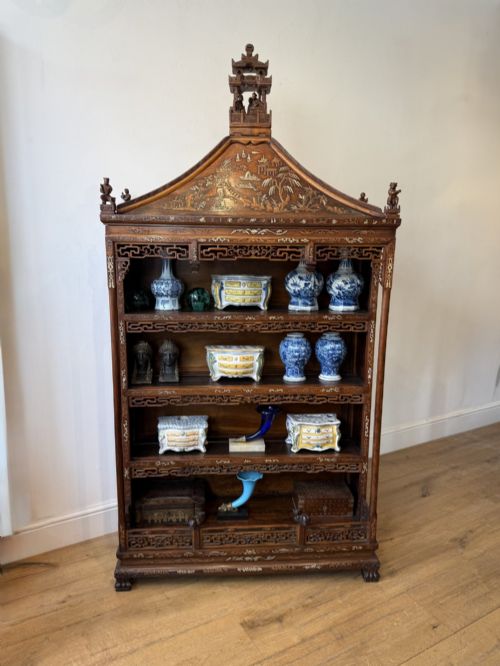


Antique Carved Etagere Bookcase
An antique carved etagere bookcase brings multi-tiered display and open storage together, offering a practical centrepiece for books and ornaments.
Antique Carved Etagere Bookcase
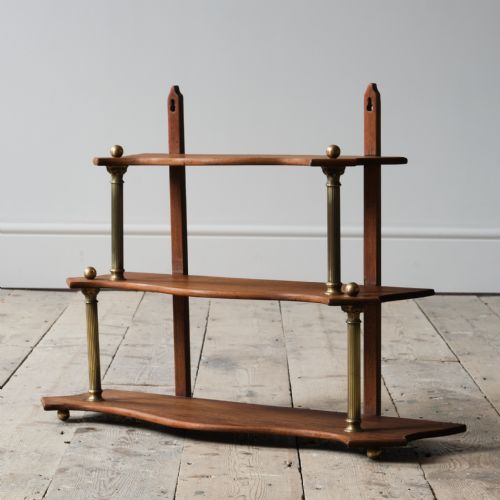
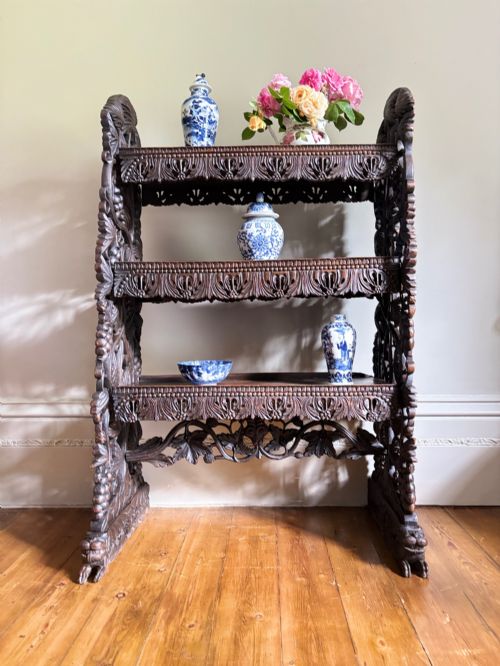
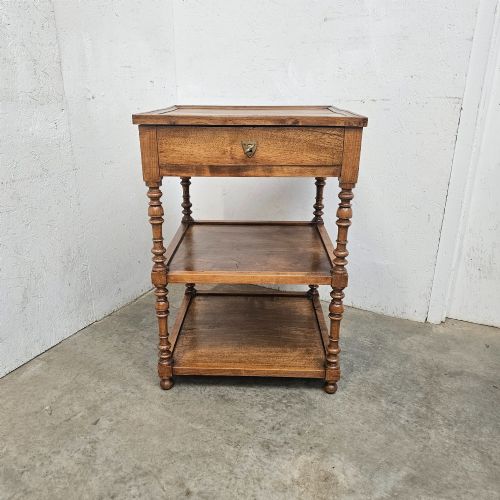
An antique carved etagere bookcase combines open shelving with display space, often featuring tiered platforms or enclosed cabinets. The pieces seen here span the nineteenth century and the early twentieth century, taking forms such as corner whatnots, wall hanging shelves, and multi-tier etageres.
Makers and workshops across different regions adopted these open storage formats, resulting in diverse aesthetic influences ranging from French provincial and Rococo revival to Anglo-Indian and Chinese carved styles. Buyers will frequently encounter rosewood, walnut, and mahogany iterations fitted with turned legs or intricate fretwork.
Standing buffet shelves and portable bookshelves appear alongside larger display cabinets, reflecting the versatile domestic roles these items fulfilled in past centuries. Each format balances the display of prized volumes with the exhibition of decorative ceramics and curiosities.
Materials and construction
Cabinetmakers utilised dense timbers like rosewood, mahogany, walnut, padauk, and burr walnut, selecting them for their rich grain and structural stability. These woods were frequently turned, carved by hand, or polished to a deep lustre.
Construction techniques relied on traditional joinery, incorporating brass fittings, inlaid details, and glazed panels where cabinets or display doors were integrated into the multi-tiered framework.
The listings encompass nineteenth-century and early twentieth-century examples, utilising rosewood, walnut, mahogany, brass, and glass across various shelf and cabinet formats.
Distinguishing quality
The distinction between standard examples and superior pieces rests on the depth and crispness of the hand carving, alongside the choice of timber figurations such as burr walnut or amboyna. Finely turned supports and balanced proportions indicate greater workshop skill.
Integration of secondary materials, including brass mounts and complex structural framing, elevates the execution. Cohesion in the decorative vocabulary, whether following a Japanese style or a traditional English format, marks the superior tier of production.
Gabriel Viardot·Gabriel-Frederic Viardot
The Antique Carved Etagere Bookcase Glossary
- Etagere
- A piece of furniture consisting of a set of open shelves for displaying small objects or ornaments. These tiers are typically supported by slender columns or turned uprights.
- Whatnot
- A multi-tiered shelving unit designed for the storage and display of books or ornaments. The form became particularly popular during the Victorian period.
- Padauk
- A heavy, durable tropical hardwood prized for its deep reddish-brown colour. It was frequently utilised in Anglo-Indian and nineteenth-century cabinetmaking.
- Burr walnut
- Timber taken from the warted growth on a walnut tree, yielding highly decorative swirling grain patterns. It was sliced into veneers for high-status furniture fronts and tops.
- Shodana
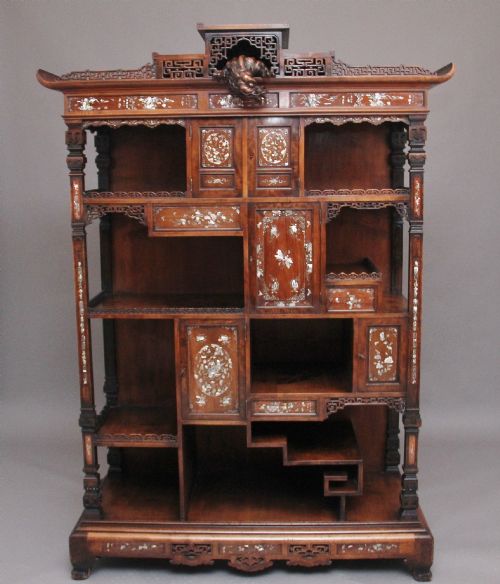
- A Japanese-style tiered display cabinet featuring asymmetrical shelving and compartments. These pieces often incorporate intricate pierced carving.
- Inlay
- A technique where pieces of contrasting timber, brass, or other materials are inserted into depressions in the base wood to form decorative patterns.
Antique Carved Etagere Bookcase: Frequently Asked Questions
What is an etagere bookcase?
An etagere bookcase is a tiered shelving unit designed for holding books and displaying decorative objects simultaneously. They combine the open access of a bookshelf with the decorative framework of an etagere or whatnot.
These pieces typically feature multiple open levels supported by turned columns or carved uprights, occasionally incorporating small cupboards or drawers within the lower section.
Where were these bookcases placed?
In nineteenth-century interiors, these units served multiple rooms, functioning as drawing room display pieces, parlour shelving, or portable library storage. Wall-hanging versions suited smaller spaces.
Floor-standing variations acted as room dividers or stood against walls to hold leather-bound volumes, ceramics, and small curiosities within easy reach.
How do I care for antique wood?
Maintaining these surfaces involves keeping them away from direct heat sources and strong sunlight, which can dry out dense timbers like rosewood and mahogany. Occasional dusting with a soft, dry cloth preserves the polished finish.
Avoid using silicone-based polishes or wet cloths, as traditional French polish and wax finishes require gentle, breathable maintenance to retain their historical patina.
How are different periods identified?
Dating relies on observing the combination of timber choices, joinery methods, and stylistic motifs. Earlier nineteenth-century examples often feature Regency rosewood with brass accents, while later Victorian pieces show heavier carved walnut or burr veneers.
Global influences, such as Anglo-Indian padauk carving or Japonisme fretwork, help place items within specific late nineteenth-century design movements.