
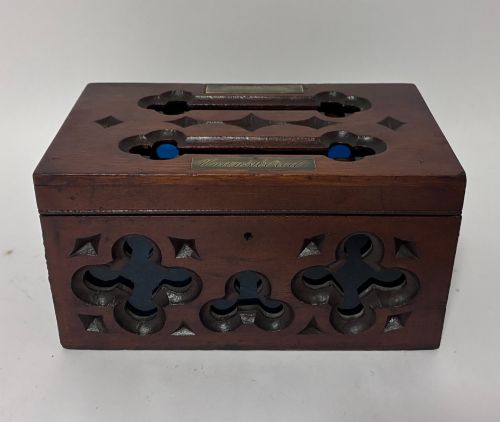


Victorian Carved Desk Organiser
These carved pieces keep your papers in order while bringing period character to a working surface.
Victorian Carved Desk Organiser
A Victorian carved desk organiser brings order to papers and pens through stationery boxes, writing inkstands, book slides and tabletop cabinets. These pieces range from Gothic oak letter racks and Scottish horn-mounted stands to Kashmiri and Black Forest carved wooden designs.
The pieces on this page span the Victorian era, the 19th century and the Edwardian period, often utilising oak, mahogany and carved wood. Forms such as miniature chests of drawers, two-tier desk tidies and inkwells with animal figures serve the practical needs of a study or library.
Materials and construction
Makers shaped these items primarily from solid hardwoods like oak and mahogany, alongside maple and general carved wood. Natural additions such as bone, horn, brass and glass inserts appear across inkwells and desk stands.
Carving defines the decoration, seen in detailed Black Forest animal figures, Scottish Baronial mounts and Gothic revival tracery. Joinery includes bun feet, tier structures and hinged boxes designed to hold stationery and writing equipment.
Listings feature oak, mahogany, maple and carved wood alongside brass, glass, bone and horn elements.
Judging quality
Quality rests upon the crispness of the hand carving and the selection of timber, where well-figured oak and rich mahogany elevate a piece above plain alternatives. The integration of functional compartments, such as drawers and fitted inkwells, indicates superior workshop execution.
Condition and originality separate fine examples from lesser items, particularly regarding the survival of original glass inserts, brass mounts and functioning hinges. The depth of detail in figural work, such as Black Forest bears or cats, distinguishes skilled carvers from mass production.
The Victorian Carved Desk Organiser Glossary
- Book slide
- An extending wooden stand designed to hold a row of volumes upright on a desk or table. These often feature carved ends or mounted galleries.
- Inkstand
- A tray or stand holding one or more inkwells, frequently accompanied by pen recesses and small drawers for nibs. They form the central writing accessory of a period desk.
- Stationery box
- A tabletop cabinet with compartments and tiered slots for letters, envelopes and paper. Many incorporate hinged lids and fall fronts.
- Black Forest
- A regional style of wood carving originating in Central Europe, known for realistic depictions of animals such as bears and cats. These carvings form the lids of inkwells and the bodies of desk novelties.
Victorian Carved Desk Organiser: Frequently Asked Questions
What is a desk tidy?
A desk tidy is a compartmentalised tabletop accessory designed to hold pens, letters and small writing supplies.
These items range from simple wooden trays to two-tier stands with drawers and letter racks.
How do I use a book slide?
A book slide rests on a desk or bookshelf to keep a selection of volumes neatly upright between two ends. The extending mechanism allows the user to adjust the length according to the number of books.
Many period examples feature carved wooden ends or mounted metal galleries.
What is Black Forest carving?
Black Forest carving refers to highly detailed wooden sculptures and desk accessories produced in mountain regions of Europe. They frequently depict naturalistic animals such as bears, dogs and cats.
These pieces often double as functional inkwells or trinket boxes.
How do I distinguish Victorian from Edwardian styles?
Victorian pieces often display heavier proportions and revival styles such as Gothic, Scottish Baronial or ornate carved wood. Oak and mahogany predominate in these earlier dark-toned pieces.
Edwardian designs tend to show lighter construction and Arts and Crafts influences, prioritising simplified oak frames and functional letter racks.